November 05, 2006

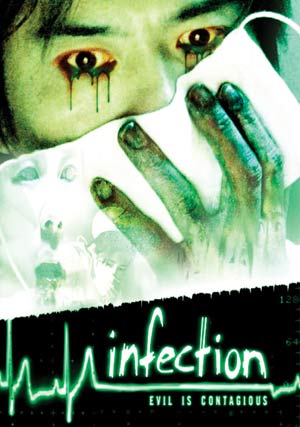
INFECTION (2004) J-Horror Theater #1

INFECTION (2004, Japan, aka Kansen)
J-Horror Theater #1
Region 1 NTSC DVD (Lions Gate)

Don't like hospitals?


Infection begins in a rundown hospital in the middle of a crisis. Too many patients, supplies running out, staff not paid. You almost think that the infection in the title is already over-running the city outside (which we never see).

Of the remaining staff and patients, each one has a different problem. One of the nurses is having trouble giving injections (she keeps missing the vein), two patients have fallen out of their beds and injured themselves, one patient sees people in mirrors who aren’t in the room...

The busy doctors, torn between an operation that's going wrong, and an ambulance trying to leave an extra patient in E.R., things start going very wrong. As an unknown infection turns the patient into green slime, everyone in the building suddenly finds themselves at risk of a fate worse than death, as the hospital dissolves into chaos…

The film cleverly distances itself from TV medical dramas with a ‘look’ that’s not quite right for a hospital. It’s not quite ramshackle or dirty, it just looks wrong. The nurses seem to be careless, distracted. The doctors nervous and stressed.

A sense of unease and uncanny is quickly established that soon put me on edge and creeped me out. The many storylines that are established with each of the characters, slowly start to pay off. For a long while I wasn’t sure just which direction it was going to go, which made it even more intriguing.

The clever lighting and cinematography achieves an unusual and unique look – a crystal clear image, but with queasy, green-edged shadows.

Despite melting patients and glops of goo, there’s still much horror left unseen, which would certainly have been shown in an FX fest if this were a western horror film. There are still some excessive scenes, but the director wisely chooses to leave some extreme moments to the imagination. He achieves a fine balance of being subtly gory.

When one of the doctors notes that the hospital is having a very bad day, the film verges on black comedy. This looks intentional though, and it gives the tone just enough distance from the more mundane atmosphere of pain and death of hospital dramas, or indeed hospitals.

An ensemble cast – almost everyone gets euqal screen time – is lead by Koichi Sato (who I last saw as the lead in Rasen (1998) which was the very first Ring sequel, and I also remembered him from Antarctica from 1983).

The director chosen to kick off the horror film series, J-Horror Theatre, is Masayuki Ochiai, who previously made the enjoyable and gruesome The Hypnotist, Parasite Eve and the best story in Tales of the Unusual (2000) about a snow ghost. The second in the series,
Premonition (or Yogen), wasn't nearly as good.

This was an unusual Japanese horror, not as extreme or frightening as many others, but certainly gripping and entertaining. Just don’t ask me to explain the ending, I’m going to have to watch it again to find out.


The Region 1 DVD only has two trailers for extras. It's 16:9 anamorphic with good english subtitles. Once again I feel that the Japanese publicity artwork was more stylish and intriguing than the US DVD art.

Do you want to know more?
Masses of screengrabs and an unkind review on Snowblood Apple here.

- - - - - - -

November 04, 2006

CURSE OF THE WEREWOLF (1961) vintage Oliver Reed


CURSE OF THE WEREWOLF (UK, 1960)
Region 1 NTSC DVD

(from Universal's 'Hammer Horrors Series' boxset)

Wallace and a Werewolf but no Gromit

I was inspired to watch this again after reading the latest Video Watchdog, who reviewed this entire DVD set of Hammer films - I previously looked at Night Creatures, heralding it's debut on DVD.

Casting a young Oliver Reed as a werewolf is obviously, in retrospect, a genius stroke. Years before he had a reputation as a boozy wildman, and years before he gained critical attention in leading roles for boozy wildman director Ken Russell (like The Devils and Women in Love), he was doing bit parts and horror films for Hammer, like Paranoiac and These are the Damned.

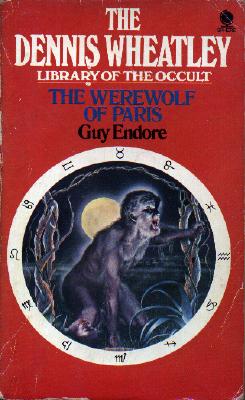
In it's heyday, Hammer was trying to match Universal Studios successful gallery of monsters, but had to carefully avoid copyright problems. They wanted a werewolf, but couldn't copy the make-up design of The Wolfman. They couldn't even call it The Wolfman, because that was based on an original script written for Universal. Instead they bought the rights to Guy Endore's The Werewolf of Paris written in 1933. The novel may have influenced Universal's unsuccessful Werewolf of London (1935).

Decades later other werewolves that made an impression were memorable due to special effects rather than performances. In The Howling (1981) Rob Bottin used different make-up appliances for every different shot of Robert Picardo transforming. Similarly, An American Werewolf in London (1982) had Rick Baker throwing every trick in the book at David Naughton. In both cases, the final creature was mostly operated as a full-size puppet. A special effect rather than an actor. I love both movies, but the end results are successful in different ways.

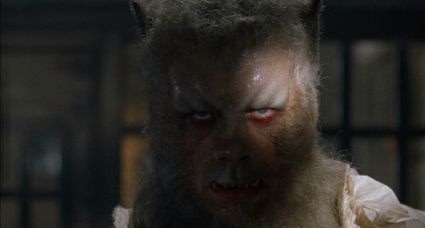
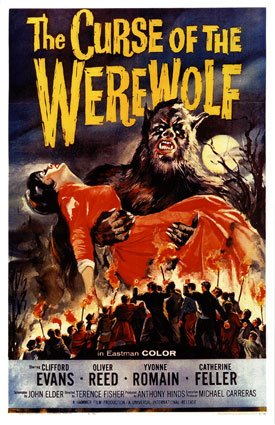
Part of the success of Roy Ashton's make-up, is the way we can still see most of Oliver Reed's face. He looks part wolf, but importantly we can still see he's part man. Together with Reed's acting, the glimpses we get of the werewolf are electrifying. His contorted snarling face, blood dripping from his mouth - it's quite startling in every glimpse we get.

However, it's a film from a different era. the aforementioned eighties werewolf movies would still play today, providing a rollercoaster of blood, shocks and in-jokes. Sixties Hammer films play more like costume dramas, Curse of the Werewolf is so traditional, it refuses to veer from a linear narrative by using flashbacks. The story of young Leon and his unfortunate conception is so involved, that we don't actually get any scenes with Reed until the film is halfway through.

Amusingly, when he does appear, he's soon working in a winery, surrounded by bottles. Note also that, at the time, Oliver Reed was much more likely to get romantic leading roles, because in 1960 he had yet to pick up the huge trademark scar down his left cheek. After being 'glassed' in a pub brawl, the young actor thought his film career was over. Yet he was wrong, and the disfigurement rarely meant that he was consigned to baddie roles.

The rest of the cast is quite fascinating - I'd forgotten how many familiar faces were in it, and not all the usual Hammer crew either (Michael Ripper notwithstanding). A couple of James Bond regulars appear - Desmond Llewellyn has a bit part here as a butler, just before he became Q in almost all the Bond films. Also Anthony Dawson as the lecherous disintegrating Marquess, a successfully OTT role - he was a baddie in the first Bond Doctor No, and was also Blofeld's stand-in in From Russia With Love and Thunderball. Though his voice was dubbed, he was the unseen presence behind the blinds in the famous Spectre meeting room, where the chairs are all wired for electrocution - a key scene referenced in the first Austin Powers films.

Richard Wordsworth gives an extraordinary performance ranging two decades, from abused beggar to feral man. Both touching and frightening, he had been similarly effective as the man/monster in Hammer's first horror The Quatermass Xperiment.


Yvonne Romain spiced up the publicity stills for the film, even though she was playing Leon's mother and couldn't possibly have shared a scene with him. The two actors also appeared together in Devil Ship Pirates. Romain had another iconic part in the same year's Circus of Horrors, for a rival studio. (More on Yvonne at
Brian's Drive In Theatre.)

Bizarrely, Peter Sallis, instantly recognisable as the distinctive voice of Wallace, from the hugely successful Wallace and Gromit animations, appears here in his prime as the town mayor. I didn't see anything in the publicity for the Wallace and Gromit movie Curse of the Were-Rabbit to exploit the fact that he'd also appeared in Curse of the Werewolf.

Besides enjoying the film again, I was also checking that Universal had delivered a correct widescreen aspect, generously framed at 1.85, and that the print was also uncut. For years I thought the film dragged in places, but that's because British movie and TV censors had snipped away the distasteful and violent scenes away. The climax of the film even includes an early use of squirting blood - possibly a squib or hidden syringe effect - which was popularised by it's excessive use at the end of the decade, by director Sam Peckinpah in The Wild Bunch.

The film has a unique werewolf mythos, a unique werewolf performance from Reed, and an atmospheric standout soundtrack from Benjamin Frankel. Admittedly it's more of a violent melodrama than a werewolf movie, but I hope I've demonstrated that it's watchable for many reasons.


- - - - - - -

GHOST STORIES (2000) haunted school anime

GAKKO NO KAIDAN (Japan, 2000)
TV anime 20 x 25 mins
GHOST STORIES (US release title)
Region 1 NTSC DVDs - 5 volumes (from ADV Films)

This anime series is not to be confused with the four films known as Haunted School (1996 to 1999), or even the short story TV horror series, Gakko no Kaidan G (1998) which was also live action.

This is an anime series that uses the same urban legends, or scary stories, told about Japanese schools that the film series used for a basis. So various familiar ghosts and situations from the films also turn up in this anime. Seems too much of a coincidence for the anime to have appeared just as the film series ended.

It has a likeable gang of ghostbusters, centred around Satsuki, a young schoolgirl, her little brother and their father. Her late mother has bequeathed Satsuki her notebook in which she describes neighbourhood hauntings and how to solve them.

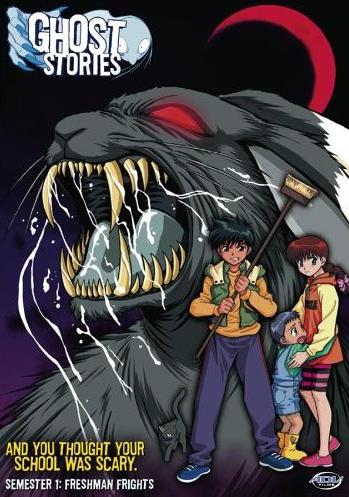
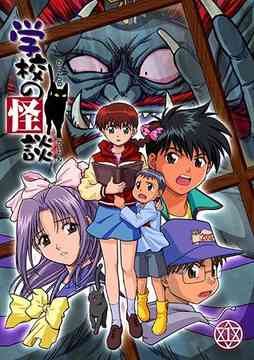
Japanese DVD cover artwork showing Satsuki and her mother's diary

Satsuki and her friends like to investigate hauntings and ghostly occurences that either take place at the school, that affect schoolchildren or even just occur locally. Thankfully, the action in the series doesn't spend too much time in schoolrooms, like so many anime series seem to.
The troubled spirits are all pretty spectacular, ranging from murderous dolls and giant killer rabbits, to the more traditional snow ghosts and demons (one of whom possesses the family cat!). If they're not big, they're usually still creepy, many of them with murder in mind.

It's intended as family viewing, but I really enjoy this series. It's like a Japanese Scooby Doo, but with real spirits and some effective scares, verging on Ring intensity! The interplay between the children is played for laughs, but they often get terrified, with Satsuki's little brother spending a lot of the time crying, like a real toddler would.


It's evidently produced using electronic animation (as opposed to painted cels), with many effective effects being generated in an edit suite instead of using animation. This works well for the most part, and there's some interesting point-of-view CGI shots too.

Some of the characters from Bleach

The director of the series is Noriyuki Abe, who is now working on the very successful anime Bleach, which has topped 100 episodes and just spawned an animated feature film. Bleach is also about schoolkids fighting unseen demons - but here it's teenagers and they use samurai swords and magic powers to save lost souls. It's action-packed, but again has well-designed characters and plenty of humour. Coincidentally, the central family is also missing the mother.

Ghost Stories/Gakko no Kaidan is one of the few anime that I've enjoyed that has had an uncut subtitled release - all 20 episodes are on DVD in the US over 5 volumes, with optional Japanese audio.

The only drawback was that ADV chose to also dub the series into English and litter the dialogue with inappropriately sexual and racial references as well as many American in-jokes. The audio is of course at odds with the young ages of the characters and the obviously Japanese setting.

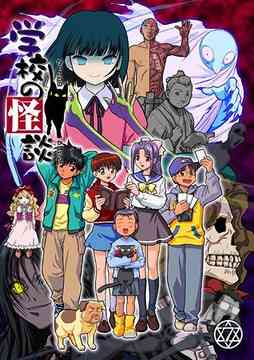
Japanese DVD cover artwork showing the gang and their adversaries

But if you can cope with reading subtitles, I'd recommend the whole Region 1 set. The Japanese set is spread over 7 DVDs and has no subtitles.

- - - - - - -

November 02, 2006

The Nigel Kneale Conclusion (1922 - 2006)


Well, sadly I heard today that the writer Nigel Kneale has passed away. It hasn't quite sunk in yet, but I'm going to really miss him.


His fantastic Quatermass series inspired sci-fi and horror fiction ever since he first began writing stories about the character in the early 1950’s. There were four TV series, and he was working on a fifth story - a prequel set in Nazi Germany, which will hopefully see print in some form one day. Three series were made into classic Hammer films, in fact the success of The Quatermass Xperiment launched Hammer Studios into horror films in the first place.

He excelled at writing and adapting ghost stories for the screen, and cleverly linked the supernatural to scientific origins. The Stone Tape (1970) boggled my mind with its accurate prophecy of home video formats, and then chillingly set my hair on end. Very rare for TV to have such a chilling effect.

My very favourite work of his is the movie version of Quatermass and the Pit (1967) which he adapted from his scripts for the BBC TV series. It’s haunted my imagination ever since I saw it as a teenager. If London ever descends into chaos, under attack from Martians, demons and robotic humans, I feel that I’m ready for it, having lived through the film so many times.

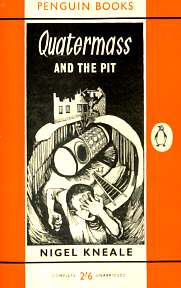
Before home video, Kneale's TV scripts enjoyed many years in print

I can’t do him justice the way obituaries hopefully will. I’ll instead just recommend to you his newly-published biography - a catalogue of his life and work, with an impressive look at the many films he's influenced over the years.

One of several covers for the new biography

Coincidentally, I was reading it only yesterday.
- - - - - - -

October 29, 2006

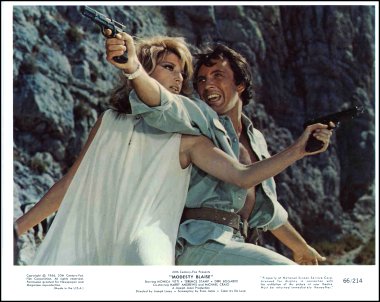
MODESTY BLAISE (1966) - a goofed spy spoof


MODESTY BLAISE
(1966, UK)


A mute recommendation...

(Updated September 2010 - out on DVD in the UK)

I really wish this was good, but it always disappoints. It fits into two sub-genres of the sixties that I really enjoy. Lightweight comedy spy flicks - the ones that Austin Powers movies reference – like Our Man Flint and Casino Royale (1967), and also comic strip adaptions - a more varied bunch than the endless Marvel Comics franchises that we’re choking on at the moment - like Batman, Barbarella and Danger: Diabolik.

Unfortunately Modesty Blaise is the least watchable in both camps, despite having enough talent to have made it the best. With Joseph Losey directing, one expects daring and gritty dramas. The Servant, King and Country and Accident (all also starring Dirk Bogarde) are all heralded British films that critics agree are the work of a quality auteur. But they forget to mention Losey’s disastrous lapses with Modesty Blaise and Boom! (possibly Elizabeth Taylor’s worst movie).


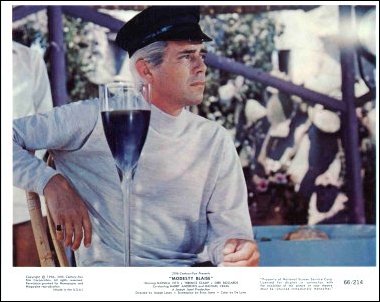
Monica Vitti as Modesty uncannily looks the part, is devastatingly glamorous and a natural comedy actress to boot. Terence Stamp was at his sexiest too. Dirk Bogarde is blond arch-villain Gabriel, Clive Revill has a dual role as his book-keeping sidekick and an Arab sheik…


To digress for a second – it’s sad when talented actors are hot one moment and then dropped the next. Clive Revill was great in comedies, often playing Russians, and could hold his own as a lead (The Legend of Hell House) but disappeared Stateside to do TV and still does high profile voiceover work in animation. I guess his turn as the voice of the Emperor in The Empire Strikes Back changed his life.

Michael Craig too, here playing an MP being twisted around Modesty’s little finger, was a familiar face in sixties movies. He lead the castaways in Mysterious Island, but his film career was buried alive with Vault of Horror (1973), and he’s been working on stage and TV ever since.

So, Modesty Blaise - the cast is good, what’s wrong with the film? I’d say that the director was extremely condescending about adapting a 'comic strip'. So much so, that he refuses to take the characters, the premise or any of the action seriously. Most of the fights are played for comedy, especially the climactic battle. Losey seems to lose interest whenever the plot is involved, instead pushing the camera towards close-ups of pop culture fads, fashions and furniture, while making in-jokes, most of which we don’t get.

Losey’s humorous touches may have been warranted if they’d been funny. Only the occasional black comedy works, and it’s especially sadistic, even for James Bond. The scene where Gabriel’s ‘wife’, Mrs Fothergill, silently tortures a mime, and the use of a dead body to counterweight an escape down a cliff, are both grimly amusing.

Apart from Johnny Dankworth’s theme tune, the music is ill-chosen and rarely complements the mood or the action, instead being used to amuse. The monk serenading Gabriel on the church organ, as he arrives on his island, seems to go on forever. The cacophony of barrel-organs during the Amsterdam knife fight is totally distracting. The songs that Vitti and Stamp are required to sing are just embarrassing.


Maybe with different music, a different edit (too long at two hours) and tighter post-synching, this could have been, should have been, a whole lot better. Though the groovy sets and fashions make this an excellent choice to play in the background at a party, but with the sound down! An odd recommendation, I know.

Mostly shot on location in Amsterdam and Naples, particularly spectacular are Gabriel’s clifftop monastery (actually in Sicily, I believe) and the un-exciting car chase up and down the winding roads of Mount Vesuvius (which is where I've just been and why I watched this again).

The Region 1 DVD (from 20th Century Fox) has absolutely no frills or notes, but is presented anamorphic widescreen 1.85 for the first time. The mono and stereo audio tracks sound a little dull, which is very apt.

Modesty's creator wrote the movie tie-in novel, launching the comic strip heroine as a successful literary character - the best thing that came of the film!

October 28, 2006

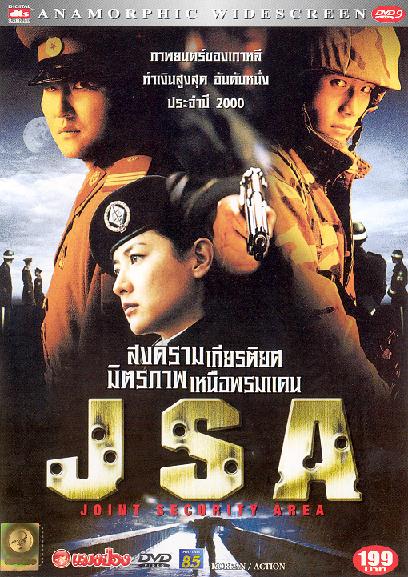
J.S.A. JOINT SECURITY AREA (2000) North and South

J.S.A. JOINT SECURITY AREA
(2000, South Korea, IMDB title: Gongdong gyeongbi guyeok JSA)
Thai Region 3 PAL DVD


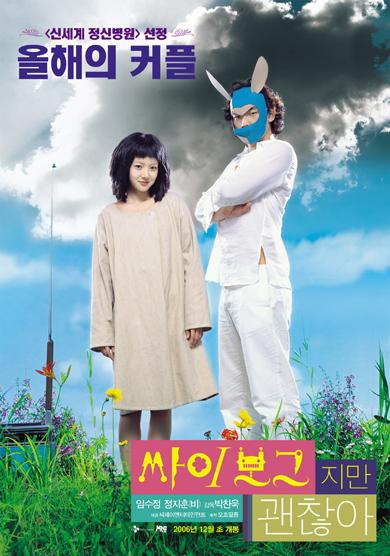
Like many fans of South East Asian cinema, I'm more than impressed with director Chan-Wook Park's 'vengeance trilogy'. So while I keenly await his next film Cyborg OK (the trailers are already online), I've just watched the film whose success enabled him to make Sympathy For Mr Vengeance.

A poster for Chan-Wook Park's next film - I'm A Cyborg, But That's OK
Joint Security Area isn't as outrageous stylistically or narratively as Oldboy or Lady Vengeance, being a fairly straightforward murder mystery. But there are some directorial flourishes and a offbeat dark humour that indicate the direction he would soon take. Set in the neutral no-go area between North and South Korea, a shooting incident leaves two soldiers dead and two wounded survivors - one from each country.

A Dutch investigator, fluent in Korean, is brought in by the neutral peace-keeping force to determine exactly what happened. In prolonged flashbacks we learn about the lives of the men in the months leading up to the fateful night - a scenario the authorities hadn't anticipated...

The director manages to play both sides here, delivering a violent, occasionally bloody thriller to demonstrate an anti-violence theme. The film also attempts to counter the demonisation of North Koreans as seen by the South. For an international audience, there's enough exposition to get everyone up to speed with a brief history of the country's division - certainly very relevant at the moment. Other recent Korean films braving the subject, like Ki-Duk Kim's The Coast Guard (2002), expected the audience to know their history.

The main strength of the film is the performances - the leading members of the cast all returned to appear in Park's subsequent films. The investigating officer in J.S.A. is played by Lady Vengeance herself, Yeong-ae Lee. The North Korean officer is Kang-ho Song, Mr Vengeance, also a familiar face in cult Korean films such as The Quiet Family, Memories of Murder, and this year's blockbuster The Host. The other soldiers in 'the incident' are played by Ha-kyun Shin, also from Sympathy for Mr Vengeance, and Byung-hun Lee, the lead in Park' s contribution to
Three: Extremes.

The only distraction in the film were the western actors with English-speaking parts, but thankfully they are not in many scenes. The film is otherwise very satisfying on many levels - beautifully shot, cleverly written, with an excellent cast. It maintains quite a grip throughout, because we know where the story leads... but not how it happened. It's quite hard to categorise in terms of genre, and different scenes could be war, mystery, comedy, thriller, or drama. Once again, I'd recommend this over many Hollywood films, but it's only going to be seen by those who can cope with subtitles.

This Thai DVD (pictured at top) is 2.35 anamorphic widescreen, with DTS and 5.1 audio. There's a trailer included and some behind-the-scenes footage. The English subtitles are OK, but occasionally mis-timed. Thankfully, the film has also been released in many other countries on DVD, including the UK and the US.
- - - - - - -

October 27, 2006

Holiday reading: In defence of pulp

Why pay for the latest page-turner when you've still got pulp in the attic?

Took some 1960's pulp fiction on holiday with me, including this one, Juggernaut by 'Bron Fane' (surely a pseudonym). The evocative cover art accurately depicts the opening chapters of the book – a mile high humanoid is flying around the galaxy, tearing open the life-support domes of human colonists, flattening their buildings and knocking over their huge 'computors' ('electronic brains'). The abundance of dated British sixties slang, still in use in the 29th century, is as amusing as the prose, which is so badly written, even I noticed.

I only mention this because despite being true 'pulp' and obviously written in a rush, it was still very readable. Juggernaut kept me going to the very last page. Crucially, the story was pretty unusual, maybe not for a comic book or manga, but unusual stuff in prose. To me, if the story is interesting, I’ll suffer many shortcomings and still enjoy it.

This of course goes for films too. If there’s one element in a trashy movie that you can enjoy – a favourite actor, some background music, even a ‘look’ of an outdated film stock – it just takes one redeeming feature to make it still watchable. Even if the film bombed, or was critically panned, or your mates have never heard of it... unknown films can still warrant extensive pleasure. I just wouldn’t necessarily recommend trying to inflict these ‘pleasures’ on your friends…

- - - - - - -

October 11, 2006

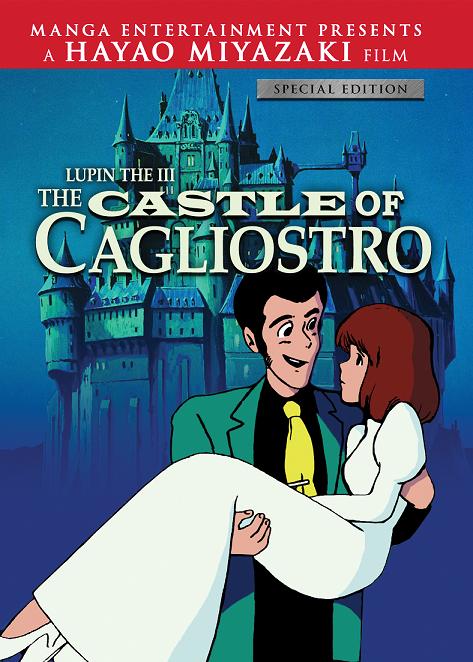
THE CASTLE OF CAGLIOSTRO (1979) new DVD special edition

THE CASTLE OF CAGLIOSTRO
(1979, Lupin III: Cagliostro No Shiro)
Region 1 NTSC DVD

(from Manga Entertainment)

Hiyao Miyazaki to the rescue


ANIME IN THE WEST
Like many western fans, my interest in anime really started with Akira. But the anime that followed in the west, were sold primarily on the basis of sex and violence. For a short time, this strategy worked, but such cynical marketing had a negative effect. It quashed the possibility of getting a wider audience for subsequent releases of anime feature films or TV.

Public consensus still misunderstands anime as being dominated by half-naked schoolgirls and extreme violence, whereas in reality it is as varied in tone as any fiction-based, live-action TV. Besdies anime for the very young, there’s sci-fi, horror, romcoms… all genres for all ages. The controversial stuff was only in a tiny minority of releases.

Akira did lead to an interest in what else Japanese animation had to offer, with a focus on other adult sci-fi anime series. But this didn’t rise above the level of ‘cult’ and enter into the mainstream. Subesequent releases like Ghost in the Shell and Final Fantasy: The Spirits Within didn't cause the same stir as Akira.

Recently, some of the most intricate, ground-breaking animated movies in the world have had terribly half-hearted cinema releases, and been overlooked by critics. Astonishing films like Appleseed, Innocence (Ghost in the Shell 2) and ironically Steam Boy (director Katsuhiro Otomo's first feature since Akira) have snuck out into cinemas without finding an audience. These are titles with challenging plots, predictive sci-fi, hugely entertaining action... that are often dumped straight onto video.

Admittedly, the west has got a lot of readjusting to do – in Japan the adult consumption of manga has removed the stigma of ‘cartoons’. At least we’re finally appreciating the films of Hiyao Miyazaki. Princess Mononoke, Spirited Away and Howl’s Moving Castle herald a new wave of anime that has found a mainstream audience. This has lead to a demand for the twenty year back-catalogue of animated films from Studio Ghibli. Indeed, in France, these older films are getting re-releases in the cinema, not just on DVD.


THE CASTLE OF CAGLIOSTRO
So here I am still working my way through Miyazaki’s older films – having been introduced to his work with the theatrical release of Princess Mononoke. The latest I’ve seen is The Castle of Cagliostro. A 1979 feature film made at the time when Miyazaki was moving from TV work into cinema.

For copyright reasons, it’s been obscured that the film is all about the characters from the long-running Lupin III series of manga and TV. Arch-criminal Lupin, is the grandson of Arsene Lupin of French literature, here embarking on an epic adventure with his usual accomplices, somewhere in Central Europe.

After raiding a casino, Lupin notices that rather than being incredibly rich, he merely has a carful of counterfeit cash. He decides to pursue the fake notes back to their source – the royal castle in a small duchy - Cagliostro. As he gets near, he encounters a very young bride, trying to escape the castle, and his mission suddenly becomes far more complicated and dangerous than he had ever imagined…

Even in 1979, Miyazaki has to walk a precarious tightrope between providing a family film, and being faithful to the bawdy violence of the original manga, which portrayed Lupin as a ‘ladykiller’. While there’s action, a little slapstick and some exaggerated face-pulling to please younger viewers, there’s also a little blood, lots of gun-play, a little swearing, an under-age wedding, and several characters smoking like chimneys! Like Spielberg begging the censors not to cut Jaws and Indiana Jones movies, Miyazaki has to push boundaries to keep both audiences happy.

Miyazaki and his crew also try to achieve the best animation they can. They never shy away from ambitious 'camera moves' – like point-of-view shots, or complicated tracking shots. Complex three-dimensional objects like the auto-gyro or the workings of the clock-tower would have to have been realised without the aid of computers. The results is so successful, that it's hard to guess what year it was made, the animation looks so advanced.

But the production doesn’t show off, it all serves the story. One that could equally have worked as live-action, and has been ‘laid out’ as if it were. The famous car chase is shot as if they had photographed from 'camera cars'. It’s an exciting scene, as well as funny for using tiny little French cars, rather than flashy sports models.

I was also very impressed with the the endless inventiveness in the castle buildings’ many hidden secrets. Lupin has to face underwater traps, impossible wall-climbs, crowds of ninja assassins and high tech defences. The look of the various background layouts also indicate that Miyazaki’s team must have at least done extensive picture research of Central Europe - I wouldn't be surprised that they actually visited.

Miyazaki only includes a little bit of politics in the story, and there’s very little subtext like his usual scripts. Cagliostro is a purely entertaining adventure with plenty of humour.

Also, despite an all human cast, the style of character animation is not his usual naturalistic approach, but uses exaggerated 'cartoony' actions in keeping with the humour, and in line with the manga characterisations.


THE NEW DVD SPECIAL EDITION
This Manga Entertainment DVD release is notable for a spotless transfer that makes the film look brand new. Only the occasional original animation faults (like a frame shift, or slightly rough-edged drawings), date the animation at all. The picture aspect is 1.85 anamorphic, like it’s original presentation.

There’s a 5.1 mix for the english soundtrack, as well as the original Japanese audio (which is what I listened to). The english subtitles take great pains to translate the jokes and the slang. My only criticism of the set is that the Japanese mix isn’t 5.1 and that the cover art doesn’t do the beautiful and intricate art of the animation any favours at all – it makes it look like a soppy romance, rather than a gothic James Bond adventure.

This is a flipper disc with the entire film on one side and special features on the other. There are storyboards, and an interview with the animation director, (who also worked on the first Lupin III TV anime), and a trailer for the original Japanese movie release.

If only we’d had Miyazaki films in the west 25 years ago, when they were released in Japan. He’d have given anime a good name!

Do you want to know more?

There are many Lupin III manga and anime, including more feature films. It's another huge Japanese subject to investigate...


Of course the original 'Arsene Lupin' is an anti-hero of French literature, and has been filmed many times though the years, including a big-budget French action film in 2004.

The real-life Cagliostro family of Italy is a tale in itself...

Wikipedia is a good place to start…


- - - - - - -

September 30, 2006

THE HAUNTED HOUSE OF HORROR (1969) a lost classic


THE HAUNTED HOUSE OF HORROR
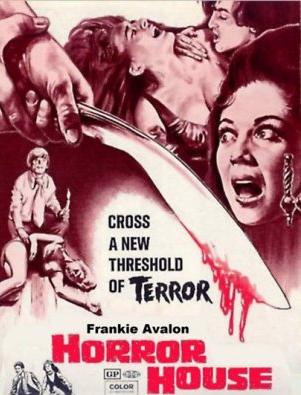
aka HORROR HOUSE (US title)
(1969, UK)
(UPDATED March 2012, for new UK DVD release)
"They thought it would be fun to be frightened!"
I keep revisiting The Haunted House of Horror, partly out of nostalgia having watched it late at night on TV over three decades, partly because I'm sure it would have been a classic, if only it had been left alone. I've always felt that there was something different about the film, particularly the way the slasher plot is subverted in a way that hasn't been seen since. I can't spoil it for the uninitiated though...

Because of a huge script rewrite and reshoot halfway through production, we've lost what could have been a key horror film of the sixties. An intricate, dark, ground-breaking story that has almost been reduced to a silly teen slasher. As it stands, it's still ten years ahead of Halloween and Friday the 13th, with murder scenes far bloodier than either.

But the movie also endures because the original intent of the script can still be enjoyed, if the viewer endures a few lesser scenes. Of course, this game (which I've been playing for years) is now made easy by the director's commentary track which now pinpoints what was his (certainly every scene with Avalon and Haworth), and amusingly explains why.
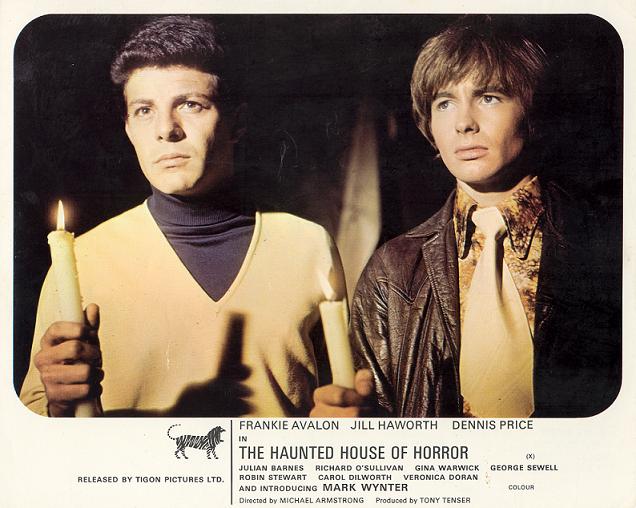
Frankie Avalon and Julian Barnes firmly holding their candles

It all starts in Carnaby Street, the centrepoint of swinging sixties fashion in London's Soho (shot on location there and in Liberty's famous store round the corner). Unlike the Austin Powers depiction, it was a fairly ordinary row of clothes shops, the fab gear inside made the place famous. Here we meet Gary and Dorothy on a coffee break. They're planning on going to a party. But Gary gets drunk down the pub first. He recovers in time to join his groovy gang of friends and split the party to seek thrills at an old mansion which has been abandoned since a gruesome murder.


"Let's have a seance." They do. They get scared. They split up and scour the old dark house by candlelight. One of them gets hacked up by a very large knife. The party's over... But wait a minute, since the house was all closed off and bolted from the inside, that must mean that one of them is the killer! Leader of the gang, Chris decides to avoid trouble with the police and solve the mystery himself, by getting the gang to agree to lie about the murder and hides the body...


A stagey publicity still - Avalon kneels over a red herring

I can't recommend this film without a few qualifiers. Away from the 'haunted house' itself, there's too little murderous atmosphere or intrigue. The funky fashions and language still amuse, but there's some dull police procedural stuff, them lagging far behind the audience.

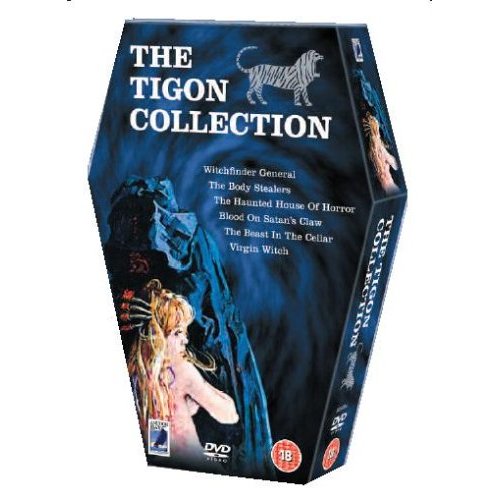
In the Tigon DVD boxset, there's a director's commentary track that helps explain - for instance, one of the central gang members was bumped up from bit-part to co-star when David Bowie ducked out of the project. Bowie would have played Richard, a character that Julian Barnes annoyingly plays as naive, but still catches an essence of ambiguous sexuality that the part originally required.
Similarly, Gina Warwick as Sylvia had her part totally changed, with a completely trumped up subplot about her affair with a married man (actor George Sewell on a break from TV's UFO) that dominates the movie.


Thankfully, there are more experienced actors such as Frankie Avalon - here trying to get back to serious roles as Chris, a rich kid playing down a drugs charge. Quite a change from his endless Beach Party movies and way before his hit cameo in Grease.


Playing his bitchy girlfriend is the haunted-looking Jill Haworth, who had a big break in Hollywood (as an Otto Preminger 'discovery' in Exodus) that fizzled out and a big break on Broadway (as the original Sally Bowles in Cabaret!) that fizzled out. Over-qualified, but always giving her best, Haworth usually makes these Brit-horrors the only reason to watch. It! (from 1967 - a latterday take on The Golem legend, also starring Roddy McDowall), and the truly awful The Mutations (1974 - a Freaks update with Tom Baker and Donald Pleasence). But I recommend her similarly themed, trapped teens (in a lighthouse) slasher Tower of Evil (1972).

Anyhow, despite the shortcomings, it's the atmosphere inside the house that still grabs me, and here I enjoy imagining the film it might have been. Two pivotal murders in particular are still shocking today, and it's no surprise to learn that they were the bloodiest ever seen up to that point. (The director figures this was because the chief censor at the BBFC, John Trevelyan, was a friend of his!)


But also, there's a genuinely unsettling hysteria that overtakes the characters when they're in the house. For a few delirious scenes, it evokes a ghastly sense of the killer's madness, and what it would be like to be trapped in a house with a nutter with a knife. This is particularly helped by the soundtrack kicking in with frantic, echoing violins...


Making a debut on DVD from Anchor Bay (in the boxset below), the film has been remastered from one of the brighter prints. The VHS version, and recent TV showings have been from a ridiculously darkened print, where you could barely see anything at all in the night scenes. This DVD makes the film look almost brand new, almost too bright! Considering the original title was The Dark, we now see characters stumbling around in well-lit sets pretending not to see where they've dropped their candles.


In 2005, Anchor Bay's Tigon Collection DVD boxset presented the film in non-anamorphic widescreen 1.66, with a marvellous commentary track from the writer/director Michael Armstrong who gets to set the record straight as to which scenes he shot before the film was wrested away from him by the producer! Armstrong (who went on to direct the even more brutal Mark of the Devil) has his knives out for AIP producer Louis 'Deke' Heyward and director Gerry Levy, who shot the extra scenes that subverted the original script.


Armstrong, in surprisingly good humour, constantly has to point out scenes where "none of this is mine". It was his first film as director and he'd set up an intricate script with complex, realistic characters and a gay character pivotal to the relationships within the gang. This plotline is now only visible as sub-text and should have elevated the film to that of a controversial thriller. 


Thankfully that same commentary has made it over onto this new UK DVD (released November 2011), the movie finally presented as a stand-alone release, further improved by a 16:9 widescreen anamorphic presentation. This reveals more picture information at the sides while using the same source, with all the bloody scenes of the Tigon boxset version included (I checked this with a side-by-side comparison). Armstrong's original script of The Dark is also included on the disc as a pdf file. On presentation alone, this Odeon Entertainment DVD is the definitive release for me.
September 29, 2006

Robby the Robot, Airwolf, Stormtrooper... collectibles

COLLECTIBLES - A NECESSARY VICE


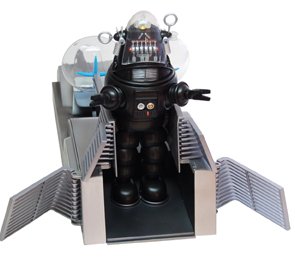
This limited edition set features a jointed, posable die-cast metal Robby the Robot (also available seperately), with his transporter sled from the sci-fi classic Forbidden Planet (1956). Made by X-Plus of Japan, it's available from Comet Miniatures. See the link for more angles of the set.

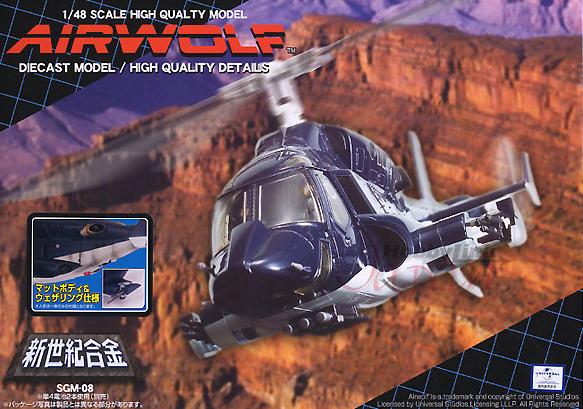
A 1/48 scale die-cast Airwolf helicopter (from Aoshima) seen in the 1984 TV series - it has a revolving blade and all the external accessories seen in the series More details and pack shots from HobbyLink Japan here, also available from Comet Miniatures.


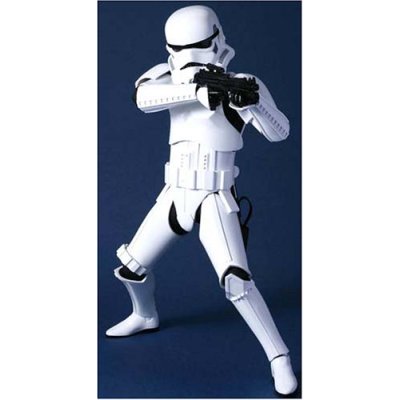
Not cheap, but highly desirable, is this super-realistic, 12 inch high, posable action figure of an original Star Wars Stormtrooper- it looks fantastic. Made by Medicom in Japan. More details on
YesAsia.

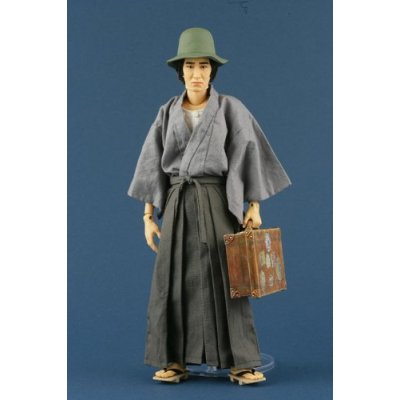
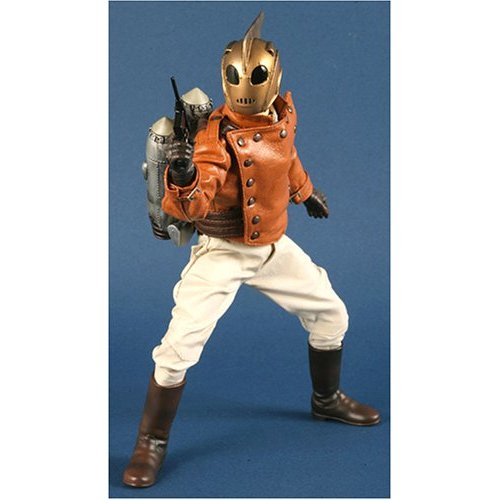
I've also picked out these more unusual figures from the same
Real Action Heroes range from Medicom to show you...


Saya the vampire slayer, from anime Blood+


Ginko, from the anime Mushishi


The Rocketeer (1991)


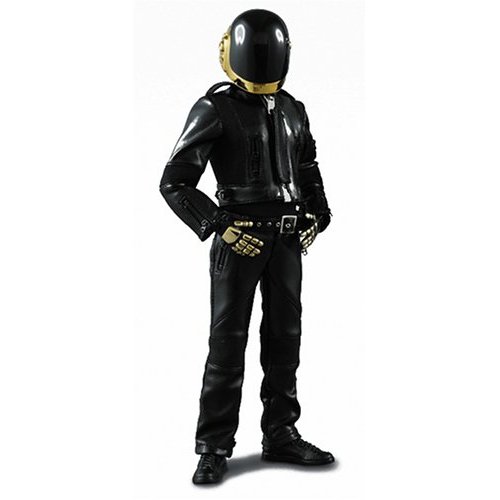
Lastly, even a range of characters from the new movie from Daft Punk, Electroma are available now as Medicom figures - it's only just been shown at the Venice Film Festival! More from the range at YesAsia here.

A still from Daft Punk's Electroma

- - - - - - -