September 16, 2006

THE X FROM OUTER SPACE (1967) Kaiju of the week

THE X FROM OUTER SPACE
(Japan, 1967, Uchu daikaiju Girara)

"Guilala is heading straight for Tokyo!"

If you’ve ever heard of a monster movie featuring a giant space chicken – this is it… but it’s not a chicken. Guilala (or Girara) may have a beak, but that’s the only chickeny thing about it. The plot is more of a riff on The Blob or The Quatermass Xperiment – some gooey stuff from outer space is brought back to earth and becomes a monster…
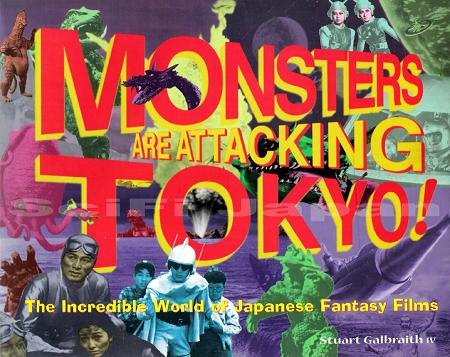


I've just reread Stuart Galbraith IV's wonderful Monsters Are Attacking Tokyo, which contextualises monster movies within the Japanese film industry through extensive interviews with the people who made and starred in them. In the late sixties, every rivalling Japanese film studio tried to muscle in on the success of Toho’s Godzilla series. Daiei Studio had Gamera and Shochiku came up with Guilala, exported to the US as The X From Outer Space.

For years, this film has been badly served by the American video release, dubbed into English on a cramped pan-and-scan VHS, when the film was originally framed 2.35.

On a trip to Mars, spaceship AAB Gamma meets a UFO that freezes their controls and plants some cosmic goo on their hull. On their return to Earth, the goo escapes and heads straight for Tokyo (surprise, surprise). How can they stop it?

The story is a sort of hybrid between Godzilla and The Green Slime, but shows a little originality towards the climax, when the scientists try and lure Guilala away from the city by loading a nuclear power source onto the back of a jeep (but please don’t try that at home). There’s not many car chases like that one.

The monster suit’s not bad, the effects aren’t totally bad, the acting’s not bad. The film is silly retro fun for monster fans.

This sixties view of space travel portrays it as an easy job with an endless round of dancing and drinking. Problem on the trip to Mars? Hey – let’s stop off at the Moonbase, let’s dance! The monster’s escaped? Let’s hit a bar! Light on drama, the requisite love triangle is devoid of sparks and the earnest cast aren’t given much to do except run around. The attempts at convincing techno-babble are hilariously awful.

Trivia fans will spot that the launch sequence of AAB Gamma includes a steal from You Only Live Twice, with a launch vehicle that releases the ship from a nose cone that opens like a flower. There’s also a scene where Guilala’s goo eats through the floor of the research base – very Alien.
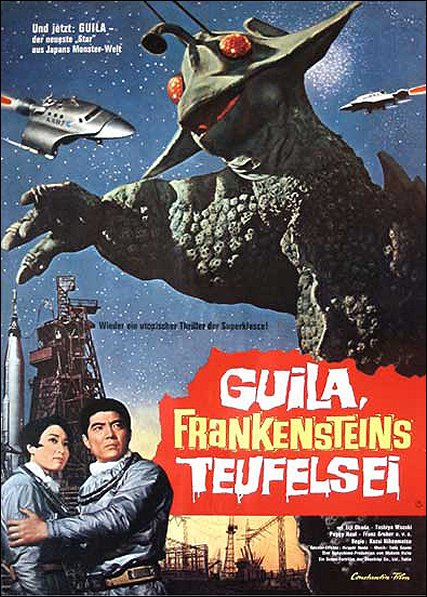

The design work is a little bizarre – AAB Gamma doesn’t look like it could fly in Earth’s atmosphere or space, the offending UFO looks like an internally lit homebaked lemon meringue pie, and Guilala has lumpy arms, big floppy feet and deelybopper antenna.

A serious drawback to your enjoyment could be the awful, repetitive, jaunty music that also undermines the few dramatic moments.

The modelwork is OK, particularly the impressive rocket base and the Moonbase, but the toy tanks and planes look way too small to have ever convinced anyone – how’s your suspension of disbelief? Guilala is full of tricks and looks better in his night-time attacks, when his glowing eyes and fireballs look much more effective.


ON VIDEO:
The Japanese and US edits of the film are roughly the same, but I’d urge you to track down a widescreen version.
This Japanese DVD (pictured above) also has an optional English audio track on it, but no subtitles. The English dub was made for the original movie release, and half the cast are talking English anyway, so it's not blasphemy to not watch it in Japanese!
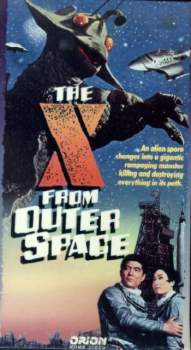
As a last resort, there’s always the US VHS (pictured), but you can rarely see what’s going on. Both the VHS and DVD are out of print, so good hunting!

- - - - - - -

September 13, 2006

THE DRIFTING CLASSROOM (1987) The manga's miserable movie adaption

THE DRIFTING CLASSROOM (Japan, 1987, Hyoryu kyoshitsu)
NTSC VHS (from Emotion Video)

As for you Troy Donahue...

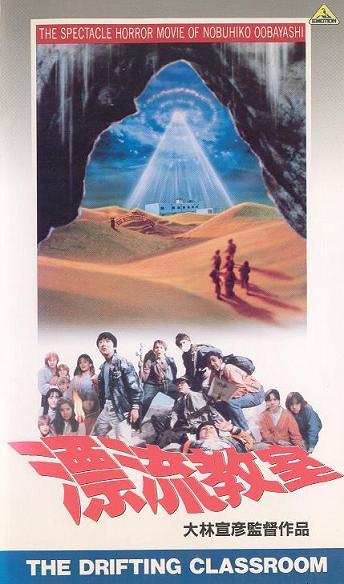
I was looking forward to this too. As Kazuo Umezu's original manga epic from 1972 is finally being published in an English translation, I wondered why this 1987 film adaption wasn’t on DVD, even in Japan. But having seen it on a Japanese VHS (pictured above), now I know why.

I can’t begin to tell you how awful this film is. It makes Jaws III look good.

If Ed Wood had directed Stargate as a horror film, with a child cast, the result would be something like The Drifting Classroom...

THE PLOT
The film begins with a scene full of what must be the most disrespectful behaviour by a teenager shown to his mother. Young Sho's bizarre misbehaviour warrants a spectacular clout from Mum, and he slouches off to school, not realising he's about to be separated from her for a very long time.

His High School is 'Kobe International', which means that the cast is full of English-speaking students and teachers. (This isn’t from the manga, it’sjust an ordinary Japanese High School).

Then (possibly) a tornado approaches the school and whisks the whole school building away. But unlike Dorothy, we don't arrive in Oz but in a strange and hostile place far away, in the middle of a sandstorm.

All that’s left is a crater in the ground (reminiscent of The Outer Limits classic episode 'A Feasibility Study'). Sho's mother is distraught, but in the weeks that follow she find clues that their children may still be OK.

Meanwhile the school seems to be in a different dimension, possibly in another timeframe. At first they assume that a quake or a nuke has hit them. Besides food and water shortages, the children have to face both madness and monsters if they are to survive…

THE FILM:
There are more than a couple of problems with the film - the story, the dialogue, most of the cast and the special effects…

The film is Japanese but half of the dialogue is in English. The cast are mostly bilingual children who are certainly not actors - they say the lines, sometimes inaudibly, but don’t act them. The few Japanese actors in the cast are very good, but have to say half their lines in cracked english.

The many secondary characters are given one trait each (one is always hungry, one has a moneybox, one missed a football match etc) and these motivations are their only motivation throughout the next two hours of screen time.

The murky print and murky transfer on the Japanese VHS that I watched rendered much of the action indecipherable. When the building ‘takes off’, the kids are screaming and trying to avoid a flood of sand pouring through the building, in a sequence that goes on for ages – the actors must have filmed in very uncomfortable conditions. But with the camera shaking, and optical flashing effects blinding me, I’d no clue what the hell was going on.

The special effects are mostly poor. Even basic compositing of characters against the model of the ‘time desert’ is often diabolically done - the camera zooms in on the foreground characters but the background doesn’t move! The matte paintings are very obvious throughout. Rarely do we think we’re in a desert. It’s ages before we get establishing shots to make us think we’re even in a desert.

Stranger still, for a film full of kids, there’s an awfully high ‘body-count’. The infantile schoolroom dialogue is completely at odds with the horrific death scenes – there’s a dead teacher with sand pouring out of her mouth, a maniac with a knife, kids on fire… But the survivors always seem to shrug it off and not mention it again.

This bizarre schizophrenic approach is at its most obviously awful near the end of the film, when the kids sing a truly horrendous musical medley of ‘The Camptown Ladies’, ‘Swanee River’ and ‘When the Saints Come Marching In’… with a trombone accompaniment.

Troy Donahue, near the end of the film and near the end of his career, ends up talking to himself with silly dialogue like “who am I?”.

The closing line of the film defies taste - one of the young kids says to the other, "I want to have your babies". I wonder if it was translated properly for the Japanese audience?

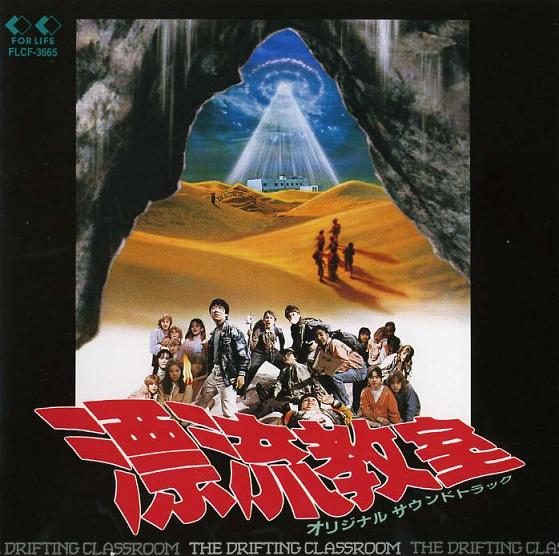
The only saving grace is the grand, memorable score from Joe Hisaishi (CD cover pictured above), who'd already started composing classic scores for the animated films of Hiyao Miyazaki.

The VHS was presented 1.85 widescreen (presumably to show the Japanese subtitles for the many English language scenes).

SUMMARY
Kazuo Umezu’s classic plot provided plenty of potential - but condensing his story into two (long) hours has disjointed the narrative. This film adaption failed to gauge the tone of the manga, where juvenile characters face up to the horror of a primitive alien existence.

Umezu's epic series is betrayed here, so please do the right thing, read the newly translated manga (Volume 1 pictured below) and don't let your curiosity encourage the exhumation of this schizoid movie oddity.

Volume 1 of the manga is out now, published by VIZ Media. In the back (er, front) there’s an excellent illustrated overview of his most famous stories. An excellent guide to the best of Kazz to come.

- - - - - - -
VAMPIRE DOLL (1970) an effective Japanese chiller

VAMPIRE DOLL
(Japan, 1970, Yureiyashiki no Kyofu: Chi O Suu Ningyoo)
a.k.a. LEGACY OF DRACULA, BLOODSUCKING DOLL


Region 2 PAL DVD (from Artsmagic)

If you go down to the woods tonight...


Presumably inspired by the success of Hammer's many Dracula sequels, this is the best of the Japanese 'Dracula' trilogy, even though Dracula isn't in it. In fact, it's the best Japanese vampire film I've seen.

A young man visits an isolated mansion in the country to reunite with Yuko, the love of his life. But her mother tells him that she's recently died in a car crash. As he pays his respects at her grave near the house, he's attacked by a shrouded figure...

Next day, Keiko and her boyfriend come to the mansion, looking for her brother. They discover (gasp!) a bloodstained cuff-link in the family cemetary. They decide to investigate further...

With a strong cast, especially Yoko Minakaze as the mother, the film sustains a creepy atmosphere, helped by an effectively modern sound mix to put you on edge. The constant use of harpsichord music is a little annoying, and may remind you more of The Addams Family.

Though the story starts off with the familiar set-up of a missing relative, there's sufficient surprises and plot twists in store. It packs in gory scenes as well creepy ones. It also beats Hammer to the modern-dress vampire tale.

I think the film succeeds because it's grounded more in Japanese legend, with its shrouded vengeful spirit, rather than trying to adapt to the Dracula mythos of the west.

The many different titles sometimes make this film hard to locate (only use Vampire Doll on
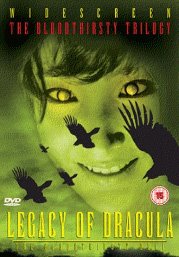
IMDB for instance), but it was released on DVD a few years ago as Legacy of Dracula in the UK, under the banner 'The Bloodthirsty Trilogy' along with Evil of Dracula (1974) and Lake of Dracula (1971), from the same director, Michio Yamamoto.

The handsomely composed 2.35 widescreen is well presented, but the DVD lets down the image by being a somewhat smeary transfer, as well as a standards conversion, but this was only occasionally distracting. I would like to see a better transfer of this in the future though.

MARINE BOY (1969) - UK TV's first anime

 
MARINE BOY
(1966, Japan, TV)
(1969, UK version, TV)
 
(UPDATED June 20th, 2013 - Season 1 DVD boxset news)

In the 1960s, while the US was already enjoying Gigantor, Speed Racer and Astro Boy on TV, the UK didn't get any anime on TV until 1969, when Marine Boy was shown on the BBC in Children's Hour (before the evening news).

I enjoyed it then, already thinking that the animation was a little jerky - my first exposure to the 8 moves per second that I now understand to be the standard rate for Japanese TV animation.

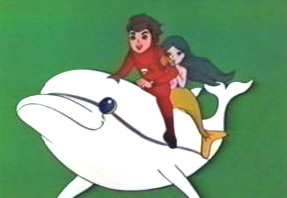
Marine Boy worked with the world Ocean Patrol to protect the human race from danger and catastrophe from under the seas. He did this with his underwater jet boots and boomerang, while chewing oxy-gum, aided by his trusty dolphin sidekick Splasher. Occasionally a mermaid, Neptina, would have to bail him out.


I enjoyed it for the sci-fi look, particularly the flying sub "P-1", and of course hoped that there'd be sea monsters, which often only appeared in the title sequence.


The theme tune used on the BBC showings that I remember is a catchy, twangy instrumental, not the annoying song that was used in the States.

The UK version of the theme tune is here on YouTube.

Details of Marine Boy's complex transition from Japanese TV here on Glen Johnson's Anime page.
 

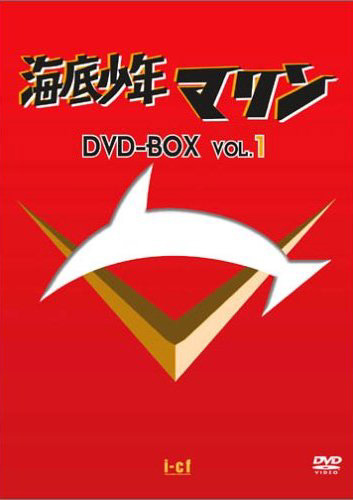
In all, there were 78 (25 minute) episodes made in English and in colour). The series was first released on DVD in three Japanese boxsets, all without subtitles or English audio. An example of the cover art is pictured above.

Then a single episode surfaced (sorry) in this Saturday Morning Cartoons collection.


But now (June 2013) Warner Archives are releasing the first series as a DVD boxset. I let you know more when I get it!


September 10, 2006

New MAGIC ROUNDABOUT collectibles

While the DVDs for either the TV series or the movie are still nowhere on the horizon (see this article for details), there is at least a new release of high-quality figures from Robert Harrop figurines.


They are quite large (four or five inches long or tall), beautifully detailed and painted. The important factor for me is that it looks just like the original character. So far there are Dougal, Brian, Florence, Dylan, Zebedee and Ermintrude. Mr Rusty and Mr MacHenry will soon join the collection.


I got mine from the lovely people at Comet Miniatures in South London, who also keep me stocked up with Batmobiles, Thunderbirds toys from Japan, Clangers etc.

YOU CAN'T STOP THE MURDERS (2003) Aussie black comedy


YOU CANT STOP THE MURDERS (2003, Australia)
Region 4 PAL DVD (from Buena Vista)

The best ever line-dancing murder-mystery

A dead biker, a dead construction worker, a dead sailor… When a serial killer begins picking their victims based on the identities of the Village People, a local cop steps up to solve the murders before a big-shot detective from the city can steal all the glory.

Akmal Saleh and Gary Eck - co-writers and stars

With a very low budget, the film wisely emphasises the quirky characters, mainly played by Aussie comedians from TV and stand-up. Written by the three main actors, this started as a sketch and has blossomed into an intricate little world – the bizarre backwoods town of West Village.

There are subplots a-plenty, red herrings, a whodunnit, a love triangle... The humour veers between easy-going and surreal, but is sometimes hit-and-miss. The murders involve dismemberment, invoking an occasionally bizarre, queasy atmosphere out of line with the comedy.

Based on the title, I was also expecting wall-to-wall seventies disco music, but instead I got the simple, cheesy delights of line-dancing (which the main cop dabbles in). Together with the lack of disco music, there's hardly any gay jokes, again making it far less 'Village People' than I was expecting.


But I found the likeable, silly characters soon growing on me. As a ‘first film’, this will hopefully lead to bigger projects from the writer/stars, one of whom also directed! This qualifies as a ‘little film’, but one which could become personal favourite if you’re tickled by it.

This DVD was highlighted by one of my favourite online shops
Diabolik (based in the US), and I’m very glad they did. It’s available from them or from Australia. I use Atlantic DVDs to get my Aussie discs online.

- - - - - - -
September 08, 2006

JU-ON: THE GRUDGE (Japan, 2003) the curse continues


JU-ON: THE GRUDGE (2003, Japan)

Region 2 PAL DVD

Special Collector's Edition (from Premier Asia)

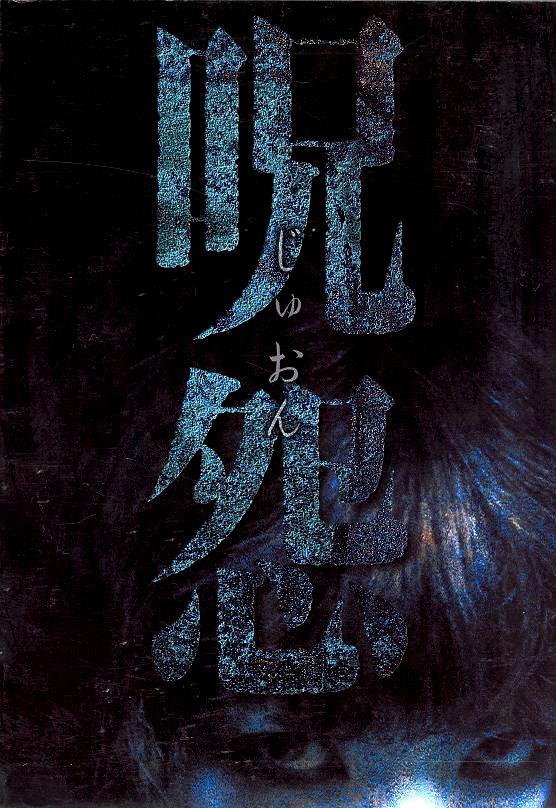
This DVD cover (above) is easily confused with the DVD of the American remake that starred Sarah Michelle Gellar. For more details about the entire Ju-on series click here.

The Director:
Takashi Shimizu is a relatively young director who delivers some of Japan's scariest films. The Ju-on films deliver Ring-type creepy scares. But instead of one huge scare in the finale, they deliver solid scares every 5 or 10 minutes.

This is no fluke. Shimizu has studied the classic horror movies of both East and West. In a revealing interview on this Region 2 edition, he name-checks his faves, like The Texas Chainsaw Massacre (1974) and The Evil Dead. But there are many other western horrors that he thought he could make scarier…

After the success of the first two Ju-on films
, made on video for the straight-to-video market in 2000, Shimizu directed the best of the Tomie sequels, Tomie: Rebirth. He was then able to expand his Ju-on story with a bigger budget, for a film that proved successful in Japanese cinemas, and beyond.


Ju-on: The Grudge (2003, Japan)
Rika, a care worker, is sent to that house where she finds a seemingly abandoned old woman surrounded by litter and dirty dishes. It’s the same story thread that the later American version had as its core.

The opening scenes serve the same purpose as the Teacher finding Toshio in the video version - we are introduced to the house where someone has been abandoned and apparently abused or neglected. Then we discover that there’s something else going on.

Rika is played by Megumi Okina, the wonderful leading actress from Red Shadow and St John’s Wort (both 2001, both recommended).

The second chapter of the film, is a flashback to the rest of the old woman's family – but here there is evidence of characters being possessed as well as cursed. This ghostly influence was hinted at in the video version (like when the third owner started dressing like Hayako and thinking of Toshio's painting as her own). But in the film version, the influence is more pronounced as characters start re-enacting the original crimes of the house.

A difference, between the video and film versions, is that whereas CGI was sparingly and subtly used in the video, the special effects are more obvious here - with hit-and-miss results. The physical effects of the ghost appearing (just an actor in white make-up) in unexpected places are what made me jump. The CGI is interesting, but not always frightening.

There's also a couple of unnecessary steals from the Ring films - like a pure 'black hair hanging' moment (successfully used throughout Ring 2) and even some distorted video faces.


Front cover of the Japanese brochure for the film

The same story structure of chapters separated by blackouts remains. A new development is that the timeline is even more fractured. Not only does the story move back and forwards in time, it turns on itself. For example in the house, one character sees his grown-up daughter at an age when he should be dead.

Sensibly, the film includes an attempt to challenge the Grudge, rather than hope that the police are actually going to solve the expanding mysteries of the case before they themselves succumb. There’s also some scenes for fans of schoolgirl zombies, and some wonderfully inventive scares.

One of my fave moments of pure Ju-on fear - the ‘jaw’ chapter from the video version - is missing from this film, (but it returned in the US remake). I think this is because the two films made on film are a continuation of the story, rather than a retelling. For the most part, the films back-reference the events in the videos accurately, and smoothly continue their story. There's some minor deviations, but these make repeated viewings all the more enjoyable.

Floor plan of the house from the Japanese Ju-on 2 brochure

For all its complex narrative, there's an unnecessary montage/explanation/flashback at the climax of the film to reiterate what the Grudge is.

The closing shots of empty streets, (a possible nod to Kairo, from 2001), hints that logically the Grudge is going to keeping on spreading. The unfortunate Kayako seems to have initiated a particularly virulent form of revenge. Again, this is very much an influence of Ring.

Altogether it's an impressive gallery of horrors, more effectively staged than the US remake with an equally likeable cast. It spawned a Japanese sequel (hopefully two) and at least 2 US remakes. An awesome tale of terror written and directed by one guy...

The excellent UK 2-dvd set has a host of extras that further explore Shimizu’s inspirations in a half-hour interview. There are also interviews with the cast, behind the scenes footage, an alternate ending, deleted scenes and trailers. All interesting stuff for fans of Japanese horror.


Lastly the music superbly underlines the fear and unease, but the traditional pop tune over the end credits isn’t a patch on the John Carpenter-esque electronic theme that closed the video versions. This theme and the best music from all four films are on a CD soundtrack (cover artwork above). It’s still available here on CD Japan’s website, which I’ve ordered from many times.

September 03, 2006

NEGADON - THE MONSTER FROM MARS (2005) out on DVD

NEGADON - THE MONSTER FROM MARS
(Japan, 2005, Wakusei Daikaiju Negadon)
Region 1 US DVD (from Central Park Media)

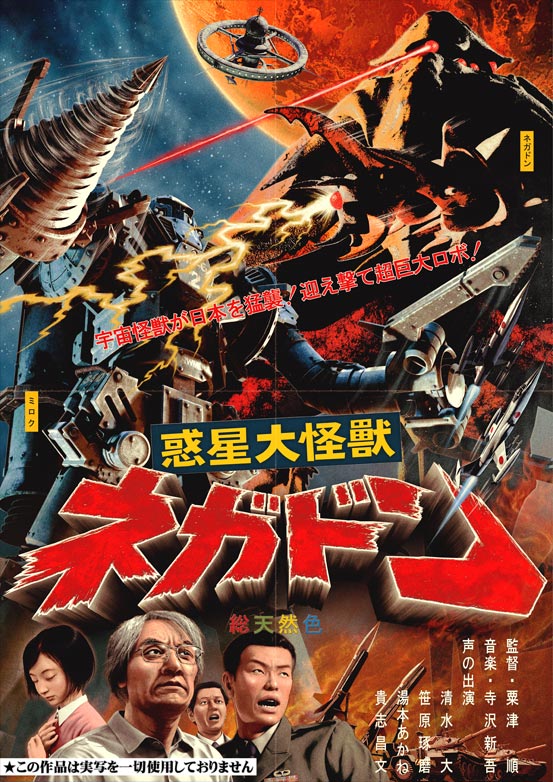
A beautiful short film, totally computer-generated, and animated by basically one man. It’s a homage to sixties ‘kaiju’ monster movies.

A giant monster from Mars is awakened by human’s terraforming the planet. It comes to Earth, specifically Tokyo, to wreak havoc. The Army and Air Force can’t bring it down, maybe an old scientist’s experimental robot can do the trick...

The visual achievement of Negadon is the constant impression that you’re looking at a shot from an old film – over two years in the making, director Jun Awazu has meticulously created a new story for his favourite movie genre.

The monster’s design is very original, and full marks to the script for not letting the characters refer to it by name – how would they know?

Besides the monster and giant robot, it’s also an interesting watch because of the time-travelling aesthetic! A CGI rendering of a sixties look is amazingly successful, with an obsessive attention to detail.


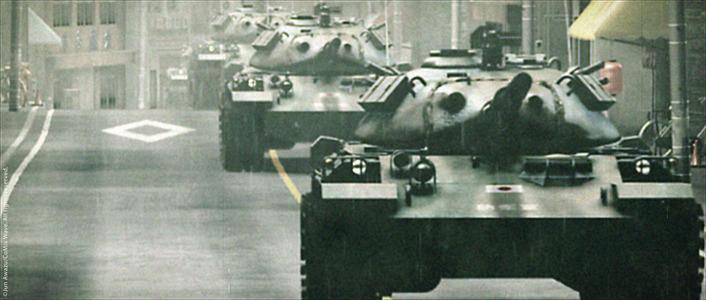
Like Japanese sci-fi films used to be, the widescreen is 2.35 extra-wide, outer space is royal blue and spaceships look like they run on wires.

The frame of reference is at times inconsistent though – some shots try to be from the sixties, other shots (like the tanks and jets) are obviously based on recent real-life footage. In the sixties, most of the shots of military hardware would have been done with models.

My other quibble is with the soundtrack. Although the pictures have been meticulously aged with faded colour and film scratches, the soundtrack is crisp and clear, and uses recent sound effects – it never sounds like the older films, and the voiceover and dialogue sounds brand new. Also the music is, annoyingly, synthesised, when it should have had some sort of orchestra, but I guess that this was a problem of time or budget.

Unlike the sixties, the mood of the piece is very downbeat, and less a celebration of the optimism of the sixties and seventies films, more of a reflection of the more anguished mood of the original Godzilla, or maybe it’s the mood of the present casting a shadow over the film.

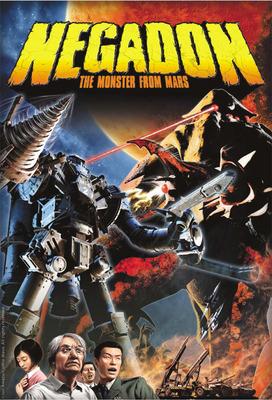
The retro poster for NEGADON

In any case, it’s quite an achievement, a modern treat for lovers of giant monsters and 'old school' Japanese sci-fi films.

I'll warn you that the running time is a brief 25 minutes, but the quality of the film is outstanding – monster movies would have had the same amount of special effects and padded it out with inane subplots anyway.

The DVD (cover art at top) compensates with a long interview with the director, an interesting look at the different elements in half a dozen key shots, as well as trailers and two of the director's shorter shorts that led up to this project.


Do you want to know more?

Here's a link to the film's English website.

August 30, 2006

LADY VAMPIRE (1959) Confused Japanese vampire


LADY VAMPIRE (1959, Japan, Onna-Kyuketsuki)

The lady is a vamp!

Who told us that Japanese movies were sexier and gorier than Hammer films? Here's a Japanese horror from the year after Hammer's classic Horror of Dracula that's neither.

It's more like a tame lesson in what was naughty in the fifties in Japan. Artists models wearing baggy swimwear. Young ladies naked backs. Whipping. OK that's naughty for the fifties, now it's commonplace.


It's in black and white, and dramatically framed in Tohoscope 2.35. There’s a few actresses with heaving busoms, a confused mythos, and not much action. It's more of a dry run for Dark Shadows rather than a homage to Hammer.

It's also an early example of a vampire in a modern-day setting - instead of getting Van Helsing, they set the police on him, but the result isn't a patch on the 'police v vampire' action that you get in The Night Stalker movie or House of Dark Shadows (both from director Dan Curtis).

I've learnt that in Japan, bad guys wear shades and bad women wear big earrings and too much make-up. Our vampire villain (not the title character) turns into a vampire when the moon is full (surely some mistake) and bites to kill rather than to drink. He has a mute dwarf sidekick, an old ghostly witch sidekick, and a bald muscleman sidekick. None of them eat flies and they're all pretty useless at their jobs.

He’s gots a whip, and a fencing foil, pre-dating the swordsman/vampire of Hammer's Captain Kronos, Vampire Hunter, but here the fight scenes are more 'school play' than excitement.

The gently Freudian torture scene where Drac prods a lady victim with a candelabra stand, can only prove that L.S.D. must have reached Japan in the late fifties. Aptly, this film was made the same year as Ed Wood's Night of the Ghouls, about the most positive comparison I can make.

The director (Nobuo Nakagawa) did a much better with The Ghost of Yotsuya the same year, but
here appears to have run out of money. The final fight scene takes place only in a wide master shot, with much of the struggle happening off-screen!

If you really must see this, it is at least available in 2.35 widescreen with english subtitles, from Satsuma, for instance.

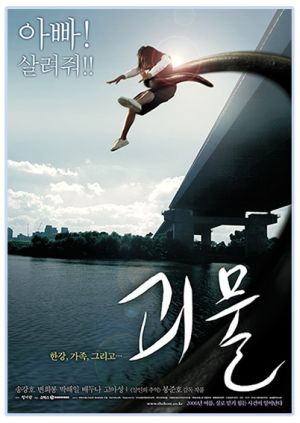
THE HOST (2006) film of the year, from Korea


THE HOST (South Korea, aka Gwoemul)

The Host with the most (box-office takings in Korea)

From the very first Host posters, I’ve been wanting to see this. Thankfully on Monday, Frightfest in London closed their annual horror and fantasy film festival with it. I don't want to spoil the plot - this has only been released in Korea so far (where it’s their most successful film ever – outselling the war epic Brotherhood and topping even The King and the Clown). I’m hoping that it's success will spread, and many of you will soon get a chance to see it.

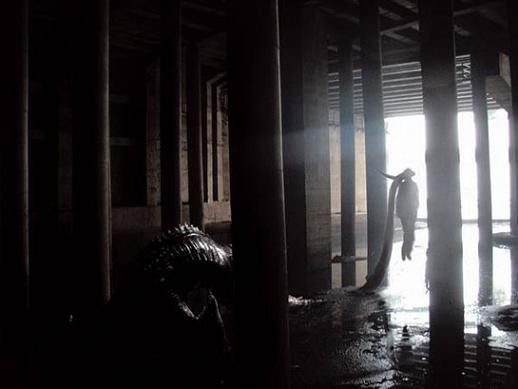
The producer’s have taken great pains not to give away too much of the story and to restrict spoiler pictures of the monster being released (especially when you really need to see it move). It’s much more of a pleasure when the story comes as a surprise.

Yes, The Host is a monster movie, but you can’t pigeonhole Jaws like that either. It’s a lure to draw us in to see a fine Korean thriller/black comedy/drama… with a monster. I’ll go out on a severed limb and compare this film favourably to Jaws – in fact in my mind, it’s second only to Jaws. You really get involved with the characters before the monster kicks in. (Don’t worry you don’t have long to wait.) The monster isn’t gigantic, it doesn’t knock over buildings, it’s just large enough to knock over cars, trucks, people…

In fact, imagine if you will, the horror of a large shark that can travel on land… (and I thought that Junji Ito’s Gyo manga was unfilmable!)

I’ll say no more, even though I’m busting to give this a full review. I’ll just say this was very, very entertaining, and it didn’t pull it’s punches. It avoids many cliches of the average Hollywood blockbuster.

It is instead a very Korean blockbuster. The story also manages to say much about modern-day Korea, and many of it’s society’s strengths and foibles, which is probably why the film is so popular in the cinema there.

The film also serves an international audience and I can’t wait to see it again. Hopefully in a cinema in Britain, before it joins the inevitable DVD shelf. But maybe I’ll hold out for an HD release… and look forward to seeing The Host all over again.

I hoped I was onto a winner when I first saw the cast, they’re becoming very familiar faces to me. Hie-bong Byeon (from the both of the director’s previous films) excels as the father of the central dysfunctional family. Kang-ho Song (star of Sympathy for Mr Vengeance and Memories of Murder) plays a similar role to his turn in The Quiet Family, as his lazy, slightly stupid son.

Du-na Bae (aka Bae Doo Na, from Tube, Ring Virus, Sympathy for Mr Vengeance) as the daughter. The likeable Hae-il Park (as the younger son, also from Memories of Murder) and memorable newcomer Ah-sung Ko (as the grand-daughter) complete the family.

Full marks to director Joon-Ho Bong (Memories of Murder) for also getting strong actors to play the few Westerners’ roles. I really wasn’t ready for Scott Wilson to appear in the opening scene – a bolt from the past from cult movie The Ninth Configuration and Exorcist III (both directed by the writer of The Exorcist, William Peter Blatty).


The Host
.
Do you want to know more?

Here’s a heap of trailers on MovieBox or if you don’t want choices, here's the best trailer so far from Japan, on the omniverous Twitch Film site.

Monster movies from Korea have been pretty poor in the past, like the awful Reptilian, (a remake of the awful Yongary). From the trailers, I thought that forthcoming giant dragon/serpent D-War was going to be a similar approach, but a marked improvement. But after a very long post-production, I think D-War has waited too long for it’s release (later this year), and will now only serve as an anti-climax after The Host, adhering as it does to the traditional gigantic monster movie formula (Army tanks vs building-destroying monster). But we’ll just have to wait and see.

Much as I love the gigantic monster genre, epitomised by Japan’s Godzilla movies, The Host heralds the near-future of monster movies. Much like the Gamera trilogy gave the genre a kick up the backside in the nineties.

Please look forward (and behind you) for The Host.


August 28, 2006

JU-ON THE CURSE 1 and 2 (2000) The first Grudge movies


JU-ON: THE CURSE
JU-ON: THE CURSE 2
(Japan, 2000)

I can't resist revisiting the Ju-on series, and it seems to grow a little each time I do...

So far there are...
JU-ON: THE CURSE (Japan 2000, made on video)
JU-ON: THE CURSE 2 (Japan 2000, made on video)
JU-ON: THE GRUDGE (Japan 2003, made on film)
JU-ON: THE GRUDGE 2 (Japan 2003, made on film)
THE GRUDGE (USA 2004 remake)
THE GRUDGE 2 (USA 2006 sequel)

Yes six movies, with an alternate director's cut of The Grudge (2004) now on DVD as well. These films are definitely not Google-friendly.

THE SHORT FILMS
It’s a testament to his skills that the director Takashi Shimizu can generate scares in under four minutes flat. His two short films, made on video, were the very first to feature Ju-on characters. These were two segments in a TV series, Gakko no Kaidan G (School Ghost Stories G) back in 1998.

Set around a school, they can be considered part of the Grudge timeline, and are even cross-referenced in the first video film. Titled 'Katasumi' and '4444444444', you can presently watch them both on YouTube (here and here), and were spotted by an eagle-eyed member of the Snowblood Apple Extreme Asian movie forum.


THE MOVIES
The Ju-on films are worthy successors to the Ring films. There’s lots of them, they’ve been remade in the US, and they feature a vengeful ghost with long black hair. But they are consistantly scarier. I'd recommend that you introduce friends to Japanese horror with Ju-on, rather than Ring, if you want to impress.

Inspired by the success of Ring (1998), Takashi Shimizu. carefully formulated a story that fed on his own fears. I’ll look more at his influences in the review of Ju-on: The Grudge film that followed in 2003.

Firstly I’ll take an extended look at the first two Ju-on films, because they seem to be rare at the moment. I'll treat them together, because they were both made on video, but still released in Japanese cinemas (as 'V-Cinema' films) in 2000.

These video versions, often referred to as Ju-on: The Curse, are low budget, but it's not a problem. They have an excellent cast, great sound design, and a marvellous plot structure, where every single scene is filled with relevant details that help you fit the jigsaw of scenes together.

JU-ON: THE CURSE
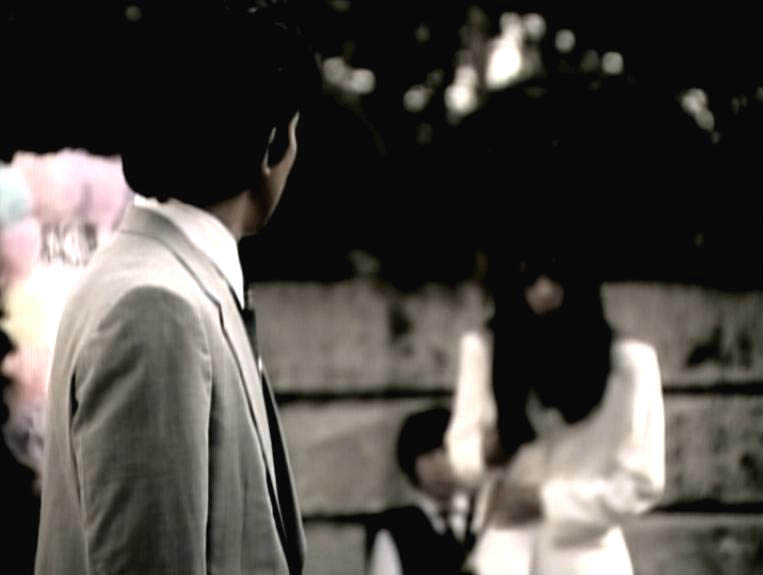
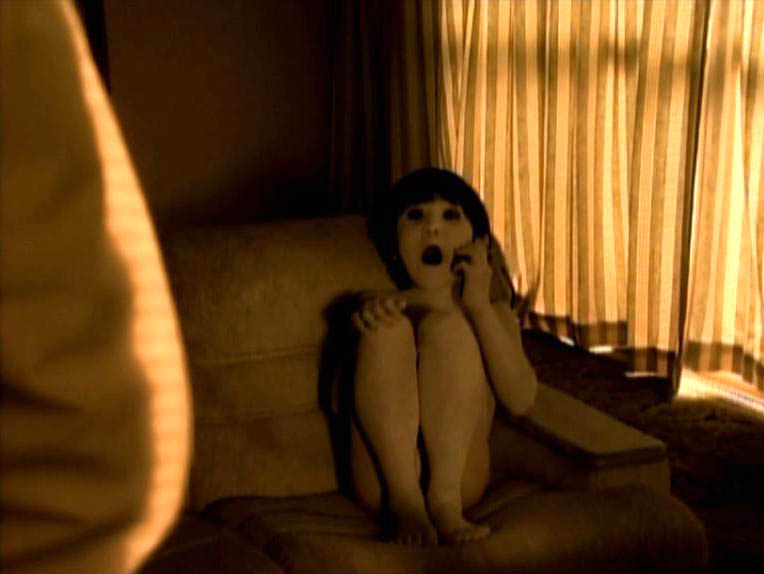
Even the opening mundane scene, of a teacher talking with his pregnant wife over dinner, is filled with details that will be relevant later on. When I first started watching this, my heart sank! I thought 'mundane', and 'shot on video'. But as the teacher starts talking about a child missing from school, and we see a brief flashback as he talks about the child’s mother, there’s a creepy shot of him standing in the playground, with an out-of-focus mother and young boy in the background. The mother moves forward, her face still indistinct, partly covered by hair. Already, a few minutes in, I was starting to get uneasy and creeped out. This turned out to be my favourite horror film made-on-video, one of the few that have 'worked' for me.

The film continues with scenes that are either creepy or downright scary. Sometimes barnstorming shocks, sometimes subtle hints of horror we don’t really want more details of (like how Toshio got to look so battered)…

As the teacher visit Toshio's home to see why he’s not at school, he becomes cursed by the tragedies that began in that house. The teacher's story continues to unfold in the two Ju-on: Curse films. While Toshio, his dad Saeko, and mum Kayako are at the centre of the hauntings. The teacher Kobayashi and his family are the catalyst of the curse. As it spreads, the Kobayashi’s apartment also becomes tainted.

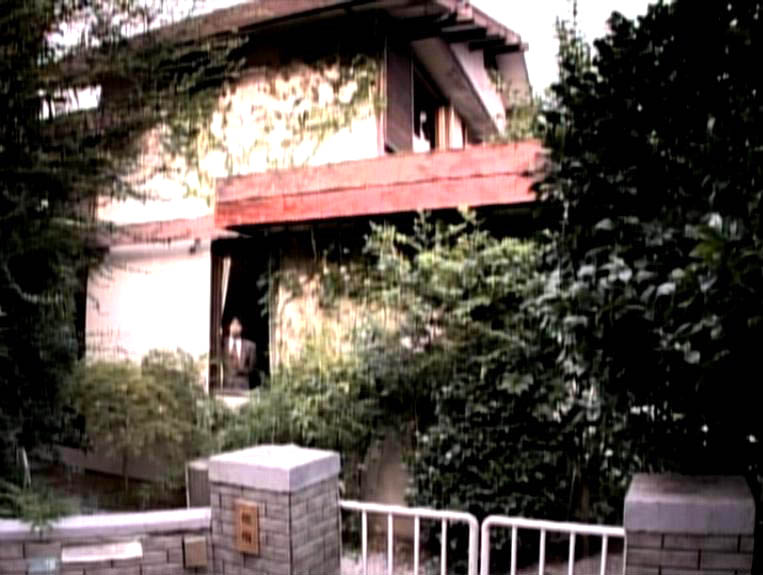
The two Ju-on: Curses have a challenging, disjointed storyline that follow seemingly unconnected characters. The films are divided into ‘chapters’ seperated by blackouts. A character’s name appears over black, as a heading, then we find out how they fit into the jigsaw. We also have to work out whether we are looking at events earlier or later in time. An important clue comes from the nameplate outside on the house’s brick gatepost, and it's crucial to the viewer that this is translated in the subtitles.

These first two movies also show us events that are only talked about in the later versions. They contain scares that are later recreated in the US versions – for my money, the ‘girl on the stairway’ scene is handled more effectively here. There are also scares which are unique to these films, like those in the school, where the children of the first new occupants carry the curse to their schoolmates.

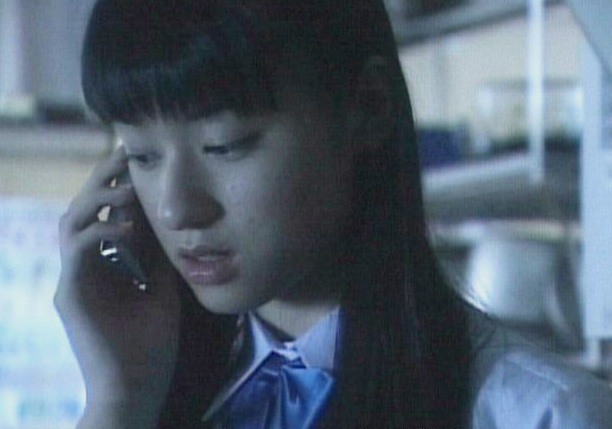
Famously, Chiaki Kuriyama appears in the very first Ju-on film, in the same year she jogged and stabbed in Battle Royale. It's an instantly creepy scene in a deserted schoolroom, which still makes me jump after repeated viewings. Pestered by scary mobile phone calls, this scene predates the ‘haunted mobile’ plot device that was expanded in Takashi Miike’s One Missed Call films.

The rest of the cast is very strong. The teacher is played by Yurei Yanagi (a casting homage to Ring), the second householder is the hauntingly beautiful Kaori Fujii (who later appeared in Haze) and even the teenagers are good. My favourite being the unfortunate Kanna, who recently got the unusual role of the snake-necked Rokuro-kubi spirit in The Great Yokai War!

I was surprised to see that the little boy, Toshio was played by a different child in these first two films. But the actors playing his Mum and Dad, (Takako Fuji and Takashi Matsuyama), are now the only actors to have appeared in every single version.

In keeping with the tight budget, actual locations were used instead of movie studios. The crew were challenged by camera angles and lighting because they were shooting in a real house (including the attic), but again this doesn’t effect the films negatively. Even the two versions shot on film were shot in this same house. It wasn’t until the US remake The Grudge, that a set was built of the house.

JU-ON: THE CURSE 2
Bizarrely, Ju-on: The Curse 2 repeats 30 minutes of material before showing anything new. The repeated scenes make the film understandable as a stand-alone, but cheats viewers who have already seen the first film. Each one is only 70 minutes long, so there would be little harm in releasing a 110 minute assembly on DVD.

The film continues with the second household to move in after the tragic Saeki family. We also see the police investigations flounder, due to mental breakdowns and further disappearences. Crucially, we see one of (the husband) Takeo's original crimes, in the most shocking and horrible scene, only hinted at in the first film. The curse continues to spread outside of the city...

Incidentally the original Ju-on house, that was used for filming, is in the suburbs of Tokyo in the huge Saitama prefecture, though the producers remain protective of its actual location.


THE DVDs
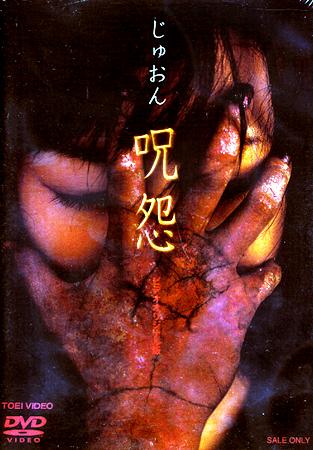
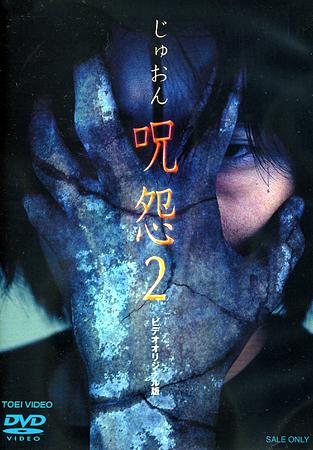
These two video films are quite rare, and were released without subs in Japan (from Toei Video) and Korea. They are hard to get hold of with English subtitles and hard to locate because of the other similarly-named sequels.

To me these two earliest versions are as good as the movies that followed and contain many vital scenes that explain what’s going on. Crucially, they are as scary as the versions that followed.


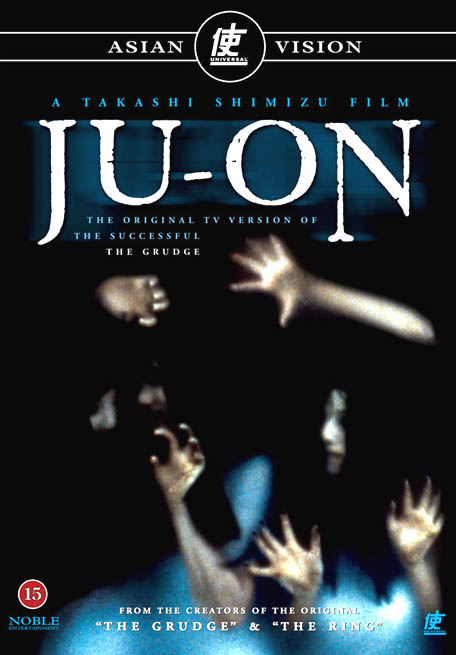
The Asian Vision DVD releases are titled simply Ju-on and Ju-on 2 (pictured above). They're from Scandinavia but have English subtitles on them. I can only find them for sale on overseas websites that are only in Norwegian, Finnish, Swedish or Danish.
Here's an example of where to obtain them.
These are both European PAL releases and have been converted from NTSC. The picture also seems to have been heavily 'graded', its colouring has been tweaked to look more filmic and less like video, fairly succesfully. The video conversion is a little distracting but the English subtitles are very good. The only extra on both DVDs is a trailer.

I also found
this link for a new Japanese DVD release that states it has English subtitles on it, but I haven't confirmed that yet. The artwork is suspiciously similar to the original Japanese Toei Video releases (pictured at the top).

I'll remind you again that the second DVD only gives you 45 minutes of new material, making it little more than a 'short'. It's got some crucial scenes in it though.

Soon I'll look at Ju-on: The Grudge (2003), where the series gained international fame.

- - - - - -
August 27, 2006

JAWS 2 (1978) A sequel too far?

JAWS 2 (1978)
Region 1 NTSC DVD (Universal)

How do you follow that?

THE SEVENTIES
When I first saw Jaws 2 in the summer of '78, I thought it was good, not great, but good. It reminded me to keep out of the water. Seeing it again now, it’s much more disappointing. The first Jaws was an instant classic, but tried very hard to be more than a monster movie - it also succeeded as a drama and an adventure.

Jaws 2 is mostly a monster movie, and fairly bad otherwise. Not so bad it’s good, but boring bad. The best bits save it though, but only because they had a bigger budget than most monster movies.

Truth be told, most of the low budget Jaws rip-offs were better thought out, and they were released before Jaws 2. Piranha and Grizzly give you a much better deal. Orca The Killer Whale and Italy's Tentacles are enjoyably bad. Then later Humanoids from the Deep was so outrageous, the violence was almost X-rated, and it threw in an Alien riff as well. Alligator had a dry script, I could go on... it's a favourite genre of mine - when animals attack.

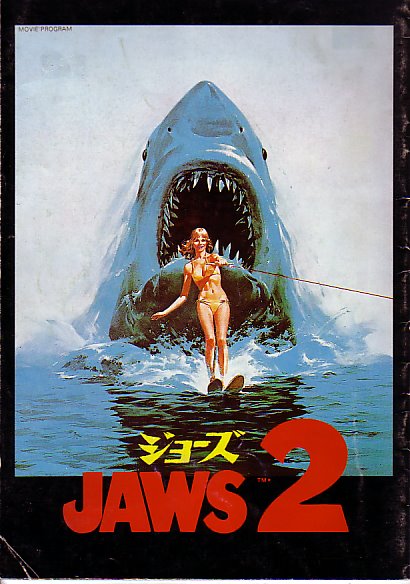
Back cover art from the Japanese cinema brochure

THE FILM
The plot of Jaws 2 is simple, straightforward and almost a dry run for Friday the 13th (which debuted two years later). A bunch of foul-mouthed kids ignore the mad old man (in this case, the police chief) and get picked off one by one in various imaginatively gory ways.

Besides the story, the John Williams score makes you think you’re listening to a Jaws film. The great cinematography means you think you’re watching a Jaws film. In the cast there’s Roy Scheider, Murray Hamilton and Lorraine Gary again but… it doesn’t feel like a Jaws film.
Although director Jeannot Swarc was working in TV at the same time as Spielberg, and directed episodes of Columbo and Night Gallery like Spielberg, it doesn’t make him a replacement for Spielberg.


To be fair, when the action comes, it’s spectacular and convincing. Some of the death scenes are brutal (yet relatively bloodless) and there are some spectacular and difficult stunts too.

But the story is flabby, with many storylines and characters set up, but few dramatic conclusions. There’s no need for so many teenagers, there's lots of romantic possibilities cued in but nothing develops. The Mayor and his town hall committee hassle the police chief, but this just all slows down the first half of the film.

The police chief is acting on a hunch that Amity again has a shark problem, for over an hour of the movie. He could quite easily have got it all wrong, seeing as he has no real proof to go on. Then, suddenly, he gets his proof and instantly rushes to the rescue of the stranded teenagers (even though he doesn't know they are in trouble). But he’s the one person on the island with no sailing or navigational skills, making him the worst man for the job. His growing ineptitude plays as stupid, like hitting his radio and wrecking the police launch. Scheider must have cursed his luck when the script arrived.

Even in 1978, I sensed the film was going to be lacking from the limp opening scene. Two divers get attacked underwater as they discover the wreck of the Orca (a vague link/explanation of the shark's motivations). There's lots of thrashing about and fast cutting, but you don't see anything actually happen. It's not violent, or interesting, it's just a lame plot point.

The slack story is slackened further by several montages of people on the beach having fun and people on the water having fun (backed by jolly John Williams music). In the first film these were funny and ironic, here they just slow down the pace further.


The first 70 minutes desperately needs tightening, up until we get to the fairly taut and suspenseful ‘kids in danger’ third act, the scenes that I always remembered most clearly.

I enjoy the look of the film, especially the beautiful shots of the sunlit sea. I enjoy the action scenes, especially outrageous is the shark (swimming like a homing torpedo) chasing a water-skier, and attacking a helicopter. But like i said, these feel like they were just included to make the posters look good and beef up the trailer.

Front cover art from the Japanese cinema brochure

To make the shark look more like a baddy, there's a very silly scene where it has to get hideously scarred (er, like the Phantom of the Opera). A woman who tries to protect her boat by braining the shark with a can of fuel, merely looks like she's pouring fuel over herself. This scene is so poorly staged, it makes her look totally inept rather than panicky.

Also, despite the mayhem, I was constantly distracted by the seventies trend of having many characters wearing tight jeans. The camera seems to catch an awful lot of shots of guys butts in often wringing wet denim, Roy Scheider (in shorts) included. I think a film is definitely in trouble if the viewer gets side-tracked in such a fashion.

THE DVD
Anyhow, the DVD extras are super, indeed the documentaries are more interesting than the film itself. Keith Gordon, one of the few actors to continue with any success (acting in Dressed To Kill and Christine - now working as a director), makes some interesting comments in his own short film.

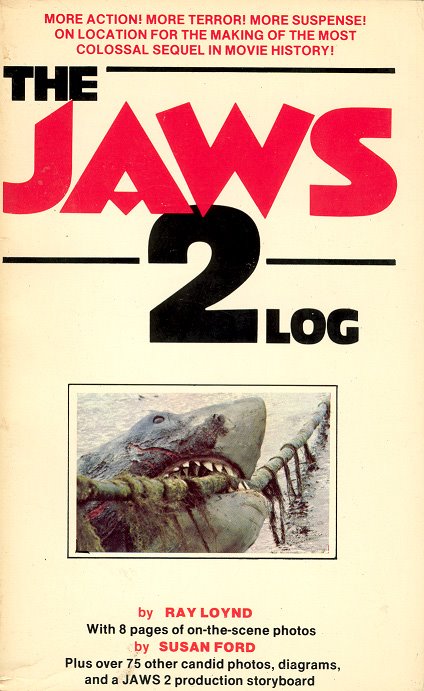
(If you want to know more, there's always The Jaws 2 Log paperback to track down.)

Among the deleted scenes is an extra death scene that helps explain where one of the characters went…

The DVD I watched was released back in 2001, when it was only presented in stereo, with an OK transfer. The film looks good but not great. Let's face it, it still needs all the help it can get.


August 19, 2006

SEVEN SAMURAI (1954) Akira Kurosawa's classic


SEVEN SAMURAI (1954, Shichinin no samurai)
PAL Region 2 DVD (from the BFI)

I’ll not do extensive reviews on classic movies like this (and recently Jaws). I’m just going to give my impressions.

I’m not huge on Samurai films (unless of course they have demons in them) but I wanted to see what Akira Kurosawa was up to while his colleague Ishiro Honda was directing the very first Godzilla! Both films were made by Toho Studios in the early fifties. To be impressed today by Seven Samurai, I think you have to imagine what films were like at the time – the realistic locations and fast, furious tracking shots must have been a breath of fresh air. The tough depiction of rural life in the 17th century, sex and violence and all must all have been pretty racy too.

Today it’s a good story, which was famously borrowed by The Magnificent Seven in 1960. But whereas Hollywood built up ‘The Seven‘ to almost superhero status, Seven Samurai tells the tale far more realistically.


Poor farmers, low on weapons and fighting skills, have to beg hungry soldiers to defend their village from bandits who have promised to return after the harvest. I was surprised that the seven samurai characters were realistic and not iconic, modest rather than flashy. The farmers also have to accept that their saviours lead lives not so different from the raiders.

I was surprised at Toshiro Mifune – he plays a wild samurai with so much enthusiasm it’s almost overplayed. The quiet leadership of Takashi Shimura as Shimada is far more memorable. Shimura, who also appeared in Godzilla (as the old Professor), is bald in the film, like Yul Brynner, because his character has shaved his head for a disguise.

Amazingly, at three hours and five minutes, there’s not much flab. Every scene helps us to understand the different characters or show us the details of the long and hard-fought battle of wits between the two sides. But if it’s heroes and stunt-heavy gunfights you want, The Magnificent Seven is the winner.


The strengths of Seven Samurai are the attempt to depict life as it then was, the classic story, and the attention to detail in the plot and the actions of the characters.

I wouldn’t say this is a 'must-see'. Like Citizen Kane is supposed to be the classic of American Cinema, to appreciate it needs an understanding of contemporary culture and the history of cinema. But not everyone wants to do homework before they watch a movie.

I will say it’s an excellent lesson in siege tactics, how good movies looked fifty years ago, and how hard life was in Japan 400 years ago.

This specially restored 185 minute version is available on BFI DVD. It also expects you to know a few words of Japanese, because not everything is translated!

THREE: EXTREMES (2004) a trilogy of terror, blood and art

THREE: EXTREMES
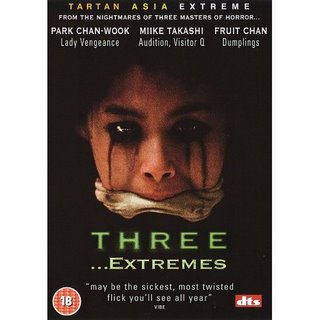
Again, much has been said about this instant classic already, but after seeing so many insipid Asian ‘horror’ films lately, I was greatly rewarded by Three: Extremes. I watched the Hong Kong release (above) which has very good English subtitles.

It’s an anthology of three short horror stories by different directors, Fruit Chan from Hong Kong, Chan-Wook Park from South Korea, and Takashi Miike from Japan.

It's also a follow-up to the less successful Three (aka Three: Memories) made in 2002. Confusingly this previous film is about to be released on DVD as a sequel and called Three Extremes 2.

There’s also a spin-off movie which expanded one of the short tales into feature-length, called Three Extremes: Dumplings. Got all that? Together with different release titles in different countries, it’s not surprising that there's confusion.

It’s also strange that three different Asian countries should be lumped together, but that’s the nature of the West’s perception of Asian horror, I guess.

BOX
The first story in Three: Extremes is called 'Box', Takashi Miike’s most adult film since Audition. Artistically beautiful to look at, and impeccably acted. The story soon turns to a dark sexual side that shows the extremes that this Three is prepared to deal with.

It begins with a young novelist, haunted by dreams of being buried in a small box, discovering that she’s being haunted in real life by her twin sister. They used to be a double act in a small circus, but jealous that her sister was getting more attention from a magician, she tries to even the score, with tragic results. Mostly taking place in the winter, the snow makes her torment very picturesque.

Miike makes this effortlessly creepy almost straightaway. It’s also sensual, in a disturbing way, beautiful and distressing at the same time, creepy and alarming. A compelling short film. Possibly my favourite.

DUMPLINGS
The second, 'Dumplings', directed by Hong Kong’s Fruit Chan, is the most famous and sickest of the three, becoming so popular that the producers soon released an expanded feature-length version. The subject matter is almost unbelievable, but entirely possible.

A rich but fading TV actress tries to fight off middle-age by visiting Aunt Mei, a modern day witch who makes the most expensive dumplings in town. What can she possibly cook that will return youthful looks? The answer is pretty awful, and has to do Mei's previous profession as an abortionist...

The ghastly tale is beautifully rendered by Christopher Doyle’s colourful cinematography. The tale is also rich with subtexts about the differences between Hong Kong and China, superstitions transcending class, and the pressures on women deserted by their husbands for younger women. It’s a multi-layered story and understandably easy to expand (unlike the other two tales).

CUT
The third 'Cut' is the first disappointing film that I’ve seen from Chan-Wook Park, whose 'Vengeance' trilogy I rate as being my favourite films from South Korea (Sympathy for Mr Vengeance, Oldboy and Lady Vengeance). It felt to me like he was trying way too hard, including flashy one-take, impossible tracking shots (inspired by Panic Room, no doubt).


A movie director is held hostage on the set of his latest production. He's tied to the wall, his wife is superglued to a piano (!). If he doesn't comply, his wife is going to start losing fingers...

I found the premise for the hostage-taker's grievance unconvincing, and the final outcome didn't feel logical. It’s a great set-up and there’s some genius flourishes and twists, but in the company of the other two tales, it looked like the weakest.

Having said that, the climax made me feel the queasiest due to the amount of bloodshed!


So, if you like your horror films extreme (like the prolonged agony of Audition's climax), but thought it was slow, here’s a tale that delivers much, much faster. Creepy, gory, well-made, almost full marks!

Bravo!


Do you want to know more?

There’s a longer synopsis, full of screengrabs and spoilers at Dragon's Den UK...


Three: Extremes is out on Region 2 PAL DVD, with Three Extremes 2 due out later in the year.