June 02, 2006

TOMIE: REPLAY (2000) - decapitation, shock, horror


TOMIE: REPLAY (2000)
Region 1 US DVD (Adness)

The curse of the cornershop carrier bag continues

Presumably not wanting to be saddled with the title Tomie 2, the strangely named Tomie: Replay injects a needed round of solid shocks in this, the second cinema outing of the series.

Centred around a seriously underlit hospital, it begins with a ghastly operation, where Tomie's head is cut out of a little girl's stomach! Afterwards, almost everyone who took part in the operation disappears, including the surgeon. His daughter sets out to find him, trying to make sense of his blood-soaked diary. Meanwhile a young patient discovers Tomie walking the corridors at night and agrees to take her home with him, poor fool. Murder, mayhem and mutation soon follow.

This film gets a bigger budget than the first, enabling a more expansive story with several stories revolving around a hospital that’s going out of control. The likeable and experienced cast are convincing, and there's enough money for some haunting FX.

Yet another actress plays Tomie here, Mai Hosho (later to appear in Suicide Circle - they needed a lot of schoolgirls for that one), and there's a new director to the series, Tomijiro Mitsuishi, who succeeds in bringing in some powerful heart-stopping moments and creep-outs. Finally we have a bona fide Tomie horror film to recommend.

We get to see how men usually treat her - maybe a meal, then murder, then dismemberment. There's not much graphic gore, but some grisly sound FX make the scenes more than effective. Using Junji Ito's manga as inspiration, there's also a marvellous mutated corpse, and a madman's face that both stick closely to the dark visions of the original drawings.

The film occasionally goes off the rails, with a couple of over-the-top moments that don't work and even some unintentional laughs. The main complaint I have is that there’s not enough of Tomie herself - we spend more time with the other characters tracking her down and mopping up after her.

These are quibbles though - this is a well-structured horror film, enhanced greatly by an atmospheric and effective soundtrack. The region 1 DVD (pictured above) has an anamorphic widescreen picture, 5.1 audio, good (removable) english subtitles, and even trailers for the first 5 Tomie releases.

But as we shall see, it won’t be the last time they’ll be burying Tomie's head in the forest…

Mark H

TOMIE: REBIRTH (2001) from the director of Ju-on, The Grudge


TOMIE: REBIRTH (Japan, 2001)
Region 1 DVD (Adness)

The 3rd movie in the series is directed by Takashi Shimizu, who brought us all of the Ju-on movies (5 and counting).

The film starts with a young painter completing a portrait of Tomie, before murdering her. His two closest friends help bury her in the woods. Later at a birthday party, the three of them are bewildered to see that she's returned. Their lives are soon turned upside-down - one needs his girlfriend, Hitomi, another turns to his mother to help keep Tomie away.

Strangely, in the promotional documentary in the DVD extras, director Shimizu says that he thinks humour is needed in horror films. Zoiks, I always thought that part of the strength of the Ju-on films is the unrelenting, scary mood – the story careering from one scare to the next.

Also, if I hadn’t watched the documentary, I wouldn’t have known there was humour in the film! There’s maybe some dark irony as two of Tomie’s murderers talk about mundane matters while they dispose of her body – so, thankfully, he didn’t resort to blatant comedy relief. He seems intent on making his own distinctive entry to the series – while re-cycling ideas that have been used in the previous films (there's even a scene copied from the climax of Another Face).


Strangely, the film doesn’t get much beyond creepy, it’s not nearly as frightening as Tomie: Replay. It get’s very grisly, more bloody – Tomie dies a lot in this one. But whereas the previous films had a constantly odd atmosphere throughout, Tomie: Rebirth allows us to stay more grounded in normality – the mundanity of normal surroundings, streets, shops and houses.

My favourite scene involves a street corner at night and a carrier bag – easily as scary as Ju-on. Unfortunately there’s not many moments like that here. Trying to make Tomie perform new tricks means that there’s also computer effects used instead of the convincingly physical prosthetic effects of the previous films. This severely compromises the climax for me.

I guess that because of Tomie’s powers, it doesn’t matter that different actresses play her. As a purist, I think Tomie should always ‘come back’ looking the same. I think the series could be more of a phenomenon if one actress had become associated with the role. Having said that, so far everyone who plays the role has brought something new to it.

This time around, Miki Sakai proves to be the most beautiful and alluring Tomie so far. She looks more mature and powerfully creepy, but perhaps isn't as threatening as the others. She certainly seems to be regenerating faster than usual.

Overall the acting isn’t very even, but the stressed-out mother is excellent, as are Hitomi and Tomie who have the hardest roles.

I enjoyed this the first time I saw it, but now watching it alongside the other Tomie films, it feels less strange than it should. It’s good, but with a heavyweight horror director, it should have been great.

The Adness region 1 DVD is good for extras – there’s a subtitled promotional programme with interesting interviews with the cast and the director. There’s also a revealing look at how the major special effects were achieved. Some of them fooled me completely.

The feature is slightly matted to 1.85 widescreen – it’s anamorphically presented. The excellent audio is in Japanese in 5.1. The english subtitles are removable – the translations are good, but occasionally stilted. The worst part of the DVD is the picture – it’s quite murky and a little soft too.


Mark H

TOMIE: FORBIDDEN FRUIT (2002) - not the final chapter


Tomie: The Final Chapter - Forbidden Fruit
(Japan, 2002, Saishuu-sho - kindan no kajitsu)

How you can you ever safely say that you're making a final Tomie film.

Tomie befriends a schoolgirl who's getting bullied. I mean seriously bullied. The bullies are using a crossbow. Tomie visits her new friend, who's coincidentally called Tomie, and lives alone with her father. For a little while, we think that evil Tomie has lost her charm and no longer drives men wild. Then we learn that she's already had an affair with him 25 years earlier. Of course while he's aged, she hasn't changed a bit. She's also rather cross that he's named his daughter after her. As Tomie cosies up to both dad and daughter, we wonder where it's all going to lead. What is Tomie up to?

This film starts deceptively slowly, with Tomie behaving herself - I was concerned that they'd even changed her character. Her friendship with the other Tomie is given time to develop, and we learn more of the father's back-story in flashbacks. This all sets up the second half of the film, where things get a little, well, crunchier. All I'll say is baseball bat and buzzsaw.

To ensure a better response to this film, the producers used a new strategy - no new young directors or bad acting, instead there's a veteran director and a small but heavyweight cast.

Bad Tomie is played by Nozomi Ando, who'd just starred in the excellent Sakuya, Slayer of Demons - she went on to star in cult hits Kibakichi and Suicide Manual. She's an excellent Tomie, but more malicious than evil.

Innocent Tomie is played by Aoi Miyazaki, who is currently riding on the success of the buddy-movie smash hit chick-flick Nana, where she stars as one of the two Nanas.

Her father, Kazuhiko is played by esteemed actor Jun Kunimura who was in Audition (not the unfortutate lead) and Kill Bill Vol.1 as Tanaka, and many other major Japanese films, usually as senior military officers or bosses. His role is the hardest and it's wonderful to see him underplay his role in a genre that usually gives way to overacting.

The title of the film is also 'hard sell' - a double come-on: admittedly it's the 'final chapter' in the initial once-a-year cycle of Tomie films, but we're also promised 'forbidden fruit' - publicity photographs angling towards the schoolgirl relationship as lesbian, and teasing us with a rekindled love affair with a 25 year age gap.

Much is made of Tomie's kissing scenes, but these also make the central story between the three characters very dramatic and very realistic.


But as director Shun Nakahara steps up the horror, he seems less and less able to take it seriously. There's some real Junji Ito horror stuff later on, but it's constantly leavened with humour. At least this time it's actually funny, but it's a shame that the horror isn't as intense as the drama.

For once the digital effects are convincing, relying on seamless compositing rather than computer-generated imagery. There's less blood than usual, some surreal body horror and the clever use of the refrigeration plant that the dad works in...

The soundtrack is suitably weird and discomforting, but this time a little too eccentric, the music occasionally distracting you from the action. The constant chorus of the omnipresent crows adds to the atmosphere of forboding

Once again, this Tomie story doesn’t follow on from any other. They are all stand alone stories, like the manga. This film seems to be a little out of step with the mood of the series, but after a slow start, it has quite a grip! Of the first five Tomie entries (four films, one made-for-TV) all are entirely watchable. Each has their own strengths and weaknesses, and each their own special character. If you don't like one, you may like another. It's a lot like a box of chocolates (sorry)...

The Hong Kong DVD that I watched had seriously lousy subtitles, so I'm going to get the region 1 version soon. At least this had 30 minutes of behind-the-scenes footage that was very interesting and self-explanatory, even without subs. The film was beautifully shot and presented in 1.85 widescreen.

Mark H

TOMIE: REVENGE (2005) confused v-cinema late entry


TOMIE: REVENGE (2005, Japan)
Hong Kong region 3 NTSC DVD (Universe Video)

What have they done to Tomie?

So, 2 years after the last film, Tomie: The Final Chapter, we get not one, but two new Tomie titles. I was very excited about these, until I saw them...

Dr Suma knocks over a young woman while driving in the woods at night. She seems unharmed and quickly disappears. The Dr looks for the woman in an isolated mansion, where she finds 2 madmen raving "Tomie" and a woman unconscious in a sleeping bag. What on earth is going on?

We learn more at the nearby hospital where Dr Suma works. She gets questioned by two 'National Security men' looking for Tomie, who think that she has the power to physically invade other women's bodies. They think she is living nearby in the woods...

Well, the first place I'd have looked would be the mansion! But here it takes a whole hour of screen time for anyone to figure that out!

The possession theme means that Tomie barely makes an appearance in person, her female victims get all the action. I also think possession is also Tomie's least interesting power - here it seems to be her only skill.

I was disappointed to find that this had been shot on video, the opening night scenes looked especially murky and smeary. This low-budget production is an example of the perils of v-cinema titles, they rarely deliver (The first two Ju-on v-films are a notable exception).

I was confused by the narrative and the shaky handheld camerawork. In was disappointed at how poor some of the acting was. The messy and very short story ends with a surprise that cheats rather than satisfies. The whole thing is missing the atmosphere of Tomie's creepiness. The writer/director is Ataru Oikawa. His previous work includes Tokyo Psycho, which I will be avoiding.

In its favour there's some convincing drama from the two leads, Dr Suma (Hisako Shirata) and her boss (Kyusaku Shimada, the lead heavy in Princess Blade). There's also and a couple of gory scenes we haven't seen in the series before, but they're misjudged, overplayed and don't resemble anything in Junji Ito's drawings.


The sound mix is uninvolving and lazily pumps up the volume to prop up some rather obvious leaping-out-at-the-camera scares.

I can't say anything nice about Tomie: Revenge. It makes the first 5 Tomie's look even more consistent, imaginative and carefully crafted. I'd even recommend the made-for-TV Tomie: Another Face over this one. I also won't recommend this to Tomie completists because it's so divorced from the source material.


The Hong Kong DVD (pictured above) has good subtitles and an anamorphic widescreen presentation. The audio sounded like a rushed stereo mix. There are just 2 trailers as extras. The film is due to be released on Region 1 DVD in the US.

Mark H

TOMIE: BEGINNING (2005) the final final chapter


TOMIE: BEGINNING (2005, JAPAN)
Hong Kong region 3 NTSC DVD (Universe Video)

Tomie gets back to the bag...

From Ataru Oikawa, the same writer/director as Tomie: Revenge comes a slightly better, but equally clumsy tale. At least I could tell that it was based on an early story by Junji Ito about Tomie's schooldays.

The story starts present day at a rather poor turnout at a class reunion. Only two former pupils are left to reminisce about Tomie joining their school. The rest of the class are either dead, missing or institutionalised. Mostly told in flashbacks, we see how schoolgirl Tomie divides and conquers. (I don't think that this tale, set 20 years earlier, constitutes Tomie's true 'beginning' - I suspect that she's a lot older than she looks...)

Again shot on video, again with annoyingly loose camerawork (there's a spectacular shot of Mount Fuji at the start of the film that's almost thrown away!). At least the performances are more even than in Tomie: Revenge.

Rio Matsumoto plays Tomie here - she's OK but she hasn't got the nasty giggling quite right. Her first evil acts are little more than grade school bullying, so the film flounders for a while. Later, contrary to her usual M.O. of tormenting her boyfriends and forcing them to kill her, she compels boys to work for her (like she did in Revenge) - this merely keeps her out of the action.

There's more of Tomie's powers of regeneration here than in Revenge, which leads to some confusion for the viewer and some half-hearted special effects - a 'crawling' ear being dragged along the ground belongs in a fifties 'B' movie. There's a better scene where a bandage soaked in Tomie's blood starts regenerating, but logically this means there should be three of her running around (original Tomie, ear Tomie, and bandage Tomie) - more loose ends left dangling from this straggly tale.

One big death scene is off camera (I'm not even sure how she was supposed to have died unless I read the manga again) and the film's big gross-out scene is played for laughs. Her victims' 'mad' scenes are unconvincing and OTT. With no atmosphere and no creepy thrills, all that the film offers is a short story and a little spurting blood - very similar ingredients to the average Thai horror, which isn't saying much.

To be fair, one mad little scene theorises that Tomie is related to a flatworm (!) and the stock footage of the little critter is very interesting, though of no use to the plot. The other highpoint is the ending, firstly because it's a relief that it's finally over and secondly, that it leads neatly back to the first film...

The Hong Kong DVD (pictured above) is anamorphic widescreen, NTSC, decent english subtitles and in stereo. There are two trailers as extras. The film (well, it runs 72 minutes) is coming to Region 1 DVD soon.


Tomie: the final word

I was very disappointed that these two recent additions didn't exceed the accomplishments of any of the first five Tomie films. I doubt if anyone will be encouraged to make any new tales for several years - the unfilmed manga would require considerable skill and formidable special effects! Similarly Ito's epic Gyo, about a land invasion of monstrous fish is also unfilmable. Why doesn't someone make some Uzumaki sequels instead?

Tomie is a unique horror character, though typical of Japanese horror - where powerful women are evil and must be dealt with severely. Where female biology is a bizarre mystery, bordering on the supernatural. Where any woman who looks overtly sexy should be avoided, because once you get involved, she'll ruin your life. Just stick to non-assertive women who don't wear make-up, you'll be fine!

All in all I'd only recommend the Tomie stories made on film, because they are uniquely creepy horror films, and are faithful to Junji Ito's marvelous and mysterious Tomie 'mythos':

Tomie
Tomie: Replay
Tomie: Rebirth
Tomie: Forbidden Fruit

Mark H

June 01, 2006

THE CASE FILES OF YOUNG KINDAICHI - an overview

UPDATED 10th SEPTEMBER 2006

Forget Sherlock Holmes and Scooby Doo - who's the greatest detective in Japan? Kindaichi!

The more I investigate this character, the more I find out! Anime, manga, novels, TV and movies. There are the period murder mysteries featuring Kousuke Kindaichi, or there are the modern-day cases solved by his grandson, Hajime.

The stories usually flirt with supernatural explanations (to throw us off the scent), the murders are numerous and bloody - some stories border on slasher movie territory in terms of body counts - and the plots are twisty, often delving back into numerous flashbacks to explain the motivations and actions of the killer.

The Case Files of Young Kindaichi (TV anime, 1997)

I first encountered Kindaichi in the Toei Studios' anime series Kindaichi No Jikenbo. This franchise of both manga and anime is the character's most famous incarnation in the west. Teenager Hajime is a goofy student, slightly accident prone and sporting a pony-tail. He's usually accompanied by girl-friend Miyuke Nanase, who normally ends up being seriously injured or at least stalked by the killer - but Hajime gets all the glory. His Uncle is in the police force, so he normally has an excuse for getting into crime scenes.

There were a whopping 148 half-hour episodes made between 1997 and 2000, usually spreading each story over 3 or 4 instalments.

There were also two animated movies. The first, The Case Files of Young Kindaichi in 1996, riffed on the story of The Phantom of the Opera, and was based on the manga story The Opera House Murders.

When a play is produced in a theatre on a small island, a classic 'locked-room' murder can only be solved by Kindaichi. The film starts well enough, with the claustrophobia of being trapped on the island adding to the atmosphere. But after more people are killed, the action returns to the mainland, and the explanations and deductions take another half an hour of screen time to sort it all out!

The second movie came out in 1999 and was called Deep Blue Massacre. It too was produced by Toei Animation.


The Case Files of Young Kindaichi (live action)

As well as the anime, there've been (I think) three live-action TV series centred on Young Hajime Kindaichi, again based on the manga stories.


The Case Files of Young Kindaichi
(Kindaichi Shonen No Jikembo) 1995
This live-action series starred Tsuyoshi Domoto, a member of the Kinki Kids pop group. This series crammed entire stories into one-hour episodes. Aimed at teenagers, the stories have a little more sex, violence and bad language than the anime. They're fun and fast-moving, but with more broad comedy than serious thrills. Young Kindaichi is still accident prone and forever hungry, but here he's also unusually cute - a bit too much like a pop star. At least they didn't give him a ponytail.

His co-star (seen on the Japanese DVD cover above) is played by Rie Tomosaka. Incredibly, some of the same stories re-appeared in the anime, only two years later.

The Case Files of Young Kindaichi
(Kindaichi Shonen No Jikembo) 2001
Kindaichi returned as a second series with the same name but a new cast. This time starring Kazuya Kamenashi, he's the one on the right. As you can see, in the tradition of Kindaichi having silly haircuts, this time around, the character is sporting an androgynous Ziggy Stardust hairdo.

Both the 1995 and the 2001 live-action series are available on DVD from Japan, but without english subtitles. The series is slightly more serious (in tone) than usual, with more drama and thrills. The pictures above are from a feature-length TV Special (2005), where Kazuya is up against what appears to be a vampire...

The Case Files of Young Kindaichi 3
(Kindaichi shônen no jikenbo 3) 2005
The third Young Kindaichi TV series stars Jun Matsumoto as Hajime (he's the one on the left on the Japanese DVD cover below) and Anne Suzuki. Kazuya is in the pop group Arashi. Like the 2001 series, it's produced in widescreen and is out on DVD but with no English subtitles.

As well as the hour-long episodes, there's already been an expensive movie-length special, The Magic Train Murder Case, a story which was previously dramatised in the anime series. The music for this new series is a pounding, modern electro score that I really like.

So if you want spooky teen drama with a healthy dose of murder, Young Kindaichi is for you. If you prefer something a little more mature, the you'll be better off with the 'old' Kindaichi. The character of Hajikme Kindaichi isn't old in the films, they're just set a long time ago. Hajime is the "Grandfather" who Young Kindaichi keeps swearing that he must not fail. To read about him, go to this post...

(Thanks to 'Vera' for helping me get my facts right!)

THE CASE FILES OF KINDAICHI - six decades of detection

An attempted checklist of the film and TV adventures of Japan's answer to Sherlock Holmes... Kousuke Kindaichi

(UPDATED 10th August 2007)
If you want to read about Young Kindaichi (he's called Hajime) better known for his anime adventures, see my other
Kindaichi article here.
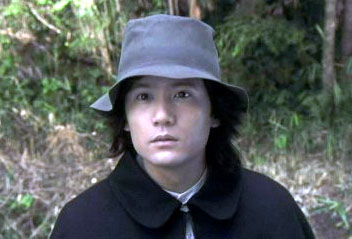
Actor Goro Inagaki as Kousuke Kindaichi in a 2004 TV special


THE BOOKS OF KINDAICHI

While the various screen incarnations of Young Hajime Kindaichi are based on manga, the character's grandfather began with the written word. Kousuke Kindaichi started life in the novels of Seishi Yokomizo, written and set in post-war Japan. Inspired by Arthur Conan Doyle and Agatha Christie, Kindaichi is still very much a unique character, giving the Japanese their very own literary hero-detective.

He's a young man with bad dandruff and worse dress-sense (decades before Columbo), who wears a trademark, scruffy sunhat. He also happens to be better than the police at deductive reasoning. Having gained publicity for solving a high-profile murder case, the detectives allow him to work with them again.

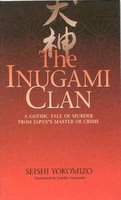
I'm guessing these books were first turned into movies almost immediately. But they didn't become really popular until the 1970's, when the films and the novels became a real phenomenon. I don't know if many have been translated into english before, but the first (?) novel, The Inugami Clan, is available in English at the moment (cover shown below).

THE FILMS OF KINDAICHI

There have been around 20 actors to play amateur detective Kousuke Kindaichi so far. I've listed below the films that I could find on IMDB that feature the character, and I've listed in brackets the actor playing Kindaichi in each.

The adaptions started with a run of films all starring Chiezo Kataoka as Kindaichi...

1947 Sanbon yubi no otoko a.k.a. Honjin Murder Case (Chiezo Kataoka)
1949 Gokumon-to (Chiezo Kataoka)
1951 Yatsuhaka-mura a.k.a. Village of Eight Gravestones (Chiezo Kataoka)
1954 Inugami-ke no nazo: Akuma wa odoru (Chiezo Kataoka)
1954 Akuma ga kitarite fue o fuku (Chiezo Kataoka)
1954 Yurei otoko a.k.a. Ghost Man (Seizaburô Kawazu)
1956 Mitsu-kubi-tou a.k.a. Three Heads Tower (Chiezo Kataoka)
1956 Kyuketsuki-ga a.k.a. Vampire Moth (Ryo Ikebe)
1961 Akuma no temari-uta (Ken Takakura)

A successful second wave of films in the late 1970's were directed by Kon Ichikawa, starring Koji Ishizaka as Kindaichi. But as you can see below, there are some with different actors playing the role, presumably from rival film studios - it's Roger Moore versus Sean Connery all over again.

Strangely, one of these rival films was also one of the most successful. It was then one of Japan's biggest budgeted productions ever, and was directed by Yoshitaro Nomura - the brilliant Village of Eight Gravestones (1977). This version was updated to contemporary Japan and starred Kiyoshi Atsumi as Kindaichi. I reviewed this epic murder mystery back in April, my review here. This currently available DVD is a rare opportunity to see a Kindaichi film with English subtitles. There will also soon be a Region 3 DVD of The Inugami Family (1976)with English subtitles, details here.

1976 Honjin satsujin jiken a.k.a. Death at an Old Mansion (Akira Nakao)
1976 Inugamike no ichizoku a.k.a. The Inugami Family (Koji Ishizaka)
1977 Akuma no temari-uta a.k.a. The Devil's Bouncing Ball Song (Koji Ishizaka)
1977 Yatsu Haka-Mura a.k.a. Village of Eight Gravestones (Kiyoshi Atsumi)
1977 Gokumon-to a.k.a. Devil's Island (Koji Ishizaka)
1978 Jo-oh-bachi a.k.a. Queen Bee (Koji Ishizaka)
1979 Byoinzaka no kubikukuri no ie a.k.a. The House of Hanging (Koji Ishizaka) 1979 Akuma ga kitarite fue o fuku (Toshiyuki Nishida)
1979 Kindaichi Kosuke no boken a.k.a. The Adventures of Kosuke Kindaichi (Ikko Furuya)
1981 Akuryo-To a.k.a. Akuryo Island (Takeshi Kaga)

Soon after, Ikko Furuya continued to play Kindaichi in a successful run of TV dramas. These series and the movies The House of Hanging and The Adventures of Kosuke Kindaichi are currently available on DVD, but without english subtitles. The latter film actually stars the books' original author Seishi Yokomizo.

Finally, in 1997, Kon Ichikawa finally managed to direct his own version of Village of Eight Gravestones, having missed out on the title back in 1977. Etsushi Toyokawa starred as the detective. But the recent big news is, from Twitch Film, that Kon Ichikawa is going to refilm The Inugami Clan for release in 2007! The director, now 90, has also chosen the original star of the seventies series, Koji Ishizaka, to return to the role of Kindaichi! More details from Twitch here...


THE TELEVISION SERIES OF KINDAICHI

Since the latest film, there's also been a steady series of new TV adaptions of the books. No doubt there's been many other TV incarnations in the past, but these are the only ones I've found details on. The current Kindaichi is actor Goro Inagaki, who is very likeable in the role, but again, like the Young Kindaichi series, he's asked to play it a little too broadly - and even has a series of sidekicks whose acting is far less subtle. I know the subject matter is grim, but surely the comedy relief doesn't have to border on slapstick.
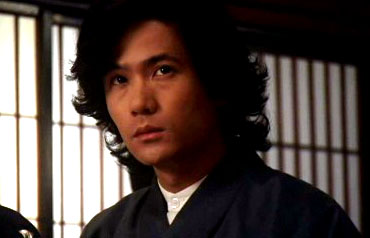
This was the first Japanese television drama series to be shot on HD Video, giving the episodes a broader, grander look, with a widescreen aspect. Each mini-series is usually 4 half-hour episodes long. These are the stories that I know of so far...

Inugami ke no Ichizoku (2004) a.k.a. The Inugami Clan
The new series started with an extra half-hour episode describing Kindaichi's back story and his first ever case, in New York! Then it moves onto yet another adaption of The Inugami Clan! It's a similar set-up to Village of Eight Gravestones featuring a serial murder within a big family, the action taking place on their huge estate.

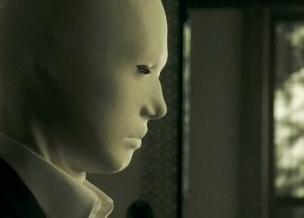
The mystery is complicated by identity of a soldier whose burns are so severe that he has to wear a white skintight mask over his head. One of the victims is found floating in the nearby lake, with it's legs sticking out of the water in a V-shape - an unusual scene, this has become a recurrent, iconic image of all the filmed adaptions.

Yatsuhaka mura (2004) a.k.a. Village of Eight Gravestones
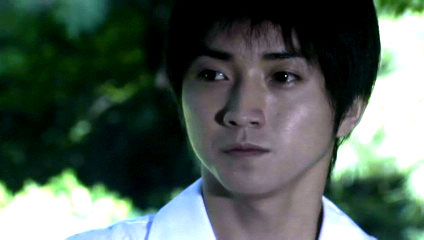
Unlike the 1977 film, this is faithfully set back in the 1940's. The storyline is a little different, with less time spent in the underground labyrinthine caves. But the action is just as bloody, and the samurai flashbacks are dramatic and well staged. Tatsuya Fujiwara (below), the star of Battle Royale and Death Note heads the cast.

Youbachi (2006) a.k.a. Queen Bee
This story is slimmer than the twisty plots of Inugami and Village, but is graced by the presence of Chiaki Kuriyama (Battle Royale, Kill Bill Vol. 1, The Great Yokai War) in the title role.
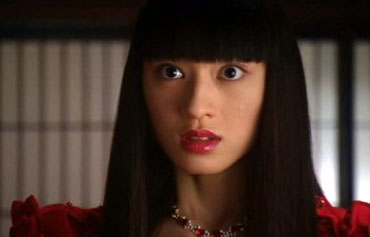
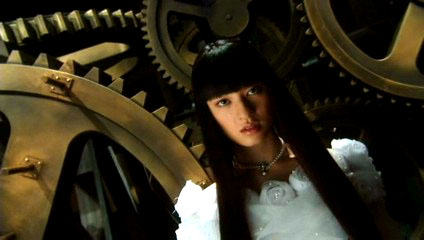
She looks splendid as a young heiress turned serial killer, committing a string of bludgeoning murders that culminate inside a huge clock tower. Chiaki carries the show in a variety of traditional outfits, and it's one of her biggest roles yet. This feature-length TV movie is out on a Malaysian DVD with (quite poor) english subtitles, see here for details.

Akechi Kogoro vs. Kindaichi Kosuke (2005)
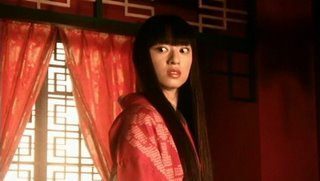
In contrast to the period setting of the current series, this was a feature-length special on TV Asahi, which pits two detectives against each other - well, it's more of a team-up really. Our man Kindaichi is still dressed in his shabby sandals. He stumbles upon a series of executive suicides, as does the dapper Kogoro Akechi - an expert profiler from the pages the novels by Edogawa Rampo (whose many horror novels have also been turned into films, such as the excellent Gemini and the recent Rampo Jigoku ).

The hook is to have two famous fictional detectives onscreen together, the twist is that they're in modern day Japan. So we swap the usual gothic for a high-tech sheen, the latest cars, skyscrapers and even a helicopter. This all makes the production look even more lavish than a lot of modern Japanese cinema. Indeed, movie star Masahiro Matsuoka (the lead in Godzilla Final Wars) plays Akechi, and pop star Tomoya Nagase (psychic Ryuichi in TV's Ring: The Final Chapter) plays Kindaichi.
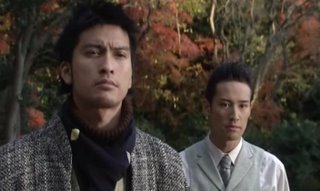
It's a lush, occasionally bloody murder mystery, shot mostly on location around Japan over the winter months. The accent is on action rather than detection.
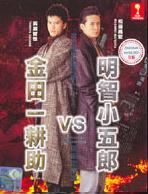
It's out on DVD in widescreen, with dodgy english subtitles in Malaysia. It's also on VCD under the title Private Detective Agency.
>>> <<<

If I find any more good references to the screen adventures of Kindaichi, the master sleuth, I'll add them to this page...

Mark H

May 31, 2006

RING - THE FINAL CHAPTER (1999) Sadako on TV again

RING - THE FINAL CHAPTER
(1999, Japanese TV series, IMDB title - Ringu: Saishusho)

All-region DVD (HK Video)

Long-winded TV series adaption of the Japanese horror classic

The solitary stone well, sitting in a clearing at the edge of the woods, in the movie version of Ring inspired me to seek out more horror films from the east. The TV series wouldn't have.

I finally finished watching this 12-episode live-action TV series. I was prompted to persevere by the observations of Denis Meikle in his substantial book on the subject - THE RING COMPANION. In it, he not only examines all the adaptions of the Ring books as films and TV shows, but also looks at the roots of Koji Suzuki's novels, in the tradition of Japanese horror stories and earlier ghost films.

He notes that the TV series Ring: The Final Chapter takes Suzuki's first 2 books (Ring and Spiral) as source material (after both books had already been turned into films), blending the video curse with a biological origin. Admittedly the script has to pad out 11 x 45-minute episodes and a 75-minute finale.


Once again there's a journalist investigating a number of heart-attack victims who all died simultaneously. A cursed videotape seems to be involved, but he watches it before learning that it has the power to kill. He's helped by two women, one a reporter, the other a friend who just happens to be a professor in a medical university. He only has 13 days to unravel the mystery of the video before his time is up.

The scriptwriters manage to mangle all sorts of mad theories together, insistent that every element of the curse can be explained scientifically. This makes a lot of the plot sound like a stretch, and demystifies the supernatural element, making it ludicrous rather than frightening.

They add numerous new plotlines and characters, and rewrite Sadako's backstory (once more), but still include her joining a theatre group - a scenario that was filmed again in the film Ring 0: Birthday (2000).

The only familiar face in the cast is Hitomi Kuroki, playing Rieko, the scientist. She starred in the original Dark Water, as well as appearing in Senrigan and Haunted School 3.

Even as television drama, it's hard to get involved because of the production values - this Japanese TV series is shot on video (which is very apt considering the central premise). But this is a 'look' that went out with the 80's. Most western drama is shot on film, with only soap operas shooting on video. This could distance the audience, or at least make them think the production is a lot older than it is.

Despite the running time, there are relatively few locations and only occasional action. It works well dramatically, most of the cliffhangers may make you come back for more, but the main problem is that it's rarely scary - another example of how the film trilogy got it right, while using the same source material.

Another annoying sign of the tight budget is the music, many of the cues being reused endlessly, even within an episode.

The DVDs (pictured above) squeeze all 12 episodes onto 2 discs, the picture looking a little soft, but it hardly matters. The English subtitles are removable and well-translated. There are a few newspaper headlines and signs that aren't translated and there's occasional spelling mistakes, but they don't spoil your understanding.


But I'd only really recommend this series to Ring completists who insist on seeing every incarnation of Sadako (who actually hardly appears here) and want to take another yet trip down that well...

If you'd like to learn more about the many other films, books, manga and TV that make up the world of the Ring, then go to
The Ringworld. It's a very helpful and expansive website that I find myself constantly refering to, as I try and track down every last version of this modern legend.

May 17, 2006

KAMIKAZE GIRLS (2004) - HK DVD review

KAMIKAZE GIRLS (Japan, 2004)
HK region 3 NTSC DVD (released by Widesight)


Truly bonkers, both visually and plotwise, this Japanese comedy crosses Clueless with The Odd Couple

I say Clueless because the central character pretty much puts style and decorum over anything else - Momoko is an offbeat 20 year old who dresses 'Lolita-style' in frilly dresses befitting a six-year old's party outfit. Due to her hopeless father's defection from the lowest echelon of the yakuza, she lives a good 2-hour journey away from her favourite dress shop in Tokyo. In order to fuel her outrageous outfit habit, Momoko decides to sell off some of her Dad's old fake designer wear. Enter prospective buyer, Ichigo, a trashy biker chick (well, she's more of a scooter chick, really) who's happy enough wearing clothes from the (gasp!) supermarket. An unlikely friendship begins, resulting in a series of off-beat adventures.


It's a frothy comedy, but with headbutting. It's very Japanese but you don't need to know that much about Japan - gangsters, track-suits and stupid haircuts are surprisingly universal themes! Unlike American teen-comedies, there are few references to sex, despite the characters both being 20 - the humour is so polite that there's not even any lesbian jokes aimed at the biker chicks. It's still sufficiently bizarre and violent to engage, though.

Although it looks like it's shot on video (my guess is High Definition), Kamikaze Girls belongs in the cinema, with its flamboyant visual style constantly flashing back to the characters' pasts. Eye-popping animation also tones down the violent excesses of the biker gangs, punctuating the film in much the same way Tank Girl did, if you'll excuse the comparison.

Kyoko Fukada nails the part of Momoko perfectly and ably carries the movie, making asides to the camera when people around her break her rules of etiquette. I look forward to rewatching the Japanese Ring 2 to see her in something different. Newcomer Anna Tsuchiya rises to the challenge of playing bad girl Ichigo, but while she may be extremely rude for a Japanese audience, she doesn't fully convince that she's really that tough. Her character is still an awful lot of fun, and I look forward to seeing the actress in her following film, the cult classic A Taste of Tea.

Comedian Hiroyuki Miyasako plays Momoko's useless father - the following year he landed the pivotal role (as Sada the reporter) in Yokai Daisenso (2005). Sadao Abe starred in the same film (as the marvellous Kappa) but here plays the ludicrous love interest with a D.A. haircut that could take your eye out. Boy, does he think he's cool. Abe is a creative chameleon of an actor who seems to maximize the potential of any of the surreal roles he's given. He keeps turning up in my favourite Japanese films, Uzumaki being the first I saw him in.

Anyhow, this DVD from Hong Kong (pictured top left) has a great set of removable English subtitles, that ably capture the humour of the dialogue. The Japanese audio is optionally presented in DTS, and the picture is anamorphic, for those of you with widescreen TVs. Strangely, the DVD is no-frills, which is ironic considering the frilly nature of the film.

Mark H

May 16, 2006

ZEE-OUI (2004) - Thai DVD horror review

ZEE-OUI (Thailand, 2004, aka THE MAN EATER)
Region 3 PAL Thai DVD


A famous serial-murder case gets a bloody re-telling

Li Hui, a Chinese farmer, arrives in Thailand in 1946 and gets renamed 'Zee-Oui' by a short-tempered immigration official. His uncle finds him a job, but the new name has to stick because it matches his work visa. Zee-Oui soon discovers that being a foreigner means getting bullied by everyone, even children. He works hard, but suffers poor health - a constant cough that he thinks is asthma. After much bad luck with his jobs, and as we learn more of his harrowing life in China, he takes to murder.

The subject matter here is problematic to say the least - a serial child-murderer who eats the hearts of his victims! It's especially tricky for western audiences to enter the fray with this particular version of an infamous true-life murder case. It's apparently been portrayed many times before in Thailand, but this time we're getting a revisionist version of the events, showing the murderer in a more sympathetic light.

Zee Oui, you see, is apparently a boogey man in Thailand - his trademark cough and cannibalistic traits make him a monstrous figure to threaten naughty kids with. It's also a justification for xenophobes to fear foreigners. Presumably, the two directors were trying to redress the balance.

As a viewer completely unfamiliar with the case, the film's opening scene gives away the conclusion to the story, before telling the whole tale in flashback. Without a good grasp of local history (the war between China and Thailand) and Thai geography, I was at a disadvantage in following the fractured timeline of the plot - not always realising when the story had shifted backwards in time. But this is something that other films manage successfully, despite cultural differences (I'm thinking of the backwards-and-forwards structure of the Japanese JU-ON films, for example).

Crucially, a brilliant scene where bullies cause Zee-Oui to visibly 'crack' is positioned after we've already seen murder victims. Whether I misunderstood the order of events, or whether the directors were saying that he was being blamed for murders he did not commit, I'm still not certain.

Another handicap to the structure of the story is the inclusion of several scenes interspersed among the end credits, that crucially fill us in with more details of Li Hui's upbringing. To introduce this information, after the film has finished, further hampers our understanding of the film's message.

Lead actor, Long Duan, almost succeeds in an impossible role, to make us sympathise for this man, but we're obviously constantly distanced from him by the brutality of his onscreen crimes. The directors intend for us to better understand his motivations - but besides listing the possible causes of his serial killings, many other political points are clumsily made about racism, sexism and government cover-ups. Overall, the naive script and convoluted timeline undermine most points they wanted to make.

While this may be award-winning material in Thailand, it's a difficult film to recommend to an international audience. The tone veers between over-the-top depictions of child murder and simplistic drama. The performances are sincere enough, but are undermined by sloppy plotting. Shortcuts taken by the script keep the story moving by using unbelievable coincidences. Moving the detective story along a little slower could have made for more intrigue and suspense, which are lacking.

So, without a strong story, and with glimpses of gore at the murder scenes, this can only be placed in horror film section. Presumably on a shelf with the other real-life murder cases that were turned into crass horror films.

Even so, despite the sensationalist subject, I didn't find the film nearly as shocking as it should have been. The crimes in The Untold Story (Hong Kong, 1993) also managed to produce sympathy for a cannibalistic child-murderer, but were far more effectively portrayed, and with a much lower budget. I guess, though, that Thai audiences may be more horrified by the desecration of holy sites and even a Buddhist shrine.

Technically, the film looks very good, with a large scale that convinces us of the many locations and periods depicted. If anything, the film looks too good - for instance Li Hui's early job slaughtering chickens takes place in a beautifully lit, colourful backyard, sending out mixed messages about what's occurring - is he in a good or a bad place? If it's such a nasty job, why does the place look so picturesque?

The Thai DVD (pictured above) has a sharp anamorphic transfer that shows off the film's crisp and colourful cinematography. There's a solid 5.1 audio track in the original Thai language, with optional English subtitles (that are well-translated and only occasionally misspelled).

There are some brief extras, a trailer, a teaser and two short 'Scoop' items (presumably prepared for TV publicity) - these include extra shots that aren't in the film, and some grainy, but grisly real-life photos of the original case. However this material is all untranslated.

Zee-Oui is an interesting film, entertaining even, it's certainly not dull. Technically it's one of the best movies I've seen from Thailand, and certainly isn't aiming for an obvious 'horror film' formula like many other Thai films. But it doesn't succeed as a drama or a reliable vers
ion of what really happened. I'd hesitate to recommend it to fans of Asian cinema or Asian horror - it's too gory to be taken seriously, but not horrific enough to be frightening.

Mark H

May 06, 2006

DINOCROC and THE BRUTAL RIVER - A couple of huge crocs!

DINOCROC (2005, USA)
and
THE BRUTAL RIVER (2005, Thailand)


2 recent films with monster CGI crocodiles on the loose


I enjoy monster movies, and I want more than anything to tell you about two exciting, action-packed movies with marvellous monsters in them - movies that deliver what their promotional artwork promises...

Instead, this is yet another warning to the curious...


DINOCROC

Evil scientists mucking around with accelerated growth drugs and inadequate containment procedures, loose DINOCROC on the world. It's a monster crocodile spliced with a two-legged dinosaur. It swims, it runs, it kills a few people. In between meals we get a turgid love story and some inept scientists trying to work out what the evil scientists are up to.

It's a rip on the plot of PIRANHA, but fails to rip the wit, the gore and the suspense of that 1978 classic, which was itself a Roger Corman produced Jaws-rip, directed with gusto by Joe Dante and written by John Sayles.

Nowadays the name, Roger Corman, above the title is alas not a seal of quality. But still DINOCROC suckered me in - if only the monster looked as good on the DVD cover as it did in the film. Admittedly, it's sort of convincing in the many night-time scenes, but it's back legs look a little too weedy to support its monster body. The attack scenes are mildly engaging, but never convincingly gory.

To be fair, DINOCROC has serviceable direction, a mixed ability cast, and a reasonable soundtrack, but I can't see this will ever be remembered for anything more than the snappy name (ouch). With PIRANHA, Corman attracted a talented team and created something special on a low budget.

Occasional moments of tongue-in-cheek black humour break up the lack of action in the first half of the film. The low-rent action races the second half to a logical if unexciting finale. There's a couple of rule-breaking plot twists, a little satire, but nothing to raise this above the level of an afternoon cable channel time-killer.


I watched the Thai DVD (pictured above) - which is a cheap way to watch a cheap film - but it's only a 4:3 pan-and-scan release. You'll have to get the Region 1 US DVD to see DINOCROC in 16:9 widescreen.


THE BRUTAL RIVER (or KHOHT PHETCHAKHAAT)

Meanwhile, in Thailand, they're still trying to rip off JAWS. New Asian film news website 24FRAMESPERSECOND alerted me to this one. This new movie supposedly tells the story of a monster croc that went on a killing spree in the sixties. First picking on a few isolated villagers deep in the rainforest, the croc went on to defy the best efforts of both holy men and the police force.

Great posters, but... It may be a good idea to make a low-budget monster movie to cut your movie-making teeth on - just don't let anybody see it until you've got something good. This is nicely shot, but completely lacking in suspense or excitement. Even during the 'action' scenes, there's a feeling that the story is treading water. For example, a man gets bitten by the croc - he thrashes around, people look horrified, he thrashes some more, no-one does anything, he keeps thrashing... The scene doesn't develop. Cross-cutting between victim and croc isn't telling a story, it's more like watching ping pong.

Also, the characters and story are really basic (how to establish a love story? - let's have a love song!). The actors only need to look scared, look horrified, or scream in agony (at something offscreen). Okay, there's a little gore, lots of dodgy computer generated monster croc, and no plot twists. I dare anyone to watch this without skipping forwards.


If anything, this is an excellent lesson in how not to make a monster movie. A few shots swiped from JAWS only reminded me that I really should watch JAWS again.

So please, if you think you'll like either of these 'crocs', please watch JAWS, JAWS 2, GRIZZLY, ALLIGATOR and PIRANHA first. If you want to see good CGI monsters, watch any JURASSIC PARK 1, 2 or 3, or even GODZILLA (1998). Then and only then, watch DINOCROC or BRUTAL RIVER.

Mark H

April 27, 2006

VOICE (WHISPERING CORRIDORS 4) Thai DVD review

VOICE - WHISPERING CORRIDORS 4
(2005, Korea, aka 'VOICE LETTER')

PAL all-region Thai DVD (released by Rose)


Fourth in the Whispering Corridors series, Voice has the most lavish budget in the series and delivers a stylish, bloody ghost story

The 4 films are linked by similar themes rather than by ongoing characters. Each film is set in a girls’s high school ‘with a history’, with a story that involves suicide, lesbian relationships, and schoolgirls haunted by their dead friends. Whispering Corridors (1998) got the series off to a shaky start. Memento Mori (1999) however, is a very good drama, with convincing naturalistic performances depicting modern school life. Halfway through, the film then concentrates on the ghost story and becomes less individual. It’s a good film, but not an essential horror. The Wishing Stairs (2003) then fell back on Ring for horror ideas and failed as a drama due to a lower standard of acting. Other films, like Bunshinsaba, were using similar story ideas to greater effect, if horror is what you’re hoping for.

But now, Voice is a giant leap forwards for the series, with fresh new ideas on scares, ghosts and twists. There’s also enough money for some unique visual FX flourishes, like when the ghost tries to piece together her memories. The cinematography is stylish and beautifully realised, adding rich colour to some scenes, defying the muted colours of the school. The cast is fantastic and very watchable. The depiction of school life isn’t as realistic as Memento Mori, but Voice succeeds admirably as a ghost story, with the added slant of having the ghost taking centre stage.

There are some startling death scenes and some extensive FX to depict the various complications of being dead, for instance, the ghost girl being confined to the school. These are ambitious and imaginatively done, but look more scientific than spiritual, as if the afterlife were a natural phenomenon.


It all helps the story take some startling turns and makes for a very different and eventful modern ghost story. The film falters a little towards the end, as the climax is a little drawn out. But if you're after horror, this is the main film in the series to recommend.


The Thai DVD release (pictured at top) is very reasonably priced, but at the expense of the film's extensive sound design. Music and voices are central to the plot, but unfortunately the original Korean mix is only available in stereo. It would certainly be worth getting a version with the 5.1 Korean mix if you have the right audio equipment. Only the Thai dub is in 5.1 on this release. If that’s not a problem, and you’re not expecting any extras, this is a well produced DVD, with great picture quality and well-translated and presented English subtitles. Strangely though, a couple of scenes of a schoolgirl smoking has been digitally blurred out. It’s not crucial to the film, but it is annoying.

November 2007 update: a Korean DVD with English subtitles and 5.1 audio has since been released, available here. Presumably it will have none of the Thai censorship either.


- - - - - - -

April 19, 2006

MUSHISHI (2005) - a wonderful new anime series

[Text UPDATED November Jan 2007]

A new anime without robots or guns or pocket monsters - just a mysterious guy sorting out elemental spirits in rural Japan

Ginko - the quietly spoken lead
in the Mushishi anime

This is my favourite anime at the moment... now concentrate...

Mushi are a strange, largely unknown part of nature - primeval entities in terms of biology, creatures exisiting somewhere between this world and the next.

A
n expert roams the countryside trying to help people who have problems with local mushi. He is Ginko, a Mushishi (or mushi-master), travelling around with a box of herbs on his back. He has a mop of white hair, though he isn't old, and he wears a brown trenchcoat. If it wasn't for Ginko's modern attire, you could easily think the series was set in the 19th century, or even further back. Everyone he meets lives traditionally, wearing kimonos and living in wooden houses.

This premise means that there are no modern distractions, or technological solutions on offer. Ginko solves problems with knowledge, deduction, simple science and occasionally herbs. I'm guessing here, but is it more than a coincidence that he's missing his left eye (hiding it with his hair) just like Mizuki Shigeru's popular character Kitaro the ghost boy? Could be just an homage, but I think Mushishi is very much a Gegege No Kitaro for an older audience. It's beautiful, paced, spiritual and keeps its humour understated.

This isn't to say that the episodes are slow - there's always something going on -usually a mystery or drama is unfolding - and the action frequently becomes spectacular. The artwork is beautiful, with bursts of intricate animation creating a sense of wonder, sometimes horror, of the other dimensions we're sharing space with...

Each episode stands alone as a story, with little need to watch them in order. There are a few links, especially the recurring character of the collector. My favourite episode so far tells of Ginko's childhood and how he became a Mushishi - it's a fascinating episode with many new mushi.


Mushishi
is based on the manga of Yuki Urushibara, whose stories the episodes closely follow - there's a sample of her artwork
on this page. But stories are running out, and the series looks set to end at 26 episodes. I can't get enough! To me it's unique and very different, very calming, very Japanese.

[UPDATE 10th Jan 2007: Translated volumes of the manga have now been published in the US.


The region 2 DVDs in Japan are slowly being released but without english subtitles. There's a new 'grey' release from Hong Kong (pictured left) of the first 13 episodes, but these are not anamorphic, and the subtitles cross the lower edge of the picture. As usual with this type of release, there are plenty of spelling mistakes and the timing is very poor on the first episode, way too fast. Not the perfect way to see a near-perfect series.

November 2007 update: the series was eventually released in 2007 in the UK and US, 16:9 anamorphic with English and Japanese stereo and subtitles.


There are two CD soundtracks available in Japan. The incidental music is made up of quietly beautiful instumentals, but the opening theme song is too drippy for my taste, a love song with wet lyrics is out of keeping with this story, spoiling an otherwise perfect anime. Both CDs are still available from Amazon or CD Japan.

If you're in the mood for spoilers, there's plenty of screengrabs here on the Memento anime blog, with plot recaps and extensive analysis.

Joe Odagiri as Ginko in BUGMASTER, the movie version of MUSHISHI

[UPDATE 10th Jan 2007: this news from Twitch - Mushishi is now also a live-action feature film, known internationally as Bugmaster (not a great title) to be released in Japan in March, 2007. Directed by no less than Katsuhiro Otomo (director of Akira and Steam Boy). It seems to be a fairly low-budget film, simply presenting several episodic stories together. Ginko appears as a young man (like the anime), rather than a teenager (in the manga). I'm not reading the reviews until I've seen it for myself, but I hear they're not as good as those for the series. Midnight Eye online magazine has a rare interview with Otomo about the film.]

DORM (2006) - a coming-of-age story from Thailand, with ghosts

(Updated September 2013)

My coverage of charming Thai ghost story Dorm (Dek Hor) is rather fragmented in Black Hole Reviews, because I used to publish news as it came in. Also, my most thorough review wasn't even in this site, but written for Twitch news. Because that's now mostly disappeared (except for one paragraph!), I'm republishing the original text below, together with my other notes on the main DVD releases of Dorm so far...


DORM
(2006, Thailand, Dek Hor)

Dorm is likely to get caught up among many other horror films from Thailand. But it's not so much horror, as a ghost story. Despite the young cast, it's certainly not childish - it has an uncomfortably dark side, reminiscent of Stand By Me, that makes it unsuitable for a younger audience. Anyhow, while I can't quite categorise it, I can say that it's a great Thai film, though not nearly as creepy as The Eye or Shutter.

While on holiday in Thailand, I was delighted to find that Dorm had just opened, a film I'd been looking forward to (having seen the trailer on Twitch) and better yet, half of the performances had English subtitles! Before the film started, in a large cinema (in Bangkok's MBK Shopping Centre), I was caught out by the whole audience suddenly standing up for the National Anthem accompanied by a photographic montage of their beloved King. We don't even do that in England! 


The film opens with Chatree (Chalee Trairat), being sent to boarding school in his seventh grade. His father justifies the decision by saying it will enable him to study harder. Chatree is very angry, but we don't know why he's unable to complain. His life is made even more miserable because he's a 'new kid', joining the school halfway through term. The teacher who doubles as the school matron, Ms. Pranee (Chintara Sukapatana), does little to make him feel welcome.

All the boys in the school sleep in one huge dormitory. On the first night, a gang of four misfits decide to pick on the new kid by telling him ghost stories. Lying under the covers, they tell Chatree that the school, the dorm, Ms. Pranee, even the very bed he's sleeping in, all have a dark history. They tell him about the school worker who committed suicide, the deserted swimming pool, and a ghostly caretaker. The stories are shown like 'flashbacks', but just how much of it are they making up to scare him? Their ruse works better than expected - Chatree has to get up in the night and visit a deserted toilet. Outside, dozens of dogs are looking up at his window and howling. He's too scared to find out what's scaring them and he rushes back to the dorm. Next morning, everyone sees that he's wet the bed.


Humiliated, and now on the wrong side of Ms. Pranee, Chatree's not interested in schoolwork, or even talking to his Dad on the phone. But at least he makes a friend. Vichien (Sirachat Jiantaworn) shows him the ropes, but also tells him that some of the ghost stories he heard actually have an element of truth. But Chatree about to find out for himself...


Besides ghost stories, Dorm is about coming-of-age, with an atmosphere that changes with the central character's moods. As Chatree discovers more about the history of the school, he becomes less scared of it, and the film's horror tactics relax. The mood remains quite morbid, however, and the carefully coloured cinematography keeps us cautious.

As the lead, Chalee (or Charlie) Trairat ably carries the film, but I'd liked to have found out more about what he's thinking - he's kept too busy with moving the story forward. The gang of boys who scared him have far better, quirkier characters and provide much-needed comedy. It's Chintara Sukapatana, as the matron, who impresses the most, though I failed to recognise her from a major role in Good Morning, Vietnam.


The young director, Songyos Sugmakanan (above left) previously co-directed another Thai hit, My Girl (Fan Chan) also starring Chalee Trairat, but Dorm is his first solo directorial effort. The story is partly based on his own bittersweet experiences of boarding school, and he's taken great pains to capture the atmosphere of the time (around 1985). In interviews, Sugmakanan also voiced his concerns about how the film has been advertised. I think the posters make it look no different from gory Thai horrors out there, such as Hell or Scared.

Though the story may be too much for an audience as young as Chatree. Maybe I'm being over-protective, but I'll warn you that there's a lot of urinating in the film! Close-ups of kids wetting themselves, boys peeing in bushes, lots of scenes in toilets - you don't get this in Harry Potter. (With a Thai audience, all the pee didn't seem to be a problem, but the schoolboys swearing seemed to be unusual.)

Throw in a brief sex scene (not involving the boys) and you've got yourself a censor's headache. There's also a vivid depiction of hanging that would certainly be a problem in the UK. Incidentally, I swear that the long shot of the hanging (glimpsed in the trailer) wasn't in the print I saw in Thailand. A clue to this could be in the two different versions of the film on release in Singapore, each with a different rating.


While it's not my problem to sell the film or decide whether kids should see it, I can recommend it as a beautifully-shot film, with finely-judged performances, and an unusual story set in quite a different culture. It's scary, but also funny, dramatic, suspenseful, sad... but all-round satisfying.

Dorm opened in Thailand in February 2006 and coincidentally had a Special Presentation at the Bangkok International Film Festival the same week. It's been a box office hit domestically and I hope it finds an international audience.


Dorm was then released in the US in 2007, but with a completely misleading cover - this scene doesn't appear in the film, and it's not an 'extreme' movie either. This region 1 DVD has audio commentary, deleted scenes, and a featurette. 


A reasonably-priced deluxe 2-disc DVD boxset (pictured) was released in Thailand, but region 3, and without any English subtitles. Best of the deluxe DVD extras is the uncut six-minute of 'clips' from Mr Vampire. A specially-filmed recreation that plays during the school's 'movie night' scene. It uses lookalike actors and recreates footage of the best gags from Ricky Lau's superb 1985 Hong Kong comedy horror. There is also plenty of behind-the-scenes footage, interviews, a Chalee Trairat pop video, and most of the original soundtrack.