September 30, 2006

THE HAUNTED HOUSE OF HORROR (1969) a lost classic

THE HAUNTED HOUSE OF HORROR (1969, UK)
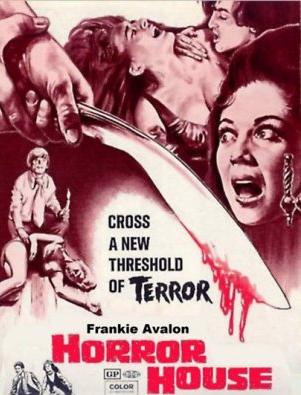
aka HORROR HOUSE (US title)
Region 2 PAL DVD (Anchor Bay)

"They thought it would be fun to be frightened!"

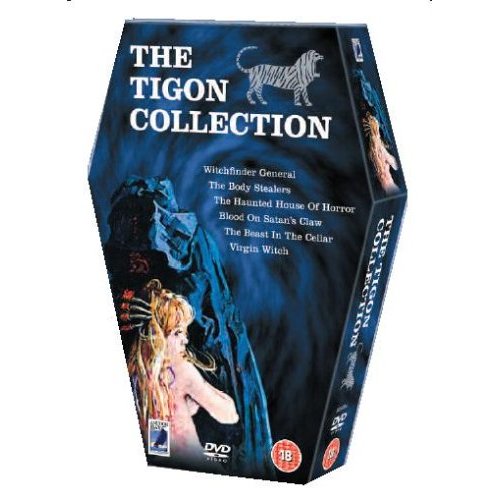
This should be very good news - a cult horror movie finally being remastered on DVD. But, it's only available as part of a 6-movie Tigon boxset, and only in the UK.


I keep revisiting The Haunted House of Horror, partly out of nostalgia having watched it late at night on TV over three decades, partly because I'm sure it would have been a classic, if only it had been left alone. I've always felt that there was something different about the film, particularly the way the cliched slasher plot is heavily subverted, in a way that hasn't been seen since. I feel I can't spoil it for the uninitiated, though...

Because of a huge script rewrite and reshoot halfway through production, we have lost what could have been a key horror film of the sixties. An intricate, dark, ground-breaking story that has almost been reduced to a silly teen slasher. As it stands, it's still ten years ahead of Halloween and Friday the 13th, with murder scenes far bloodier than either franchise.

But the movie also endures because the original intent of the script can still be spotted, if only the viewer can endure the many lesser scenes. Of course, this game of 'spot the good stuff' (which I've been playing for years) is now made easy as the director's commentary track now pinpoints what was his, and amusingly explains why.

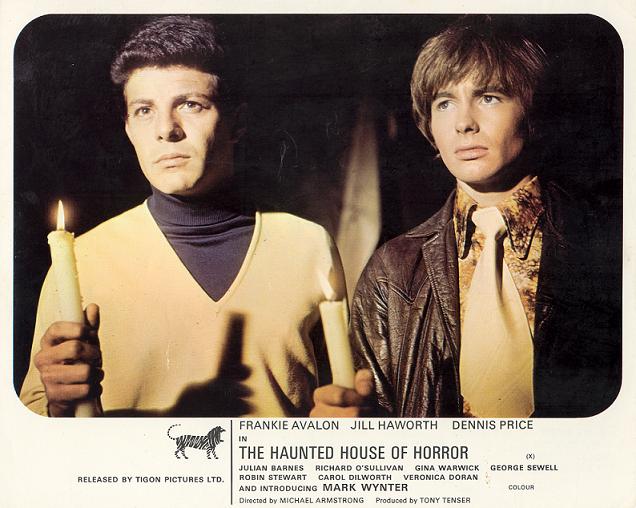
Frankie Avalon and Julian Barnes firmly holding their candles

STORY (spoiler-free)
It starts in Carnaby Street, the centrepoint of swinging sixties fashion in London's Soho. Unlike the Austin Powers depiction, it's a fairly ordinary row of clothes shops - it was the fab gear that made the place famous. Here we meet Gary and Dorothy on a coffee break. They're planning on going to a party. But Gary gets drunk down the pub first. He recovers in time to join his groovy gang of friends and split the party to seek thrills at an old mansion which has been abandoned since a gruesome murder.

"Let's have a seance." They do. They get scared. They split up and scour the old dark house by candlelight. One of them gets hacked up by a very large knife. The party's over...

But wait a minute, since the house was all closed off and bolted from the inside, that must mean that one of them is the killer! Leader of the gang, Chris decides to avoid trouble with the police and solve the mystery himself, by getting the gang to agree to lie about the murder and hide the body...

A stagey publicity still - Avalon kneels over a red herring

REVIEW
I can't recommend this film without a heap of qualifiers. Away from the 'haunted house' itself, there's little atmosphere or intrigue. The funky fashions and language can still amuse, but there's some extremely dull police procedural stuff, the police lagging far behind the viewer on what's going on. The backing music is usually very annoying, either totally inappropriate to the mood, or far too loud and heavy-handed horror cliches.

The acting too is a mixed bag - this could of course entertain you, but we have very good actors mixed with some barely adequate ones. Again, the commentary track helps tell us why - for instance, one of the central gang members was bumped up from bit-part to co-star when David Bowie ducked out of the project. Bowie would have played Richard, a character that Julian Barnes annoyingly plays as naive, but still catches an essence of the ambiguous sexuality that the part originally required.

Similarly, Gina Warwick as Sylvia had her part totally changed, and is now featured in a completely trumped up sub-plot, about her affair with a married man (actor George Sewell, on a break from TV's UFO), that dominates the movie.

Thankfully, there are more experienced actors such as Frankie Avalon - here trying to get back to serious roles as Chris, a rich kid playing down a drugs charge. Quite a change from his endless Beach Party movies and way before his hit cameo in Grease.

Playing his bitchy girlfriend is the haunted-looking Jill Haworth, who had a big break in Hollywood (as an Otto Preminger 'discovery' in Exodus) that fizzled out and a big break on Broadway (as the original Sally Bowles in Cabaret!) that fizzled out. Over-qualified, but always giving her best, Haworth usually makes these Brit-horrors of the time the only reason to watch. The boring It! (from 1966 - a latterday take on The Golem legend, also starring Roddy McDowall), and the truly awful The Mutations (1974 - a Freaks update with Tom Baker and Donald Pleasance). But I truly recommend her in the similarly themed, trapped teens (in a lighthouse) slasher Tower of Evil (1972).

Anyhow, despite it's many shortcomings, it's the atmosphere inside the house that still grabs me, and here I enjoy imagining the film it might have been. Two pivotal murders in particular are still shocking today, and it's no surprise to learn that they were the bloodiest ever seen up to that point. (The director figures this was because the chief censor at the BBFC, John Trevelyan, was a friend of his!)

But also, there's a genuinely unsettling hysteria that overtakes the characters when they're in the house. For a few delirious scenes, it evokes a ghastly sense of the killer's madness, and what it would be like to be trapped in a house with a nutter with a knife. This is particularly helped by the soundtrack kicking in with frantic, echoey violins, right up to when the killer approaches the last helpless victim...

However, even this effective climax is diluted, even sabotaged, by constant cutaways to a police car racing to the rescue.

DVD
Finally making a debut on DVD, the film has been remastered from one of the brighter prints. The VHS version, and recent TV showings have been from a ridiculously darkened print, where you could barely see anything at all in the night scenes. This DVD makes the film look almost brand new, though it's almost too bright now! Considering the original title was The Dark, we now see characters stumbling around in well-lit sets pretending not to see where they've dropped their candles.

The DVD is presented non-anamorphic widescreen 1.66 and has a marvellous commentary track from the writer/director Michael Armstrong who finally gets to set the record straight as to which scenes he shot before the film was wrested away from him by the producer! Armstrong (who went on to direct the even more brutal Mark of the Devil), has his knives out for AIP producer Louis 'Deke' Heyward and the director Gerry Levy, who shot the extra scenes that subverted the original script.

Armstrong, in surprisingly good humour, constantly has to point out scenes where "none of this is mine". It was his first film as director and he'd set up an intricate script with complex, realistic characters and a gay character pivotal to the relationships within the gang. This plotline is now only visible as sub-text, rather than explicitly stated, and should have elevated the film to that of a controversial, hit thriller.

The Haunted House of Horror isn't a lost classic, The Dark is.

- - - - - -

September 29, 2006

Robby the Robot, Airwolf, Stormtrooper... collectibles

COLLECTIBLES - A NECESSARY VICE


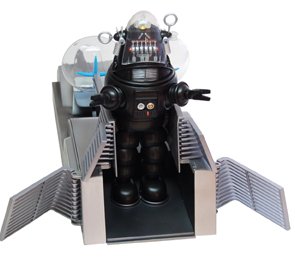
This limited edition set features a jointed, posable die-cast metal Robby the Robot (also available seperately), with his transporter sled from the sci-fi classic Forbidden Planet (1956). Made by X-Plus of Japan, it's available from Comet Miniatures. See the link for more angles of the set.

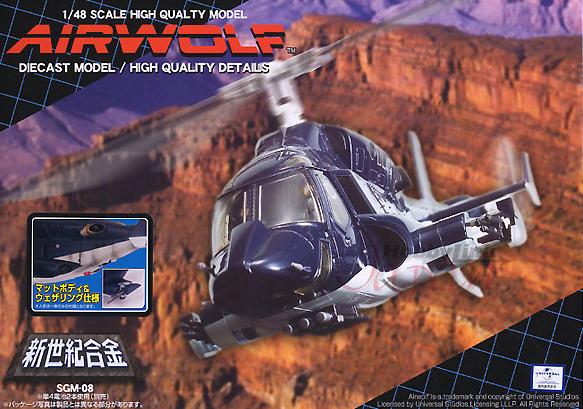
A 1/48 scale die-cast Airwolf helicopter (from Aoshima) seen in the 1984 TV series - it has a revolving blade and all the external accessories seen in the series More details and pack shots from HobbyLink Japan here, also available from Comet Miniatures.


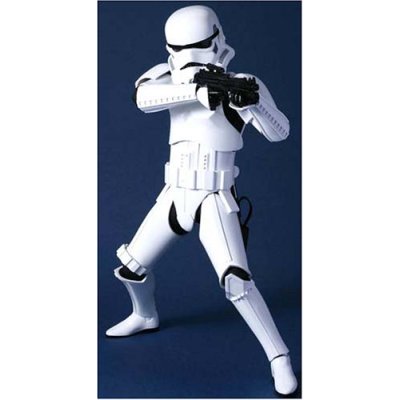
Not cheap, but highly desirable, is this super-realistic, 12 inch high, posable action figure of an original Star Wars Stormtrooper- it looks fantastic. Made by Medicom in Japan. More details on
YesAsia.

I've also picked out these more unusual figures from the same
Real Action Heroes range from Medicom to show you...


Saya the vampire slayer, from anime Blood+


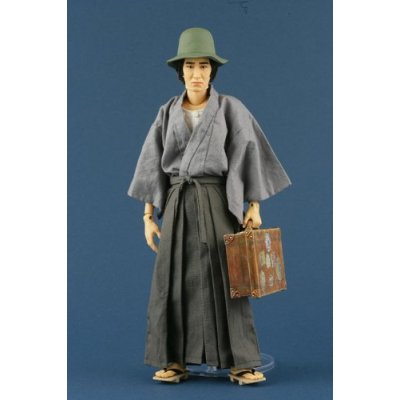
Ginko, from the anime Mushishi


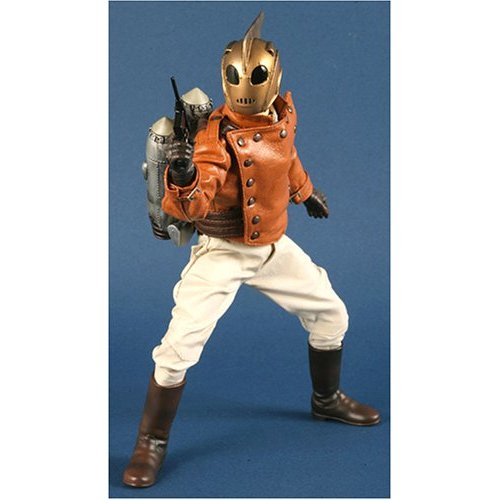
The Rocketeer (1991)


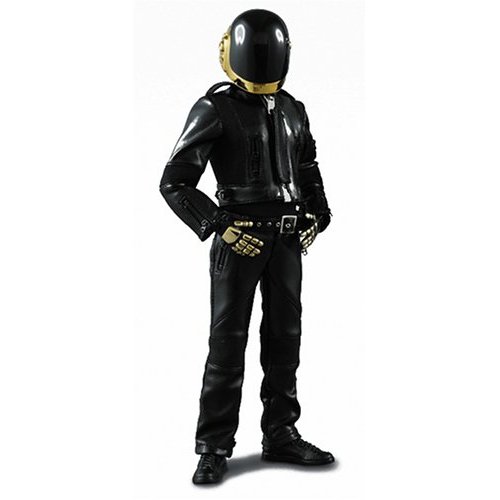
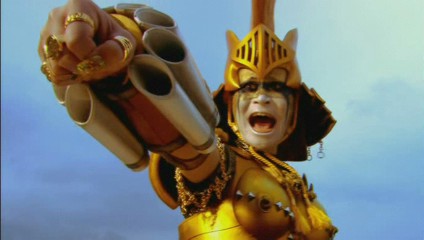
Lastly, even a range of characters from the new movie from Daft Punk, Electroma are available now as Medicom figures - it's only just been shown at the Venice Film Festival! More from the range at YesAsia here.

A still from Daft Punk's Electroma

- - - - - - -

September 28, 2006

YOG - SPACE AMOEBA (1970) Toho monster rally

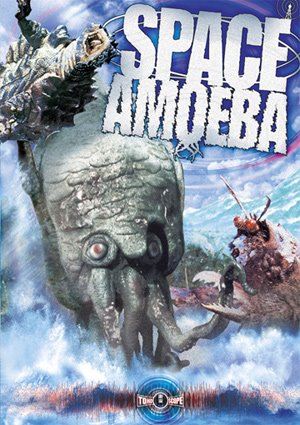
SPACE AMOEBA
(1970, Japan, YOG - MONSTER FROM SPACE)

If your nightmares include being plucked off a beach by a giant squid, (I know mine do), this could be the film for you...

Region 1 NTSC DVD (Tokyo Shock)

There are many Toho Studio monster movies that don't star Godzilla. Much as I'd love to review every Godzilla movie for you and highlight the best (all in good time), I feel that the non-Godzilla films get far less coverage, and I'm shocked and pleasantly surprised that such a rare item is out on DVD. Space Amoeba has finally been released widescreen (2.35) in Japanese, after years of having the picture cropped and the dialogue dubbed. Cause for celebration and reappraisal - it's a good, clean, fun (man in a suit) monster movie!

In 1970, Toho rounded off their extremely successful monster decade with this gem, before lower budgets began to compromise their films. In Japan, according to IMDB, it was called Gezora, Ganime, Kameba: Kessen! Nankai no daikaijû
but was given
even sillier names for its release in the west. Despite the title and even sillier publicity stills, Space Amoeba has an A-list production crew.

Directed by Ishiro Honda no less - the director of the original Godzilla film (Gojira, 1954) and the best of Japan's sci-fi films over three decades. Honda directed one last Godzilla film after this, Terror of Mechagodzilla (1975), then semi-retired to TV work. But he returned to assist his long-time friend Akira Kurosawa on Kagemusha, Ran and Dreams.

After a title sequence that teases us with close ups of the movie's three monsters, the opening shot is a startlingly modern image - the silhouette of an Apollo-like space rocket against a huge sunrise. Instantly I was reminded by the coincidental (?) opening shot of William Peter Blatty's black comedy The Ninth Configuration (1980).

We're then treated to a marvellous launch sequence, all done with huge models, obviously benefitting from recently seeing the real thing on TV. Plotwise, the Helio 7 is being sent on an unmanned mission to Jupiter. Of course, it never gets there, as the probe gets intercepted in space by a, er, huge space amoeba. A beautiful special effect - a glittering transparent blob that oozes its way into the spaceship and takes control, crashing the probe into the sea near a remote South Pacific island...

Enter young, trendy photographer Kudo, on the trail of the missing probe - he saw it land but no one believes him. He tags along with an expedition to the island, where a report comes in that a Japanese explorer has been snatched by a giant squid! This of course is at a time decades before giant squid were known to exist.
The team discover that some thing from deep space has come to the island with the probe, and is trying to assimilate itself into different lifeforms on the island.


While this is more of an excuse for a giant squid, a giant crab and a giant turtle to run around terrifying people, the plot is probably derived from the 'blob from space' scenario first posed by writer Nigel Kneale in The Quatermass Experiment. Indeed, the scene of the amoeba entering the capsule in space is something I imagined occuring, but was never explicitly shown, in the original Hammer film.

The 'invasion from space' plot, together with a sub-plot about industrial espionage on the island, is strong enough to keep us interested in the human characters. This is very rare in giant monster movies, and a credit to the cast for making the implausible interesting.

Akira Kubo plays the photographer - normally a cleancut astonaut or hero-type, Kubo obviously enjoys letting his hair down, sporting a designer beard, a funky hat, and playing it cool without being obnoxious. The actor is still working today, recently appearing in a Chiaki Kuriyama horror film called Mail.

The short-tempered scientist Dr Mida is played by Yoshio Tsuchiya, fresh from starring in the extremely risque, avant-garde
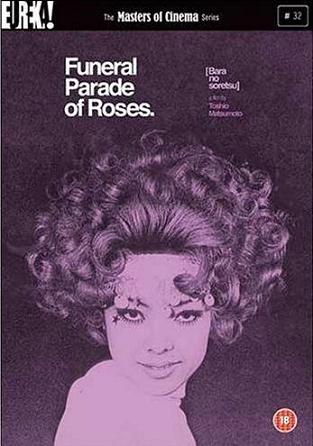
Funeral Parade of Roses.

The dodgy-dealing Obata, is played by Kenji Sahara, who only ever seemed to act in Toho monster movies, and still is! He was in Godzilla Final Wars (2004).

The heart and soul of this party, Ayako, is played by Atsuko Takahashi, who had previously played a beautiful alien (Kilaak!) in another classic monster rally, the Godzilla film Destroy All Monsters (1968).

So, we've got a blob who takes over creatures, makes them gigantic and strong and directs them to the native village for some gratuitous destruction of buildings. This of course means that the giant squid has to walk around on land. If you thought that the walking squid in The Calamari Wrestler (2004) looked silly, then what about a walking giant squid. Much fun can been made of Gezora's wobbly walk, but let's face it, most squid are pretty wobbly out of the water. The rubber suit is a lot of fun, and very cleverly filmed so you don't ever see the legs. In fact, it looks pretty much as it should do, but the glowing eyes are a little over the top.

Next up is Ganime, a giant crab. (Who comes up with these names?). It gets to fight with Kameba, the giant rock turtle in the spectacular climax - a wonderfully intricate volcano set.

My main complaint about the film is that Gezora (the squid) never tangles with the crab or the rock turtle. I was disappointed the first time I saw Space Amoeba for this very reason. Subsequently, I revisited my old books and discovered publicity stills that feature all three monsters fighting with each other (above). I'd been suckered by the publicity - the scene doesn't appear in the film. But this second viewing of the film has kindled new joys.

Yes, the monsters are all men in suits, but what fantastic suits. The movements in Ganime's face rivals Predator's ugly mug, many years later. Kameba is a great monster design, again with a convincingly articulated face, and with the fact that he's a man on all fours cleverly hidden.

This undemanding monster movie moves swiftly along - lots of action, and a better storyline than most. However when Akira Kubo summarises the plot during the closing scene, even the scriptwriters know how ridiculous it sounds.

Did I mention the mechanical bats? These effects are obviously 'old school' wirework - way before we could summon up CGI bats. But they're very good for what they are. Indeed 'bats on wires' deserve a movie sub-genre of their own. One which I'm currently nostalgic for...


- - - - - - -

Sayonara, Tiger Tanaka

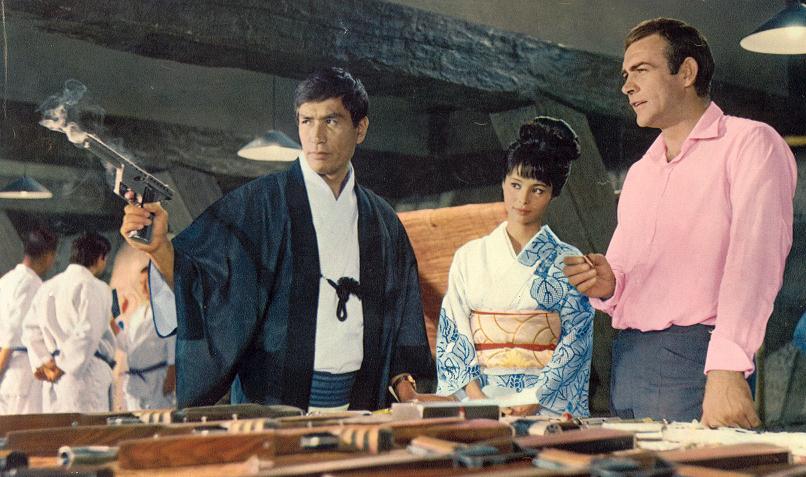
Tetsuro Tamba, Akiko Wakabayashi and Sean Connery
in You Only Live Twice

I don't do this every time one of my favourite people passes away - maybe I should - but in this case it's certainly relevant to these pages.

Japanese actor Tetsuro Tamba passed on September 24th. I just learnt the news on TwitchFilm.

I saw the fifth James Bond epic You Only Live Twice on the big screen before I was ten. It was my first glimpse of Japan, and of Tetsuro Tamba. As far as I knew then, Tiger Tanaka was M's equivalent, the head of the Japanese Secret Service and he did have his own private monorail under Tokyo, and he did have a castle just for training an undercover ninja army and he did have a helicopter with an underslung electro-magnet specifically for picking up baddies' cars from the roads for dumping them into Tokyo Bay.

Of course I was impressed, and always assumed he was a very important actor. Indeed, recently I learnt that the role was originally turned down by no less than Toshiro Mifune, before Tamba got the role.

It was only by getting into Japanese films recently that I also discovered that, forty years later, Tamba was still working, when I saw him in the wonderful Sakuya, Slayer of Demons. Indeed, his last film The Submersion of Japan has only just been released in Japan, and I've yet to see it.

If you're a fan of samurai movies or Yakuza thrillers or even Happiness of the Katakuris, chances are you already know his work. Some online obituaries have said that Tetsuro Tamba, (sometimes credited with the spelling Tanba) appeared in over 300 films, and I don't doubt it. I just wonder how many of them we'll get to see.

Unfortunately for us, he only lived once.


- - - - - - -

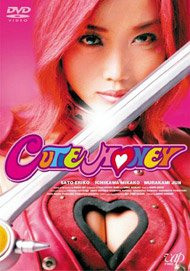
CUTIE HONEY (2004) Live action anime movie!


CUTIE HONEY (2004, Japan, imdb: Kyuti Hani)

"Don't talk over my monologue!"

Based on a well-established anime character, this live-action feature film is out on Hong Kong Region 3 DVD (pictured above), and will hopefully be released Region 1 in the near future. Bandai Visual have picked up the US rights.

Got comic book villains kidnapping young women and professors of nano-technology? Can they not be stopped, even when surrounded by a hundred police cars? If bullets bounce off them, who can fight them?

Cutie Honey, that's who. She's the superhero who's a fast, strong, slightly dim, sexy, cute, master of disguise. Honey flash! All she needs to do is fight the baddies. But to find their hideout she might need to team up with a female police detective sharpshooter, and a special agent fop with a fast car.

This is an excellent attempt at turning an anime into live-action. The successful transition could be due to the director, Hideaki Anno, having also written and directed (and animated!) anime projects beforehand. The result is a film with a surreal, colourful, fast-cutting style and a nutty plot with nasty barely-human villains.

Obviously, having Cutie Honey personified achieves a level of sexiness that drawings never could. But besides her supple, ample figure, former model Eriko Sato also impresses in the fight sequences and dramatic scenes, as well as a knack for comedy.


The fights have a similar mad visual style to Kung Fu Hustle (also made in 2004) with a mix of live stunts and high speed 'cartoony' visual effects. The result isn't supposed to be realistic, but fun. This also means the special effects don't have to be photo-real, like the Hollywood superhero films strive for.


The other film this reminded me of, was the similarly tongue-in-cheek Zebraman. Also the recent Charlies Angels, but with much more cheesecake on display. Cutie Honey is cheeky, funny and a little edgy. Despite Honey's ample charms, there's a dab of gender confusion going around. The lead villainess seems to be played by a man, the lady cop is extremely stern and abhors weakness, villain Gold Claw is very butch, and even Honey's voice can get extremely low when she's not disguising herself as men.

But perhaps the reason I really liked this was because Honey's mobile has a Ghidrah ringtone!!!

- - - - - - -

September 27, 2006

PREMONITION (2004) J-Horror Theater #2


PREMONITION (2004, Japan, aka YOGEN)
Region 1 NTSC DVD (Lions Gate)

Want to see the newspaper?

This is the second in the 'J-Horror Theater' series of movies - six unrelated stories with different horror directors, linked only by the same production team (most importantly producer, Taka Ichise, trading on his success with the Ring and Ju-on franchises).


Incidentally, there's a series of four Korean horror films coming out soon that are using this same trick (see the posters at 24framespersecond - Aug 28 entry).

Premonition was released in Japan as Yogen at the same time as the first in the series Kansen (Infection). The third, Rinne (Reincarnation), directed by Takashi Shimizu, was released in 2005.

I was expecting more from this film, seeing as it was directed by Norio Tsuruta, whose eerie Kakashi and Ring 0: Birthday had impressed me.

Premonition begins with a real life newspaper article about the same real-life psychic who inspired Ring, and was refered to in the book and movie.

The strong premise is that a newspaper is delivered with headlines describing deaths that haven’t happened yet, and what happens when the reader tries to avert the fatalities. I can't describe much of the plot without spoiling it from the start. I can just say that the opening scene is incredibly tragic and that the eerie mood doesn't take long to get established.

Based on a thirty year old manga story called Kyofu Shinbun (literally Newspaper of Terror), The script expands and incorporates the original tale very cleverly.

In the thorough extras on the Region 1 DVD is a very honest interview with the director, Norio Tsuruta, who admits that his horror films have been much more subtle in the past, but now, jealous of the success of Takashi Shimizu, he’s been encouraged to ‘show more’ horror. Looks like he studied Ju-on 2 very closely, because there’s a similarly tour-de-force sequence of alternate realities towards the climax, where the viewer is disorientated by constantly changing timelines. He even cast the star of Ju-on 2, 'horror queen' Noriko Sakai, as the leading lady here.

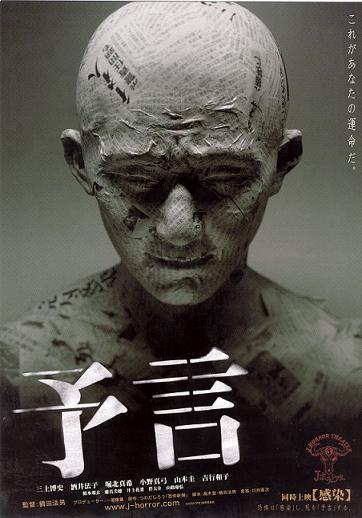
The original Japanese flyer

Almost instantly, I was gripped by the film, which has a heavy air of supernatural suspense right from the start. This mood was sustained for much of the film, no mean feat, but the actual horror payoffs, that the director has previously avoided, didn’t work for me. Ghostly apparitions were shown in too strong a light as too physical, and failed to shock or scare, making the main actor’s reactions appear even more over the top.

Leading actor Hiroshi Mikami has to appear distraught, scared or shocked for much of the movie and wasn't reined back as far as he could have been. To many viewers I’d guess his acting would be seen as way ‘too much’ and more likely to amuse than frighten. This isn't a film to turn on your friends to Japanese horror.


Similarly, there's another awkward moment that may also unintentionally amuse. A scene at a funeral service shows a mourner about to look into the casket. The mother of the deceased opens up the casket and allows her to look inside before warning her that the dearly departed has had its face ripped off!

Full marks for mood (and cutest child ever), but points deducted for actual horror. Again, I really enjoyed the disorientating climax, almost a nod to the climax of Dead of Night (1945) where the protagonist stumbled through every previous scene in the film. The climax and the film’s satisfying resolution makes up for its deficiencies. But I had been expecting a more even and successful film from this promising series.


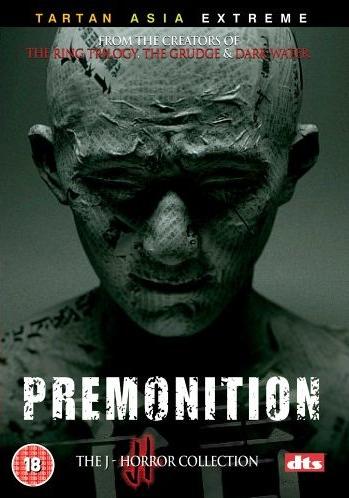
In the US, the series began on DVD without any sort of fanfare, considering the talent involved. I'll admit that the lacklustre front cover has put me off watching this until now.


Premonition, Infection and Reincarnation have just been released in the UK (as part of 'The J-Horror Collection'), with better DVD covers, taken from the original Japanese ad campaign.


- - - - - - -

TETSU NO TSUME (1951) A Japanese Jekyll and Hyde

A poster for the original Japanese release

TETSU NO TSUME
(1951, Japan, "Claws of Iron")
NTSC Laserdisc (Daiei Home Video)


When Jekyll and Hyde met King Kong and Wolfman

I bought this years ago, sight unseen, on Japanese laserdisc and have only just discovered what the film is actually called, thanks to an extract from Patrick Macias' book Tokyoscope. His book is a rare look at cult Japanese cinema. Where most English-language books only look at Kurosawa or Godzilla, Patrick has opened up the subject on the sort of cult films that I love, and reviewed them in an informative and amusing way. The review is recommended - see here.

( It's constantly frustrating that many treasures of East Asian cinema are hidden in an information 'Black Hole', veiled behind different languages, and only written about in a few Asian magazines or on the www. I'd go so far as to say that the recent boom in Asian horror wouldn't have succeeded without the internet. )

But, thanks to Google, now I know that this film is called Tetsu no Tsume, it translates as "Claws of Iron". It was made full-frame and in black and white. I re-watched it, but without any form of translation, so bear with me...

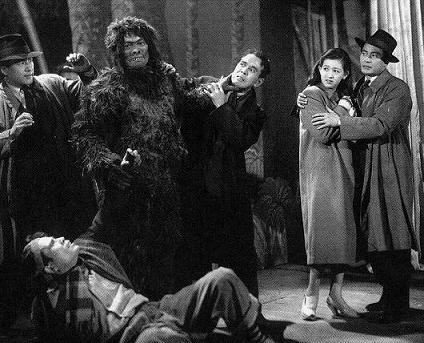
Caught somewhere between Hollywood's The Wolf Man (1940) and Hammer's Curse of the Werewolf (1960), mixed up with Dr Jekyll and Mr Hyde and King Kong, the result is unique, and not altogether unsuccessful!

A series of murders occurs near a nightclub and a local church. The list of subjects include meek church worker, Tashiro, who seems to act strangely around palm trees and bottles of alcohol. He's also torn between his love of the church organist and a nightclub dancer (much like Spencer Tracy in his portrayal of a drunken Mr Hyde in 1941). Tashiro's schizophrenic life is physically accentuated by a bite he received from a wild ape in the jungle during the war. Whenever he drinks excessively, he transforms into a beast-man (don't we all).

Yes, instead of Dr Jekyll's potion, all he needs is alcohol to help the badly-behaved beast emerge. A lowlife drinking buddy decides to exploit his curious talent for transformation into an act at the local theatre! This turns out to be quite a night. The opener is a singing act in a glass cabinet. She magically changes her clothes whenever electricity is arced across the case (how is that possible? why would you do that?).

For the star turn, Tashiro comes on stage, sits down and drinks. Not very entertaining (unless you like plays by Beckett), until eventually his face becomes bestial, using a similar effect to Murnau's Dr Jekyll and Hyde (1931) where a change in the colour of the lighting reveals his monster make-up.

Tashiro then ducks behind some jungle scenery and obediently changes into a gorilla costume, presumably to illustrate his wartime experience to the audience. Of course, things go wrong, Tashiro rampages down to the local nightclub, spectacularly wrecks it, steals a dancer and heads for the rooftops with his trophy (like all apemen before him, from Murders in the Rue Morgue to King Kong - it must be genetic).

But I'm telling you the plot! Of course I won't spoil the ending, but strangely, it features the church bell, much like the climax of Curse of the Werewolf. In this genre, coincidence seems to be rife.

The bizarre story moves along at quite a pace, probably with an American-enforced morality written into the script (drink, nightclubs and loose women - bad, church - good), that even gorillas could understand. (Patrick Macias' review infers that the American occupying force in Japan at the time, had a strong influence over even the content of entertainment - this warrants further investigation...)

The earnest acting and moody photography (palm trees have never looked so forboding) are undermined by the inept monster make-up that's eventually revealed. Beast-man in close-up looks like a bad Halloween make-up kit, including the comedy bad teeth. But in wide shots, the ape suit looks good, and the nimble stunts that exploit his animal traits, like clearing a fence and leaping up to a balcony, are cleverly done.

The film is nothing spectacular to rave about, but like the Hollywood monster movies of the forties, I think it has a sustained watchable charm - it's certainly a unique mixture of several horror genres and is a far better production than many of the ape movies widely available in the US. It's also unusual that the apeman isn't used here for comedy value.

I'm sure this film would find an audience, if only it was released with a translated soundtrack or subtitles. At present I don't believe it's available on any video format, certainly not Japanese DVD, and never had a US release.

Actor Joji Oka plays Tashiro, the director is Shinsei Adachi, and IMDB lists this film only under the name Tetsu no Tsume.

I just wanted you to know about it.
- - - - - - -

September 21, 2006

FUNERAL PARADE OF ROSES (1969) A Kubrick fave

FUNERAL PARADE OF ROSES (Japan, 1969, Bara No Soretsu)
Region 2 PAL DVD (Eureka)

If you go down to Shinjuku tonight...

I like to watch films knowing what year they were made, but I started in on this film in ignorance and really couldn’t work it out!

It’s in black and white, but the opening scene looked so modern, I almost thought it was made in the eighties. Two white figures making love blend into the white background. A beautifully filmed scene that confuses what’s exactly going on, which parts of the body we are looking at, and disguises the fact that we are actually watching two men.

Afterwards, I found out that this was made in 1969 in what could easily have been a Japanese Andy Warhol movie - except that the acting is better, the story is better, and the production was more professional and much more inventive than many of Warhol's contemporary feature films (I'm thinking of Flesh, Trash, and Heat). Like a Warhol film, there’s sleaze and drugs and transvestites and gay sex, but in Funeral Parade the drama isn’t OTT camp it’s played straight, the sleaze and drugs and nightclubs feel realistic too, rather than a bad, bad taste soap opera. The gay sex is unflinching and quite explicit for the time. The experimental side of the production is inventive but never tricksy and casually flips us in and out of the film. At one point the lead actor is interviewed about how he sees his role in the film. It’s like mixing the dvd extras into the film itself.

Real-life characters play themselves, together with the lead, Peter, playing a character like himself, alongside professional actors. Peter, a bona fide drag queen, plays Eddie (yes, that's him on the DVD cover), who's trying to become the number one Madame in the Genet nightclub (a fictional name for a real location). He's having an affair with the club's owner, played by Yoshio Tsuchiya, who looks younger than ever! I’ve seen him in a dozen movies, mostly made before this one - the flattering lighting that makes the queens look more convincing works wonders on him too! He looked older and more crumpled playing grumpy villains in classics like Matango - Fungus of Terror.

The film verges on semi-documentary, giving us a valuable insight into the sixties gay scene in Tokyo, not to mention experimental film-making, drug culture, fashion... for all of this, it's an astonishing film. Some of the narrative flits around in time, the effortless flashbacks and flash forwards are clever, but easy to follow, but may have disorientated viewers in 1969! I'd love to see a similar snapshot of the lesser-seen side of Tokyo now - I certainly haven't seen the modern gay scene as well documented anywhere recently.

The positive representations of drag queens and gay lifestyles are rather undermined by the tragic and violent edge provided by the film's Shakespearean plot, which still packs a dramatic and visceral punch today. Together with the non-linear narrative and the horror movie climax, this ranks as a classic across several genres.


It was exciting enough at the time to become one of Stanley Kubrick's favourite films, even influencing the filming techniques he used in A Clockwork Orange - a very high commendation indeed, to be ripped off by Stan the Man!


This DVD is the first home video release of this film outside Japan. I'm astonished that I'd not heard of it before, when I was trawling through Warhol, Derek Jarman and John Waters' back catalogues back in the eighties.


Made around the same time as Performance, which it's worth comparing to, Funeral Parade of Roses should rank as one of the most interesting films of the sixties. Where has it been hiding?

At least the DVD extras pay service to the director, Toshio Matsumoto, who's well-represented in a recent long interview and an interesting (subtitled) commentary track. There's also a poster gallery and a cheeky contemporary trailer. Super!

September 19, 2006

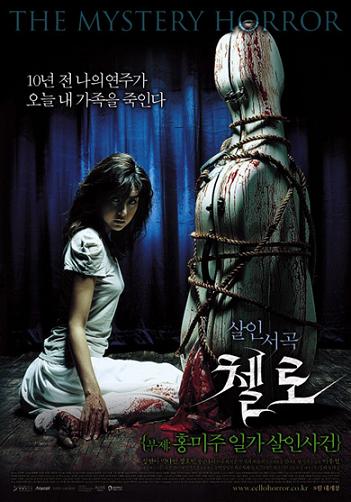
CELLO (2005) absolutely everything is scary

CELLO (South Korea, 2005)
Region 3 NTSC DVD

About as scary as jello, Yello or Elvis Costello

From last year's batch of South Korean horror films, this is the worst so far. I'd recommend The Wig and Voice way over Cello.

A cello teacher, recovering from a car crash, is being haunted by something or someone. Is it something to do with a spooky cello she bought for her spooky mute daughter, a spooky tape of cello music, or because they have a new spooky mute housekeeper at home...

The story has so many little red herrings in it, that I wasn't sure what was supposed to be scary. The camera paused on absolutely everything and everyone, with spooky music signalling that all the close ups were siupposed to be scary and significant. It took fifty confusing minutes before we thankfully got a flashback to clue us in to what the hell was going on.

There are a few sudden shocks rather than scares, but even these were misjudged, often obliterated by unconvincing and vague CGI effects. The scares seemed to be aiming at Ju-on: The Grudge for inspiration, but didn't work on me. The death scenes were silly or unimpressive, and the characters' reactions seemed muted and out of step with the events.
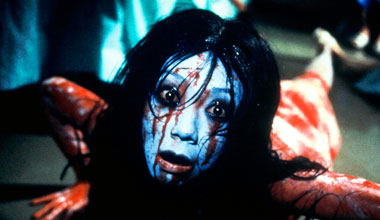
I really couldn't get into this - it looked OK, the budget is big enough, but the actors weren't allowed to show us any clues to what they thought was going on either.


As usual, the posters looked good, but I expected more given South Korea's usually high reputation for quality horror films.

Cello is out soon on Region 1 DVD on the Tartan Asia Extreme series.

- - - - - - -

GODZILLA VS BIOLLANTE (1989) finally on DVD with subs

GODZILLA vs BIOLLANTE (1989, Japan)
Hong Kong region 3 NTSC DVD (Universe Video)

Finally. This is the first official DVD release that features the original Japanese audio with English subtitles. It has one of my favourite monsters, the gigantic genetically-spliced plant monster Biollante, and this was my first opportunity to see the film with the original Japanese audio.

The image appears to be a little soft, so I can only assume that this hasn't been taken from a digitally remastered source. It is however anamorphic widescreen with stereo audio. The English subtitles are mostly well translated, but have simplified Chinese included above them.

The DVD is available from Region 3 online dealers like HK Flix and CD Wow.

The film followed up The Return of Godzilla (aka Godzilla 1985) and kick-started a successful run of nineties Godzilla films.

The Return of Godzilla is also now available on Region 3, in the rarer, longer Japanese cut (without the embarrassing Raymond Burr scenes). It's in Japanese with English subtitles. Super-X !

I've updated my rundown of ALL 28 of the Japanese Godzilla films available on DVD, go to my checklist here.

- - - - - - -

September 17, 2006

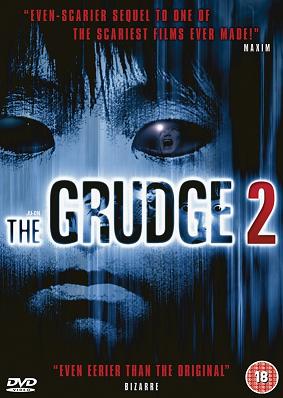
JU-ON:THE GRUDGE 2 (2003) the Japanese sequel

JU-ON: THE GRUDGE 2 (2003, Japan)
Region 2 PAL DVD (Premier Asia)
Updated 15th January 2007

Kayako crawls again!

Due out on DVD in the UK on October 9th, this is the impressive movie sequel to Ju-on: The Grudge. Director Takashi Shimizu made this fourth Japanese Grudge movie (two made on film, two made on video) before making the two American remakes in 2004 and 2006.

Juon: The Grudge 2 begins with a cast of new characters that slowly link together after a confusing start, where the Grudge is targeting a car. A horror actress played by Noriko Sakai and her husband are inside – the crux of the story is that she’s pregnant…

There are new thrills and chills, with one silly scene featuring a wig (The Wig did it better) and yet more nods to Ring. It’s to writer/director Shimizu’s credit that he wrings fresh situations out of this, made in the same year as the previous film. As the narrative plays around with flashbacks and flash-forwards, there’s a fantastic, disorienting chapter when the Grudge attacks one victim in her dreams.


While Ju-on: The Grudge was inextricably linked with the earlier video versions, like it was part of the same jigsaw, Ju-on: The Grudge 2 seems more disassociated from the previous events in the house, almost starting over afresh with a new take on its potentials. It still feels like Shimizu can easily pull a successful third (fifth?, eighth?) film in this series out of his hat.

The Snowblood Apple website has an impressive review of Ju-On: The Grudge 2 that I was loathe to compete with - it's full of screengrabs and spoilers if you want to know more...
JU-ON: THE GRUDGE 2 – THE DVD
On October 9, the Premier Asia two-DVD set is released (pictured at top), full of extras including interviews, deleted scenes. Although it gained the title Ju-on: The Grudge 2 while on release in Asia, the UK release is confusingly titled The Grudge 2, the same name as the American sequel.


JU-ON: THE GRUDGE - THE MANGA
When Ju-on: The Grudge 2 was released in Japan, a second manga book based on Shimizu’s stories was published – these (pictured) are now available in English translations from Dark Horse
Comics,
though I find the films creepier…

- - - - - - -

SUKEBAN DEKA (1985) the first yoyo schoolgirl cop

SUKEBAN DEKA (1985, Japan TV)
Series 1 (24 x 25 minutes)


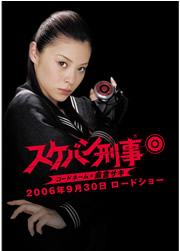
Kenta Fukasaku's new film, YoYo Girl Cop opens in Japan at the end of the month. It may look like a mad concept, but in Japan it's just another revival of an eighties TV show. Indeed, as a homage to the original TV Sukeban Deka, actress Saito Yuki will appear in this new movie too.

The slinky new look of the brand new Sukeban Deka movie

I've reviewed the spin-off movie Sukeban Deka: The Movie,
the sequel and the OVA anime, and now I'm enjoying watching the original TV series.

SERIES 1 (1985)
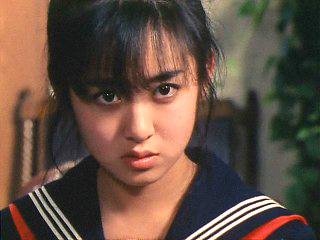
Undercover cop Saki Asamiya (played by the dangerous-looking and pouty Saito Yuki, below), gets missions from her Controller, Jin, who has a habit of appearing in her bedroom, unannounced!

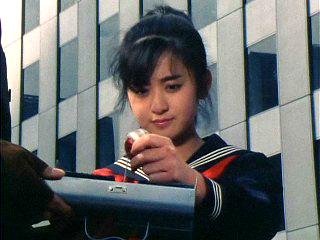
Though she appears moral and selfless, Saki is being blackmailed by the authorities, on a promise to release her murderous Mom from prison. She gets messages from the 'Dark Director' who, like Charlie, talks to her on a speakerphone. Off she goes on missions armed only with a deadly steel yoyo (with a police badge hidden inside).

When she's not sorting out corruption amongst the teachers at her own school, she's sent on special visits to other schools - like the creepy catholic high school where the girls are dabbling with Satanism (I love that episode). Most of her cases culminate in Saki frightening the baddies with her steel yoyo, usually by breaking flimsy furniture or a couple of vases.

The cramped, badly-lit studio sets and shaky handheld camera work, add to the cheesy fun. The catchy soundtrack seems to be made up around 6 endlessly recycled tunes, occasionally boosted by villainous classical tunes like Wagner's Ride of the Valkyries or Bach's Toccata and Fugue in D minor.

It's a cross between schoolroom drama and Yakuza thriller. The school is so violent that the headmaster even carries a kendo staff. We see kids are pressured into suicide, stabbed, shot, punched and otherwise treated in a way you never normally see minors suffering in light-weight family action shows. It goes someway to explain that the violent schoolchildren of Battle Royale didn't come out of nowhere, they may have simply been a step up from shows like these.


Saki gets her very first killer yo-yo

The first Sukeban Deka series starts off with very limited action scenes, but steps up a gear in episode 11 when a long story-arc takes us through the rest of the series. The story of the three evil sisters (also used in the anime) involves Saki's family, murder, mind-control and lots more fighting. Besides having a bullwhip, a crossbow and a rifle, her new adversaries are backed up by a gang of masked motorbike riders. The action accelerates to Kamen Rider type fights in a quarry, together with impossibly high back flips and huge explosions.

While I miss her earlier cosier missions, these later episodes boast marvelous OTT plots, and mad James Bond ambitions on a ridiculously low budget.

Highlights include Saki tackling the motorbike gang single-handedly with only a yoyo, a student struggling through a piano recital having just been stabbed backstage, and a brutal showdown in a flooded prison courtyard.

Admittedly these are fairly low-rent thrills, but all-action schoolgirl thrillers are hard to find. Despite the low budget, the huge amount of physical stunts expected of the young cast is still impressive. The characters are fun, the plots outrageous, the acting enjoyably variable.

The series is only available on Japanese DVDs without any subtitles. Perhaps the new film will popularise these outrageous and entertaining programmes enough for a worldwide release.


Do you want to know more?
Dozens of screengrabs and episode plot spoilers on the extensive Encyclopedia Idollica site, also dedicated to female Japanese pop idols.

- - - - - - -

September 16, 2006

THE X FROM OUTER SPACE (1967) Kaiju of the week

THE X FROM OUTER SPACE
(Japan, 1967, Uchu daikaiju Girara)

"Guilala is heading straight for Tokyo!"

If you’ve ever heard of a monster movie featuring a giant space chicken – this is it… but it’s not a chicken. Guilala (or Girara) may have a beak, but that’s the only chickeny thing about it. The plot is more of a riff on The Blob or The Quatermass Xperiment – some gooey stuff from outer space is brought back to earth and becomes a monster…


I've just reread Stuart Galbraith IV's wonderful Monsters Are Attacking Tokyo, which contextualises monster movies within the Japanese film industry through extensive interviews with the people who made and starred in them. In the late sixties, every rivalling Japanese film studio tried to muscle in on the success of Toho’s Godzilla series. Daiei Studio had Gamera and Shochiku came up with Guilala, exported to the US as The X From Outer Space.

For years, this film has been badly served by the American video release, dubbed into English on a cramped pan-and-scan VHS, when the film was originally framed 2.35.

On a trip to Mars, spaceship AAB Gamma meets a UFO that freezes their controls and plants some cosmic goo on their hull. On their return to Earth, the goo escapes and heads straight for Tokyo (surprise, surprise). How can they stop it?

The story is a sort of hybrid between Godzilla and The Green Slime, but shows a little originality towards the climax, when the scientists try and lure Guilala away from the city by loading a nuclear power source onto the back of a jeep (but please don’t try that at home). There’s not many car chases like that one.

The monster suit’s not bad, the effects aren’t totally bad, the acting’s not bad. The film is silly retro fun for monster fans.

This sixties view of space travel portrays it as an easy job with an endless round of dancing and drinking. Problem on the trip to Mars? Hey – let’s stop off at the Moonbase, let’s dance! The monster’s escaped? Let’s hit a bar! Light on drama, the requisite love triangle is devoid of sparks and the earnest cast aren’t given much to do except run around. The attempts at convincing techno-babble are hilariously awful.

Trivia fans will spot that the launch sequence of AAB Gamma includes a steal from You Only Live Twice, with a launch vehicle that releases the ship from a nose cone that opens like a flower. There’s also a scene where Guilala’s goo eats through the floor of the research base – very Alien.


The design work is a little bizarre – AAB Gamma doesn’t look like it could fly in Earth’s atmosphere or space, the offending UFO looks like an internally lit homebaked lemon meringue pie, and Guilala has lumpy arms, big floppy feet and deelybopper antenna.

A serious drawback to your enjoyment could be the awful, repetitive, jaunty music that also undermines the few dramatic moments.

The modelwork is OK, particularly the impressive rocket base and the Moonbase, but the toy tanks and planes look way too small to have ever convinced anyone – how’s your suspension of disbelief? Guilala is full of tricks and looks better in his night-time attacks, when his glowing eyes and fireballs look much more effective.


ON VIDEO:
The Japanese and US edits of the film are roughly the same, but I’d urge you to track down a widescreen version.
This Japanese DVD (pictured above) also has an optional English audio track on it, but no subtitles. The English dub was made for the original movie release, and half the cast are talking English anyway, so it's not blasphemy to not watch it in Japanese!

As a last resort, there’s always the US VHS (pictured), but you can rarely see what’s going on. Both the VHS and DVD are out of print, so good hunting!

- - - - - - -

September 13, 2006

THE DRIFTING CLASSROOM (1987) The manga's miserable movie adaption

THE DRIFTING CLASSROOM (Japan, 1987, Hyoryu kyoshitsu)
NTSC VHS (from Emotion Video)

As for you Troy Donahue...

I was looking forward to this too. As Kazuo Umezu's original manga epic from 1972 is finally being published in an English translation, I wondered why this 1987 film adaption wasn’t on DVD, even in Japan. But having seen it on a Japanese VHS (pictured above), now I know why.

I can’t begin to tell you how awful this film is. It makes Jaws III look good.

If Ed Wood had directed Stargate as a horror film, with a child cast, the result would be something like The Drifting Classroom...

THE PLOT
The film begins with a scene full of what must be the most disrespectful behaviour by a teenager shown to his mother. Young Sho's bizarre misbehaviour warrants a spectacular clout from Mum, and he slouches off to school, not realising he's about to be separated from her for a very long time.

His High School is 'Kobe International', which means that the cast is full of English-speaking students and teachers. (This isn’t from the manga, it’sjust an ordinary Japanese High School).

Then (possibly) a tornado approaches the school and whisks the whole school building away. But unlike Dorothy, we don't arrive in Oz but in a strange and hostile place far away, in the middle of a sandstorm.

All that’s left is a crater in the ground (reminiscent of The Outer Limits classic episode 'A Feasibility Study'). Sho's mother is distraught, but in the weeks that follow she find clues that their children may still be OK.

Meanwhile the school seems to be in a different dimension, possibly in another timeframe. At first they assume that a quake or a nuke has hit them. Besides food and water shortages, the children have to face both madness and monsters if they are to survive…
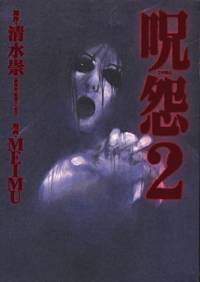
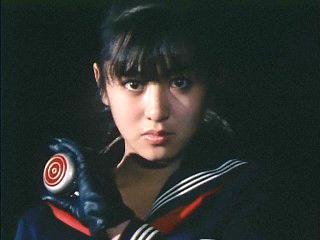
THE FILM:
There are more than a couple of problems with the film - the story, the dialogue, most of the cast and the special effects…

The film is Japanese but half of the dialogue is in English. The cast are mostly bilingual children who are certainly not actors - they say the lines, sometimes inaudibly, but don’t act them. The few Japanese actors in the cast are very good, but have to say half their lines in cracked english.

The many secondary characters are given one trait each (one is always hungry, one has a moneybox, one missed a football match etc) and these motivations are their only motivation throughout the next two hours of screen time.

The murky print and murky transfer on the Japanese VHS that I watched rendered much of the action indecipherable. When the building ‘takes off’, the kids are screaming and trying to avoid a flood of sand pouring through the building, in a sequence that goes on for ages – the actors must have filmed in very uncomfortable conditions. But with the camera shaking, and optical flashing effects blinding me, I’d no clue what the hell was going on.

The special effects are mostly poor. Even basic compositing of characters against the model of the ‘time desert’ is often diabolically done - the camera zooms in on the foreground characters but the background doesn’t move! The matte paintings are very obvious throughout. Rarely do we think we’re in a desert. It’s ages before we get establishing shots to make us think we’re even in a desert.

Stranger still, for a film full of kids, there’s an awfully high ‘body-count’. The infantile schoolroom dialogue is completely at odds with the horrific death scenes – there’s a dead teacher with sand pouring out of her mouth, a maniac with a knife, kids on fire… But the survivors always seem to shrug it off and not mention it again.

This bizarre schizophrenic approach is at its most obviously awful near the end of the film, when the kids sing a truly horrendous musical medley of ‘The Camptown Ladies’, ‘Swanee River’ and ‘When the Saints Come Marching In’… with a trombone accompaniment.

Troy Donahue, near the end of the film and near the end of his career, ends up talking to himself with silly dialogue like “who am I?”.

The closing line of the film defies taste - one of the young kids says to the other, "I want to have your babies". I wonder if it was translated properly for the Japanese audience?

The only saving grace is the grand, memorable score from Joe Hisaishi (CD cover pictured above), who'd already started composing classic scores for the animated films of Hiyao Miyazaki.

The VHS was presented 1.85 widescreen (presumably to show the Japanese subtitles for the many English language scenes).

SUMMARY
Kazuo Umezu’s classic plot provided plenty of potential - but condensing his story into two (long) hours has disjointed the narrative. This film adaption failed to gauge the tone of the manga, where juvenile characters face up to the horror of a primitive alien existence.

Umezu's epic series is betrayed here, so please do the right thing, read the newly translated manga (Volume 1 pictured below) and don't let your curiosity encourage the exhumation of this schizoid movie oddity.

Volume 1 of the manga is out now, published by VIZ Media. In the back (er, front) there’s an excellent illustrated overview of his most famous stories. An excellent guide to the best of Kazz to come.

- - - - - - -

VAMPIRE DOLL (1970) an effective Japanese chiller

VAMPIRE DOLL
(Japan, 1970, Yureiyashiki no Kyofu: Chi O Suu Ningyoo)
a.k.a. LEGACY OF DRACULA, BLOODSUCKING DOLL


Region 2 PAL DVD (from Artsmagic)

If you go down to the woods tonight...


Presumably inspired by the success of Hammer's many Dracula sequels, this is the best of the Japanese 'Dracula' trilogy, even though Dracula isn't in it. In fact, it's the best Japanese vampire film I've seen.

A young man visits an isolated mansion in the country to reunite with Yuko, the love of his life. But her mother tells him that she's recently died in a car crash. As he pays his respects at her grave near the house, he's attacked by a shrouded figure...

Next day, Keiko and her boyfriend come to the mansion, looking for her brother. They discover (gasp!) a bloodstained cuff-link in the family cemetary. They decide to investigate further...

With a strong cast, especially Yoko Minakaze as the mother, the film sustains a creepy atmosphere, helped by an effectively modern sound mix to put you on edge. The constant use of harpsichord music is a little annoying, and may remind you more of The Addams Family.

Though the story starts off with the familiar set-up of a missing relative, there's sufficient surprises and plot twists in store. It packs in gory scenes as well creepy ones. It also beats Hammer to the modern-dress vampire tale.

I think the film succeeds because it's grounded more in Japanese legend, with its shrouded vengeful spirit, rather than trying to adapt to the Dracula mythos of the west.

The many different titles sometimes make this film hard to locate (only use Vampire Doll on
IMDB for instance), but it was released on DVD a few years ago as Legacy of Dracula in the UK, under the banner 'The Bloodthirsty Trilogy' along with Evil of Dracula (1974) and Lake of Dracula (1971), from the same director, Michio Yamamoto.

The handsomely composed 2.35 widescreen is well presented, but the DVD lets down the image by being a somewhat smeary transfer, as well as a standards conversion, but this was only occasionally distracting. I would like to see a better transfer of this in the future though.

Not on DVD: MARINE BOY (1969) first ever UK anime


MARINE BOY (1966, Japan, TV)

(UK version, 1969)
78 x 25min episodes (in English and in colour)


While the US in the 1960s was already enjoying Gigantor, Speed Racer and Astro Boy on TV, the UK didn't see any anime on TV until 1969, when Marine Boy was shown on the BBC in Children's Hour (before the evening news).

I enjoyed it then, but thought that the animation was a little jerky - my first exposure to the 8 moves per second, that I now understand to be the standard rate for Japanese TV animation.

Marine Boy worked with the world Ocean Patrol to protect the human race from danger and catastrophe from under the seas. He did this with his underwater jet boots and boomerang, while chewing oxy-gum, with his trusty dolphin sidekick Splasher. Occasionally mermaid Neptina would have to bail him out.

I enjoyed it for the sci-fi look, particularly the flying sub "P-1", and of course hoping that there'd be sea monsters, which often only appeared in the title sequence.

The theme tune that I remember is a catchy, twangy instrumental, but there was a very annoying song used in the States.

After wanting to see this again for many years, I'm telling you about it now because the first episode has just appeared here on Google Video. The UK version of the theme tune is here on YouTube.

So far, the three series have only be released on DVD in three Japanese boxsets, all without subtitles or English audio. An example of cover art is pictured above. I'm surprised that this early nostalgic hit, very reminiscent of Speed Racer hasn't surfaced in the UK, US or Australia.

Do you want to know more?
More screen grabs and characters from the series here on Nostalgia Central.

Details of Marine Boy's complicated transition from Japanese TV, here on Glen Johnson's Anime page.


- - - - - - -

September 10, 2006

New MAGIC ROUNDABOUT collectibles

While the DVDs for either the TV series or the movie are still nowhere on the horizon (see this article for details), there is at least a new release of high-quality figures from Robert Harrop figurines.


They are quite large (four or five inches long or tall), beautifully detailed and painted. The important factor for me is that it looks just like the original character. So far there are Dougal, Brian, Florence, Dylan, Zebedee and Ermintrude. Mr Rusty and Mr MacHenry will soon join the collection.


I got mine from the lovely people at Comet Miniatures in South London, who also keep me stocked up with Batmobiles, Thunderbirds toys from Japan, Clangers etc.

YOU CAN'T STOP THE MURDERS (2003) Aussie black comedy


YOU CANT STOP THE MURDERS (2003, Australia)
Region 4 PAL DVD (from Buena Vista)

The best ever line-dancing murder-mystery

A dead biker, a dead construction worker, a dead sailor… When a serial killer begins picking their victims based on the identities of the Village People, a local cop steps up to solve the murders before a big-shot detective from the city can steal all the glory.

Akmal Saleh and Gary Eck - co-writers and stars

With a very low budget, the film wisely emphasises the quirky characters, mainly played by Aussie comedians from TV and stand-up. Written by the three main actors, this started as a sketch and has blossomed into an intricate little world – the bizarre backwoods town of West Village.

There are subplots a-plenty, red herrings, a whodunnit, a love triangle... The humour veers between easy-going and surreal, but is sometimes hit-and-miss. The murders involve dismemberment, invoking an occasionally bizarre, queasy atmosphere out of line with the comedy.

Based on the title, I was also expecting wall-to-wall seventies disco music, but instead I got the simple, cheesy delights of line-dancing (which the main cop dabbles in). Together with the lack of disco music, there's hardly any gay jokes, again making it far less 'Village People' than I was expecting.


But I found the likeable, silly characters soon growing on me. As a ‘first film’, this will hopefully lead to bigger projects from the writer/stars, one of whom also directed! This qualifies as a ‘little film’, but one which could become personal favourite if you’re tickled by it.

This DVD was highlighted by one of my favourite online shops
Diabolik (based in the US), and I’m very glad they did. It’s available from them or from Australia. I use Atlantic DVDs to get my Aussie discs online.

- - - - - - -

September 08, 2006

JU-ON: THE GRUDGE (Japan, 2003) the curse continues


JU-ON: THE GRUDGE (2003, Japan)
Region 2 PAL DVD

Special Collector's Edition (from Premier Asia)

This DVD cover (above) is easily confused with the DVD of the American remake that starred Sarah Michelle Gellar. For more details about the entire Ju-on series click here.

The Director:
Takashi Shimizu is a relatively young director who delivers some of Japan's scariest films. The Ju-on films deliver Ring-type creepy scares. But instead of one huge scare in the finale, they deliver solid scares every 5 or 10 minutes.

This is no fluke. Shimizu has studied the classic horror movies of both East and West. In a revealing interview on this Region 2 edition, he name-checks his faves, like The Texas Chainsaw Massacre (1974) and The Evil Dead. But there are many other western horrors that he thought he could make scarier…

After the success of the first two Ju-on films
, made on video for the straight-to-video market in 2000, Shimizu directed the best of the Tomie sequels, Tomie: Rebirth. He was then able to expand his Ju-on story with a bigger budget, for a film that proved successful in Japanese cinemas, and beyond.

Ju-on: The Grudge (2003, Japan)
Rika, a care worker, is sent to that house where she finds a seemingly abandoned old woman surrounded by litter and dirty dishes. It’s the same story thread that the later American version had as its core.

The opening scenes serve the same purpose as the Teacher finding Toshio in the video version - we are introduced to the house where someone has been abandoned and apparently abused or neglected. Then we discover that there’s something else going on.

Rika is played by Megumi Okina, the wonderful leading actress from Red Shadow and St John’s Wort (both 2001, both recommended).

The second chapter of the film, is a flashback to the rest of the old woman's family – but here there is evidence of characters being possessed as well as cursed. This ghostly influence was hinted at in the video version (like when the third owner started dressing like Hayako and thinking of Toshio's painting as her own). But in the film version, the influence is more pronounced as characters start re-enacting the original crimes of the house.

A difference, between the video and film versions, is that whereas CGI was sparingly and subtly used in the video, the special effects are more obvious here - with hit-and-miss results. The physical effects of the ghost appearing (just an actor in white make-up) in unexpected places are what made me jump. The CGI is interesting, but not always frightening.

There's also a couple of unnecessary steals from the Ring films - like a pure 'black hair hanging' moment (successfully used throughout Ring 2) and even some distorted video faces.


Front cover of the Japanese brochure for the film

The same story structure of chapters separated by blackouts remains. A new development is that the timeline is even more fractured. Not only does the story move back and forwards in time, it turns on itself. For example in the house, one character sees his grown-up daughter at an age when he should be dead.

Sensibly, the film includes an attempt to challenge the Grudge, rather than hope that the police are actually going to solve the expanding mysteries of the case before they themselves succumb. There’s also some scenes for fans of schoolgirl zombies, and some wonderfully inventive scares.

One of my fave moments of pure Ju-on fear - the ‘jaw’ chapter from the video version - is missing from this film, (but it returned in the US remake). I think this is because the two films made on film are a continuation of the story, rather than a retelling. For the most part, the films back-reference the events in the videos accurately, and smoothly continue their story. There's some minor deviations, but these make repeated viewings all the more enjoyable.

Floor plan of the house from the Japanese Ju-on 2 brochure

For all its complex narrative, there's an unnecessary montage/explanation/flashback at the climax of the film to reiterate what the Grudge is.

The closing shots of empty streets, (a possible nod to Kairo, from 2001), hints that logically the Grudge is going to keeping on spreading. The unfortunate Hayako seems to have initiated a particularly virulent form of revenge. Again, this is very much an influence of Ring.

Altogether it's an impressive gallery of horrors, more effectively staged than the US remake with an equally likeable cast. It spawned a Japanese sequel (hopefully two) and at least 2 US remakes. An awesome tale of terror written and directed by one guy...

The excellent UK 2-dvd set has a host of extras that further explore Shimizu’s inspirations in a half-hour interview. There are also interviews with the cast, behind the scenes footage, an alternate ending, deleted scenes and trailers. All interesting stuff for fans of Japanese horror.

Lastly the music superbly underlines the fear and unease, but the traditional pop tune over the end credits isn’t a patch on the John Carpenter-esque electronic theme that closed the video versions. This theme and the best music from all four films are on a CD soundtrack (cover artwork above). It’s still available here on CD Japan’s website, which I’ve ordered from many times.

September 03, 2006

NEGADON - THE MONSTER FROM MARS (2005) out on DVD

NEGADON - THE MONSTER FROM MARS
(Japan, 2005, Wakusei Daikaiju Negadon)
Region 1 US DVD (from Central Park Media)

A beautiful short film, totally computer-generated, and animated by basically one man. It’s a homage to sixties ‘kaiju’ monster movies.

A giant monster from Mars is awakened by human’s terraforming the planet. It comes to Earth, specifically Tokyo, to wreak havoc. The Army and Air Force can’t bring it down, maybe an old scientist’s experimental robot can do the trick...

The visual achievement of Negadon is the constant impression that you’re looking at a shot from an old film – over two years in the making, director Jun Awazu has meticulously created a new story for his favourite movie genre.

The monster’s design is very original, and full marks to the script for not letting the characters refer to it by name – how would they know?

Besides the monster and giant robot, it’s also an interesting watch because of the time-travelling aesthetic! A CGI rendering of a sixties look is amazingly successful, with an obsessive attention to detail.


Like Japanese sci-fi films used to be, the widescreen is 2.35 extra-wide, outer space is royal blue and spaceships look like they run on wires.

The frame of reference is at times inconsistent though – some shots try to be from the sixties, other shots (like the tanks and jets) are obviously based on recent real-life footage. In the sixties, most of the shots of military hardware would have been done with models.

My other quibble is with the soundtrack. Although the pictures have been meticulously aged with faded colour and film scratches, the soundtrack is crisp and clear, and uses recent sound effects – it never sounds like the older films, and the voiceover and dialogue sounds brand new. Also the music is, annoyingly, synthesised, when it should have had some sort of orchestra, but I guess that this was a problem of time or budget.

Unlike the sixties, the mood of the piece is very downbeat, and less a celebration of the optimism of the sixties and seventies films, more of a reflection of the more anguished mood of the original Godzilla, or maybe it’s the mood of the present casting a shadow over the film.

The retro poster for NEGADON

In any case, it’s quite an achievement, a modern treat for lovers of giant monsters and 'old school' Japanese sci-fi films.

I'll warn you that the running time is a brief 25 minutes, but the quality of the film is outstanding – monster movies would have had the same amount of special effects and padded it out with inane subplots anyway.

The DVD (cover art at top) compensates with a long interview with the director, an interesting look at the different elements in half a dozen key shots, as well as trailers and two of the director's shorter shorts that led up to this project.


Do you want to know more?

Here's a link to the film's English website.