April 19, 2006

DORM (2006) - a coming-of-age story from Thailand, with ghosts

(Updated September 2013)

My coverage of charming Thai ghost story Dorm (Dek Hor) is rather fragmented in Black Hole Reviews, because I used to publish news as it came in. Also, my most thorough review wasn't even in this site, but written for Twitch news. Because that's now mostly disappeared (except for one paragraph!), I'm republishing the original text below, together with my other notes on the main DVD releases of Dorm so far...


DORM
(2006, Thailand, Dek Hor)

Dorm is likely to get caught up among many other horror films from Thailand. But it's not so much horror, as a ghost story. Despite the young cast, it's certainly not childish - it has an uncomfortably dark side, reminiscent of Stand By Me, that makes it unsuitable for a younger audience. Anyhow, while I can't quite categorise it, I can say that it's a great Thai film, though not nearly as creepy as The Eye or Shutter.

While on holiday in Thailand, I was delighted to find that Dorm had just opened, a film I'd been looking forward to (having seen the trailer on Twitch) and better yet, half of the performances had English subtitles! Before the film started, in a large cinema (in Bangkok's MBK Shopping Centre), I was caught out by the whole audience suddenly standing up for the National Anthem accompanied by a photographic montage of their beloved King. We don't even do that in England! 


The film opens with Chatree (Chalee Trairat), being sent to boarding school in his seventh grade. His father justifies the decision by saying it will enable him to study harder. Chatree is very angry, but we don't know why he's unable to complain. His life is made even more miserable because he's a 'new kid', joining the school halfway through term. The teacher who doubles as the school matron, Ms. Pranee (Chintara Sukapatana), does little to make him feel welcome.

All the boys in the school sleep in one huge dormitory. On the first night, a gang of four misfits decide to pick on the new kid by telling him ghost stories. Lying under the covers, they tell Chatree that the school, the dorm, Ms. Pranee, even the very bed he's sleeping in, all have a dark history. They tell him about the school worker who committed suicide, the deserted swimming pool, and a ghostly caretaker. The stories are shown like 'flashbacks', but just how much of it are they making up to scare him? Their ruse works better than expected - Chatree has to get up in the night and visit a deserted toilet. Outside, dozens of dogs are looking up at his window and howling. He's too scared to find out what's scaring them and he rushes back to the dorm. Next morning, everyone sees that he's wet the bed.


Humiliated, and now on the wrong side of Ms. Pranee, Chatree's not interested in schoolwork, or even talking to his Dad on the phone. But at least he makes a friend. Vichien (Sirachat Jiantaworn) shows him the ropes, but also tells him that some of the ghost stories he heard actually have an element of truth. But Chatree about to find out for himself...


Besides ghost stories, Dorm is about coming-of-age, with an atmosphere that changes with the central character's moods. As Chatree discovers more about the history of the school, he becomes less scared of it, and the film's horror tactics relax. The mood remains quite morbid, however, and the carefully coloured cinematography keeps us cautious.

As the lead, Chalee (or Charlie) Trairat ably carries the film, but I'd liked to have found out more about what he's thinking - he's kept too busy with moving the story forward. The gang of boys who scared him have far better, quirkier characters and provide much-needed comedy. It's Chintara Sukapatana, as the matron, who impresses the most, though I failed to recognise her from a major role in Good Morning, Vietnam.


The young director, Songyos Sugmakanan (above left) previously co-directed another Thai hit, My Girl (Fan Chan) also starring Chalee Trairat, but Dorm is his first solo directorial effort. The story is partly based on his own bittersweet experiences of boarding school, and he's taken great pains to capture the atmosphere of the time (around 1985). In interviews, Sugmakanan also voiced his concerns about how the film has been advertised. I think the posters make it look no different from gory Thai horrors out there, such as Hell or Scared.

Though the story may be too much for an audience as young as Chatree. Maybe I'm being over-protective, but I'll warn you that there's a lot of urinating in the film! Close-ups of kids wetting themselves, boys peeing in bushes, lots of scenes in toilets - you don't get this in Harry Potter. (With a Thai audience, all the pee didn't seem to be a problem, but the schoolboys swearing seemed to be unusual.)

Throw in a brief sex scene (not involving the boys) and you've got yourself a censor's headache. There's also a vivid depiction of hanging that would certainly be a problem in the UK. Incidentally, I swear that the long shot of the hanging (glimpsed in the trailer) wasn't in the print I saw in Thailand. A clue to this could be in the two different versions of the film on release in Singapore, each with a different rating.


While it's not my problem to sell the film or decide whether kids should see it, I can recommend it as a beautifully-shot film, with finely-judged performances, and an unusual story set in quite a different culture. It's scary, but also funny, dramatic, suspenseful, sad... but all-round satisfying.

Dorm opened in Thailand in February 2006 and coincidentally had a Special Presentation at the Bangkok International Film Festival the same week. It's been a box office hit domestically and I hope it finds an international audience.


Dorm was then released in the US in 2007, but with a completely misleading cover - this scene doesn't appear in the film, and it's not an 'extreme' movie either. This region 1 DVD has audio commentary, deleted scenes, and a featurette. 


A reasonably-priced deluxe 2-disc DVD boxset (pictured) was released in Thailand, but region 3, and without any English subtitles. Best of the deluxe DVD extras is the uncut six-minute of 'clips' from Mr Vampire. A specially-filmed recreation that plays during the school's 'movie night' scene. It uses lookalike actors and recreates footage of the best gags from Ricky Lau's superb 1985 Hong Kong comedy horror. There is also plenty of behind-the-scenes footage, interviews, a Chalee Trairat pop video, and most of the original soundtrack.


April 17, 2006

DRAGONHEAD (2003) a realistic Japanese disaster movie

DRAGONHEAD (2003, Japan)
Movie review

A downbeat, spectacular, post-apocalyptic drama

Imagine you're on a train on your way back from a school trip. Just as it goes into a tunnel, the train crashes. You wake up in the world of Dragonhead - trapped underground with a hundred corpses, not knowing why you crashed.

Dragonhead is a recent, big-budget disaster movie from Japan. After a slow start in the tunnel with a wrecked bullet-train - the story opens out into a classic apocalypse scenario - a handful of survivors facing what looks like the end of the world. There's plenty of action, but this isn't a gung-ho adventure - it's more realistic, with the survivors usually in a state of despair, facing challenges to their survival and their morale.

Throughout the film, there's a consistent feeling of loneliness too. The survivors are dwarfed by their desolate surroundings. Each place they encounter underlines how easily society can unravel. The mood is similar to earlier downbeat apocalypse movies like The Day the Earth Caught Fire, Crack in the World, Deep Impact, or even The Omega Man.

The special effects are spectacularly realised, offering visions of the results of widespread destruction. This was achieved with seamless digital compositing that combined computer-generated vistas with huge sets and actual locations filmed in Uzbekistan. The film was shot 2.35 widescreen, and appears to have been recorded on High Definition video - the quality is excellent and rarely looks like video (this doesn't look like 'v-cinema', by any means). HD was probably used because of the huge number of digital effects (the same method that George Lucas used for Star Wars 2 and 3).

3 young stars head the cast: pop singer Sayaka, Satoshi Tsumabuki (who rarely seems to be out of work) is here re-united with a co-star from the Waterboys movie, Takayuki Yamada. Satoshi and Sayaka carry the brunt of very demanding, physical roles as the young hapless teenage couple Toru and Ako.

The director is George (or Joji) Iida, whose Rasen (1998) was an under-rated first sequel to the now infamous Ring (also 1998). His sci-fi thriller Another Heaven (2000) was much more successful.

You won't be surprised to hear that Dragonhead was based on a series of manga. Written by Minetarou Mochiduki, his Shark Skin Man and Peach Hip Girl was also made into a film, which I watched yesterday without realising the two were linked!

The quality of special effects rivals Hollywood and the story takes some twists new to the genre, but this film has only just emerged on DVD in the US. I'm constantly amazed at how we miss out on such large-scale movies until years after their release.

Max

SHARK SKIN MAN AND PEACH HIP GIRL (1998) Hip Japanese gangsters

SHARK SKIN MAN AND PEACH HIP GIRL
(1998, Japan, aka Samehada otoko to momojiri onna)

Bloody, good, gangster shootout comedy

Very enjoyable, though I couldn't tell that this was based on a manga. You can usually guess if you're watching something with 'comic book' origins, but this is a well-written script brought to life by adult performances.

Plot time. Bankrobber Samehada tries to cheat money out of his mob. On the run he's rescued by Toshiko, a timid hotel clerk who is also running way - from her lecherous uncle. Heavily armed, the outrageously well-dressed mobsters close in on Samehada, not realising that the uncle has contracted a kidnapper to apprehend Toshiko.

This is one hip movie, though maybe it lays on the cool a little thick: the clothes are designer labels, the guns are big, and if you smoke, you light up in the flashiest way possible.

To be fair, the characters are as memorable as their outlandish outfits, brought to life by an ensemble cast who look like they've been on the road together for years. The way they bicker, constantly assert their pecking order, and kill time together looks very real.

Yet this is a black comedy, not reality. The dialogue aims for a Tarantino quality, successfully so. But while the gangsters amuse us with their trivial preoccupations, we don't forget what they really do, as an early gun battle proves. Likeable characters die, blood gets spattered up the walls. This is as it should be - I'm personally very tired of 'gun-comedies' where hundreds of rounds are fired but no one gets hurt.

The film is fast-paced, yet the director keeps the camera quite distant, usually static. There's no shaky 'action movie' handheld camerawork to fake the excitement. Instead we get carefully framed tableaux within which the characters can perform. This is a method that director David Lynch often uses. Mercifully, we are also kept distant from some of the violence - a beating with a baseball bat looked like it couldn't possibly have been faked!

The cast are uniformly strong, but the female characters are underused (the gangster 'moll' in particular) and the Peach Hip Girl gets plenty of action but none of the juicy dialogue. We start the film almost exclusively in her company, and share her pain and disorientation as events rapidly overtake her. But we then lose her viewpoint as the chaos escalates and the rest of the gang moves in.
But I guess this is more a movie about guys, for guys. It's all about criminals solving situations the violent way. You're forced to identify with the guy who commits the least worst crimes - anti-hero Samehada, played effortlessly by Tadanobu Asano. This actor has appeared in Takeshi Kitano's recent works as well as cult hits like Ichi the Killer. He keeps the tone light without playing it for laughs. He plays Samehada with a wicked smile and the confidence of a bankrobber who rarely loses his cool.

His formidable opponents include bossman Tanuki (Ittoku Kishibe) who wears a black leather overcoat and waistcoat custom-made to hold his collection of throwing-knives. There's Uncle Sonezaki (Youhachi Shimada), a slave to his centre-parting who hires a hitman to sort out his lovelife. My favourite was Yamada (Tatsuya Gashuin), the nerdy hitman, who wears his stripy tank top sweater tucked into his trousers... All these guys only have limited time onscreen, yet you want to see much more of all of them.

The only real disappointment is that the story doesn't keep moving locations, and starts to run in circles. This is the only evidence of the relatively low budget, everything else about the film works.

Shark Skin Man and Peach Hip Girl is a marvellous debut for director Katsuhito Ishii. I can't wait to see his subsequent non-gangster films, starting with Panic 7.

Max

April 15, 2006

VILLAGE OF EIGHT GRAVESTONES (1977) DVD review

VILLAGE OF EIGHT GRAVESTONES
(1977, Japan, aka YATSU HAKA-MURA)

Hong Kong region 3 NTSC DVD review (Panorama Entertainment)

A gory epic murder mystery from Japan

I wish I'd seen this film back in 1977 - I'd have switched on to Japanese cinema far earlier. It's a mystery of the calibre of MURDER ON THE ORIENT EXPRESS intercut with violent flashbacks as gory as THE WILD BUNCH.

From the DVD cover, I thought I was going to get a low-key ghost story where the scariest thing was a close up of an undead samurai (even RING was guilty of blowing its scariest moment on the front cover). How wrong I was. This turns out to be one of the biggest budget Japanese movies of the seventies and one of the most successful. It works as a murder mystery and a ghost story, with generous flashes of violent samurai back stories. It doesn't actually scare, but it constantly manages to shock and intrigue over an epic 150 minute running time.

Briefly, a young airport technician, Tatsuya, working in Tokyo, is sought out by his estranged family via a solictor. He's invited back to his ancestral home, but not before his grandfather dies in mysterious circumstances in the solictor's office. Carrying his grandfather's ashes, and curious to learn more about his mother and his place of birth, Tatsuya returns to a valley deep in the mountains behind Osaka, to a mansion in the 'Village of eight Gravestones'. When another relative dies the same way as his grandfather, Tatsuya hears about an ancient samurai curse...

Most of the film takes place around an entire valley, the centre of which is the huge family home. It appears to have been shot largely on location, spectacularly captured in widescreen. The lush colour occasionally runs red during the nastier sword action, which involves clever and graphic violence that punctuates the detective work.

I'm astonished that this film isn't famous internationally. It's accomplished cinema that doesn't pull its punches. Director Yoshitaro Nomura was one of the mainstays of the Shochiku film studio, delivering over 80 films. His best film is cited as being CASTLE OF SAND which on the strength of VILLAGE, I'm tempted to check out. Sadly, he passed away last year. At least this has inspired retrospectives into the gems in his huge body of work.

It's not just Hollywood, the film was remade in Japan in 1996!

The DVD (pictured above) has reasonably good english subtitles, though they occasionally miss short sentences out and fail to translate signs and text. The mono mix is full and clear. The original 2.35 widescreen is presented cropped to 16:9 after the opening credits, resulting in cramped composition and some characters talking offscreen. The image is non-anamorphic, the subtitles dipping into the lower black bar.

This long film has been split over two DVDs rather than use the dual-layer facility. There are good liner notes and the director's filmography in english. No other extras. Obviously the side-cropped widescreen is annoying, but the film isn't otherwise available, even in Japan! This Hong Kong release is currently advertised on HKflix and DVD Asian.

Max

The DAUGHTER - a Thailand DVD horror

THE DAUGHTER (Thailand, aka Phee thuay kaew)
Thai PAL all-region DVD

Low budget Thai video-movie rips THE EXORCIST the cheapest way possible

This is a warning to the curious - I'm not recommending this movie, just letting you know a bit more about it. If you flick through the DVDs online looking for new Thai horrors, you might be taken in, like me. I bought this on the cover art alone, hoping for a headless ghost at least. Turns out it's the head of a ghost superimposed into the upturned shot glass used for the seance, and not a huge jar with a floating head in it!

Story-wise, a young office-worker is fired after sleeping with her boss. Pregnant and out of work, she wonders what the future will hold. Her friend suggests a seance, but they unfortunately pick a rundown witch's shack to hold it in. During the seance, something happens to her unborn baby... 7 years later, the child starts behaving abnormally and no-one can get in her way.

Shot on video, this looks more like Thai TV than 'v-cinema'. The acting is good enough, but the budget lets down the special effects and the scale of the story. The scares are mishandled. The witch/ghost is simply an old woman with uplighting. There's even an attempt to make her glide (or judder) across the floor (how old is that?). The make-up makes the evil child look as if she's got flu, rather than supernatural problems. The child actor never looks more than angry, when she should be demonic (if you want to see a really demonic-looking child, check out the Korean horror film PHONE). Any murder scenes are implied with blood splattering up the walls, rather than onscreen violence - not much blood either. If you want to be disappointed and non-plussed by a film, then THE DAUGHTER is for you.

The DVD (pictured above) has good english subtitles on it, but is only referred to as THE DAUGHTER on the trailer. It's available online at ThaiCDexpress, who list it as PHEE THUAY KAEW. The DVD comes in a shorter than average size case, not to be confused with the VideoCD release.
thaicdexpress.com

Max

April 09, 2006

HAAN (2005) Pearl Harbor double-agent

HAAN (2005, South Korea, a.k.a. HAN GIL SU)
Korean region 3 NTSC DVD

Disappointing WW2 espionage drama

The premise seemed very promising for this recent movie from Korea. A Korean double-agent playing the Japanese off against the Americans on the islands of Hawaii, just before the attack on Pearl Harbor. Based on a real-life person, not much is actually known about what actually happened, giving the film-makers plenty of licence - unfortunately they don't provide much excitement or suspense in what should have been a nail-biting race against time.

The script clumsily describes contemporary attitudes and current offscreen events through chunks of exposition. The characters' relationships are simple and melodramatic, but without much drama. It's also confusing in places - there's one scene that ends with Haan being tortured and his little finger is about to be guillotined off - the blade descends, the film quickly fades out to black - next shot he's in a hospital bed and you can't see his hands. What just happened? Did he lose a finger or not? A 'non secitur' if you like. Very confusing.

Worse still are the anachronisms in the film. The US Naval HQ building looks like it was built in the 1970's rather than the 1940's, and in one scene they ride around in modern speedboats, jarring the viewer back into modern times.

The film clearly labels which characters are Korean and which are Japanese, using stereotypical signifiers like kimonos, sake drinking and lots of Japanese flags hanging around the rooms. Realistically though, the characters speak in the correct languages.

The climax includes the cheapest recreation of the attack on Pearl Harbor that I've ever seen. A total of 5 American extras are onscreen at any time, and the explosions are all added digitally. A few reasonable shots of CGI Japanese planes have been made, but it's hardly worth trying to visualise this event on such a shoestring.

I'd still like to see a documentary about what was known about Haan and how much American intelligence knew about the impending attack. But this movie fails to convince with its version of events.

The Korean DVD (pictured above) has good, clear english subtitles on the main feature. Annoyingly they continue to appear when english is being spoken. The only extras are a trailer (made on video) and a brief look at one simple indoor scene being shot. You can also listen to 10 tracks from the soundtrack, from the CD option on the main menu.

Max

April 06, 2006

SPECTREMAN (1971) - Gorilla TV

SPECTREMAN
(1971, Japan)

An outrageously bad seventies live-action superhero TV show from Japan

Thai PAL VideoCD review

Hells bells! I thought there were a couple of dodgy special effects in the early Ultraman series. Wait till you see Spectreman. The opening title sequence alone packs in dodgy animation, dodgy models and dodgy, well, drawings - and that's the good stuff.

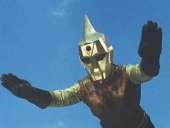
Spectreman himself looks OK, with his golden helmet and snazzy boiler suit (unlike Ultraman's expensive-looking, figure-hugging rubber outfit). But the baddies are, well, a guy in a gorilla mask wearing shiny pink and a blond wig - his sidekick is a guy in a gorilla suit wearing a lot of jewellery. I know Planet of the Apes was all the rage at the time, but this looks truly ridiculous.

The two Space Apemen sit in a flying saucer and try and wreak havoc by activating a load of really weird monsters.
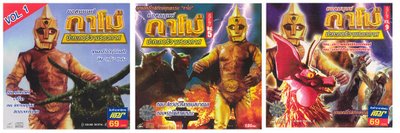
The saving grace of the whole enterprise is that the monsters are fun because their designs are so way out. For instance the black furball with two foxes heads (on the cover of volume 5, pictured at centre) is unlike any real animal, but still lively enough for action-packed biting and fighting.

Spectreman's transformation involves a lot of rapid cuting between the guy in the suit and a drawing (apparently done in felt tip). His flying sequences involve close ups of him with his arms in the air, and a model of him swinging around on wires. His back-up team are 5 people crammed into a car - so no need for an expensive secret base.

Because of the bad special effects, the mad monsters and everyone taking it so seriously, it's an awful lot of fun in an Ed Wood sort of way. There's a fair amount of bad taste violence (bystanders being stomped by the monsters) to top it all off.

But I can't say it isn't entertaining... because it really is.

I found three double-episode VideoCDs (pictured at top) going for under a dollar each. The video quality is good, but the Thai dubbing is atrocious, adding to the hilarity. Strangely the theme tune remains in Japanese while all the dialogue has been replaced by Thai, obliterating all music and sound effects whenever anyone speaks!

UPDATE - JUNE 2007
Another way to see Spectreman in action is to hunt around on YouTube. At the moment, you should at least be able
to see the theme tune to the series, even though the entire episodes have been taken off the site.

UPDATE - JULY 2007
A Spectreman DVD boxset is now available in Japan... see the CDjapan website for details.


- - - - - - -

April 03, 2006

Update: TETSUJIN 28 - Region 2 UK DVD

TETSUJIN 28 is a remake of a classic Japanese anime that was redited as GIGANTOR in the USA. Latest news is that the first 5 episodes of this recent anime will be out on Region 2 PAL DVD in the UK on 24th April. Hopefully it will be presented in widescreen.

Details at play.com...
TETSUJIN 28 - volume 1 on UK DVD

My original review from December 2005, here...
TETSUJIN 28 - on DVD in Hong Kong

There may also be a release of the live-action Japanese movie version on DVD in the UK later this year.


I recently picked up this beautiful Bandai die-cast figure of Tetsujin's opponent Black Ox, in the toys section of the MBK department store in Bangkok. Posable, sturdily-made, with light-up eyes!

Max

March 20, 2006

YOKAI DAISENSO (2005) - Takashi Miike's Great Goblin War

THE GREAT YOKAI WAR (2005, Japan, titled YOKAI DAISENSO)
Hong Kong NTSC Region 3 DVD boxset

I've been waiting for this one for over a year and it's finally out, with english subtitles, on DVD in Hong Kong. I got the 2-disc set (pictured) but there's also a single-disc HK release available.

Ever since I saw photographs from the 1960's Yokai Monsters trilogy I'd wanted to see them (
see the pics here...) - luckily all three movies were released on DVD in the US recently (as 100 Monsters, Spook Warfare, Along With Ghosts). Now one of Japan's top directors has (sort of) remade Spook Warfare, giving us a unique epic monsterfest - but you might want to do a little homework before seeing it...

Tadashi, a 12 year old boy has moved to the countryside away from his home in Tokyo. He starts seeing mischievous demons in a nearby forest. They've been stirred up by a powerful spirit who's preparing to go to war with the human race... first stop, Tokyo.

The cast are spectacular, particularly the young lead, Ryunosuke Kamiki, who's convincing but never cute, in a very tough and physical role as the young hero Tadashi. The baddies Sada and Agi, look stylish and dangerous. Agi is the formidable looking but almost unrecognisable Chiaki Kuriyama, here landing her best role ever as a demon terminatrix. She gets great duels, great make-up, great dresses, great scenes. She's finally matured from her endless schoolgirl roles, wonderful though they were (scene-stealing in Battle Royale, and Kill Bill Vol. 1 in particular).


The actors, together with excellent make-up effects, bring the central band of Yokai to life. The water spirit, Kappa, is particularly endearing as played by Sadao Abe (unrecognisable from his school bully role in Uzumaki). Many venerable actors who don't normally do this sort of thing have been enticed into working with Miike, and also through their own childhood memories of Yokai.


The CGI look of the battle scenes and metal demons is no more annoying than the Harry Potters or Narnia FX. A conscious decision has been made to produce a uniquely Japanese fantasy epic of the same calibre as Hollywood, but without bowing to international tastes.

The main influence on Yokai Daisenso is more Shigeru Mizuki than director, Takashi Miike. Indeed according to the supplemental interviews, Miike was hired as a director after all the main Yokai characters had been picked! Many of the cast and crew name Mizuki as a part of their childhood - his Yokai books, manga, TV series and encyclopedia make up a formidable body of work.


Besides chronicling the historical Japanese tales of ghosts, spirits and demons (some of them inherited from Chinese folkore), Mizuki has single-handedly kept the subject alive by placing the characters in modern settings, for instance through the stories of Kitaro, the ghost boy. I'll be talking more about the Gegege No Kitarou series and movies in another entry - needless to say, after 40 years of manga and anime, with a new yokai every episode, there are an awful lot of demons that the Japanese are familiar with that we've never seen before. We're in danger of missing out on the fun when each Yokai appears in the new movie: there are references, in-jokes and the fun of recognising your favourite monsters. Imagine if Pokemon had been a smash hit for 40 years - how many adults would have it as part of their childhood?


My own favourite is the Rokurokubi, the snake-necked maid. Her main scene in Yokai Daisenso is spectacular and funny... I'll say no more. Miike suceeds in showcasing dozens of major Yokai characters. But there are rather a lot of Yokai to fit in... one scene was shot with a crowd of 500 extras dressed as different monsters, another scene features 20 million CGI monsters!!!

As you can tell, the extras DVD in this set has been subtitled in English - the documentaries and interviews are valuable in understanding the ambitions of the Producers and the Yokai phenomenon. Sometimes though the translations go slightly awry - (unlike the movie subtitles which are very good) - at one point it says that Shigeru Mizuki is 73, when in fact he's 83 - he lost an arm serving in WW2. But, it's wonderful to hear from him and the other members of the cast, like Chiaki Kuriyama. Also, you don't see many press conferences that are punctuated by an earthquake - but it's Japan, they just carry on regardless!

For a complete breakdown of the DVD extras, see the great review at DVD Times, but watch out for the spoilers... DVD Times DVD review

So, overall it's a very, very richly detailed movie. A huge creative effort from everyone involved, including Takashi Miike, who normally knocks out several films a year, here devoted over a year to one film. While it's not as consistent as his recent Zebraman, it's certainly an epic monster rally for fans to treasure.

March 19, 2006

JIGOKU - Visions of bloody HELL

Cinematic depictions of Hell - a starter guide

I've always been fascinated with visions of the afterlife. Having seen some mysterious and spectacular stills, I first sought out the Hollywood versions of Dante's Inferno. Both the 1924 silent movie and the 1935 Spencer Tracy vehicle included tours of the seven levels of Hell according to Dante, visually lead by the intricate engravings of Gustav Dore (whose engravings lent themselves perfectly to black and white cinematic recreation). The 1935 version is worth seeking out for the five minute descent into hell - envisioned using large sets, cavernous models, matte paintings and dozens of half-naked extras.
Incidentally, a new Hollywood remake of Dante's Inferno is about to be unleashed - but this time it's a comedy... It stars Dermot Mulroney as Dante and James Cromwell as his guide, Virgil.

I've searched for films which attempt to depict a different kind of Hell... this time according to Buddha. Three of them Japanese, called Jigoku, only 2 of which I've seen, and a recent Thai remake, called Narok, which also translates literally as Hell...


JIGOKU (1960, Japan)

This is a classic Japanese drama that is practically an arthouse classic, due to its expressionistic underworld sets and earnest acting talent. The first hour sets up a dozen sinners in a rural town, specifically a young man being lead into temptation by an old school friend.

The second hour demonstrates how each sin will be punished in the afterlife - a guided tour is provided by the ruler, Lord Enma. The various areas of Hell are depicted by large apparently wall-less sets (the edges disappear into darkness) and dozens of extras playing the doomed. The strictest of punishments involve being sawn in half while laying face down, or worse still, being flayed alive all the way down to the bone. These bloody make-up effects would have been very strong stuff for 1960, especially since they're in colour.

One scene shows dozens of people buried up to their necks, leaving only a garden of heads visible - this reminded me very much of a similar Hell tableau in What Dreams May Come. I'd highly recommend this 1994 Vincent Ward film for its strong story, as well as it's spectacular visions of Hell, and rare visions of Heaven too.

The 1960 Jigoku is interesting for seeing the differences and similarities in cultures, but is less compelling as a dramatic storyline. Despite its excesses, Hell here is merely stressful rather than frightening.

UPDATE 3rd March 2007 - SciFiJapan has an extensive review, posters and screengrabs from the 2006 Criterion Collection DVD release of this version of Jigoku.

JIGOKU (1999, Japan)

I've not seen the 1979 Japanese remake, but I suspect that the 1960 one was the best, and had the biggest budget. The 1999 Jigoku verges on trashy. Directed by the late Teruo Ishii (Horror of Malformed Men, 1969), it primarily deals with the perpetrators of the 1995 sarin gas attack on the Tokyo subway. We see the cultists plotting and executing the attack, then suffering for their deeds by various punishments, including the customary flaying.

The film is held together by Lord Enma (here played by an actress) approaching a young cultist in Shinjuku and warning her of what could happen to her. Unlike in 1960, we quickly move to Hell early in the film - but it's a tiny set with painted walls, a handful of extras, and only a few demons with inexpressive masks on - the monsters look more like 1960's Ultraman cast-offs. Also the gore looks unconvincing and home-made. The film seems more preoccupied in showing topless girls and unconvincing sex scenes. It also looks like a sly way of restaging and exploiting the sarin gas attack story without identifying the film as such.

For me, it didn't feel like Hell at all, and if you want to learn more about the gas attack, there was a good Channel 5 documentary on recently whose reconstructions were far more convincing - they also talked to survivors of the incident and related why and how it happened.

HELL (2005, Thailand, titled Narok) -
Thai Region 3 PAL DVD

Thankfully, the story has been taken more seriously by a new film from Thailand (a remake of the Japanese Jigoku) and is out now on DVD. Obviously it's an ambitious project and no budget can do Hell full justice, but it's certainly closer to depicting somewhere you really don't want to go - and that, I thought, was the whole point.

Here, a minibus crash sends a group of friends into the afterlife. Through flashbacks we see what sins they've committed, then we see how they are to be punished. Again, Thailand is a sincerely Buddhist nation, so off we go again to Buddhist Hell...

This initially looks like a wasteland of torture - endless bodies being physically set upon by barbaric demons armed with a variety of simple weapons. Again there's the sawing in half, but here the flaying looks almost real... people being bludgeoned with large wooden mallets, stabbed with spears... the punishments seem to be everywhere. Is there no escape?

Instead of sets, outdoor locations are used, but with digitally altered skies to notify that we're seeing a different world. This is a less subterranean vision than the other films, but it's still claustrophobic, because the pain is everywhere - even when the group try to escape they only encounter other tortures.

The demons who police the suffering are almost-human barbarians. They look convincing and obviously enjoy their work. The special make up effects are successfully gory and mostly work, except for a couple of digital dismemberments. Other SFX like the "dimension gates" - huge tornadoes that carry people from one plane of existence to the next - look digital and fakey, but are spectacularly imagined.

All in all, I found this Thai Hell the most compelling. The tone was consistently grim (reminding me somewhat of Cannibal Holocaust - there too, the characters were documentary makers) until a little unwelcome comedy relief breaks the mood halfway through the film. The ending feels a little rushed and, obviously, some of the sins don't seem to warrant the outrageous tortures meted out later. But this film fits nicely into the new wave of slasher films from Thailand (like Scared and Art of the Devil) as well as the new brutality of Hollywood horrors like Saw, Wrong Turn and The Hills Have Eyes.

At present the film is only available on DVD and VCD from Thailand, but without english subtitles. The 16:9 anamorphic widescreen picture is a slightly cramped representation of the original 1.85 cinema aspect. This PAL region 3 DVD (pictured) has a trailer and a brief behind the scenes package included, as well as poster and design art. But, I'm sure the online publicity photographs alone will get this film a wider release soon.

- - - - - -

March 15, 2006

JOYUREI / GHOST ACTRESS / DON'T LOOK UP (1996) from Hideo Nakata

GHOST ACTRESS aka DON'T LOOK UP (1996, Japan, titled JOYUREI)
Directed by Hideo Nakata
Film review

White dress, black hair, haunted film - Hideo Nakata directing ghosts before RING

Ring (or Ringu) launched Japanese horror movies across the globe, based on Koji Suzuki's novels about Sadako wreaking her psychic revenge through cursed videotapes. Despite the fact there had already been a Japanese TV movie in 1995 (Ringu: Kanzen-ban), it was Hideo Nakata who directed the successful movie version - and he probably got the job because he had already made Ghost Actress.

The film centres around the making of a wartime drama at an old movie studio. The director starts running into trouble when the ghost of a young woman starts appearing in the rafters above the movie set, as well as on the filmed rushes. As the cast and begin to get spooked, accidents start to happen on set...

Ring wasn't just effortlessly scary - it didn't come out of nowhere. Hideo Nakata had already been trying out how to scare audiences with a ghost girl all the way through Ghost Actress, which makes it an interesting watch. Strangely, the ghost is seen many more times than in Ring - here she's more active, more vocal and more hands on!

There are a few more parallels, besides the appearence of the ghost - it's mentioned that the very celluloid itself might be haunted. Also, the basic structure of a story within a story is similar to that of Ring 0: Birthday - the 3rd Japanese Ring movie - where a play is in production.

Ghost Actress, is very well-acted, atmospheric, occasionally creepy, but a little too brief at 73 minutes - you're left wanting more story, including a better reason for the haunting. But it's a lively precursor to the terrifying Ring-cycle, and I'm surprised it's not been released properly on DVD - I can only find it on Korean release at the moment, and that's without english subtitles.

Lastly, a special mention of the leading actor playing the movie director - Yûrei Yanagi went on to play the pivotal role of the reporter in Ring and Ring 2, as well as the unlucky schoolteacher in the original 2 v-cinema movies of Ju-on: The Grudge. That must make him one of the most scared actors in Japan! Perhaps in Ghost Actress we're witnessing him originate the falling-over-backwards-to-the-ground-cos-he's-so-scared manoeuvre! He's soon to be seen in the awesome- looking vision of hell, Kidan (check out Twitch film for a trailer), which should hopefully be available in english in the coming months.

If you want to go to the Twitch film site, or learn more about scary Ring movies - check the links on the sidebar to the right.

Max

SF Episode One - SAMURAI FICTION (1998) - DVD Review

SF Episode One - SAMURAI FICTION (1998, Japan)
Korean DVD (NTSC, All Region, Garam Net)

Charming, funky, homage to old-school samurai films - from the director of RED SHADOW


Impressive for its wealth of memorable characters, Samurai Fiction is an ideal companion to Takeshi Kitano's Zatoichi remake, with its fresh and humorous approach. While it's essentially a traditional tale of samurai honour, SF appeals with its progressive ideals, modern soundtrack, and young cast.

This film shows the director's enthusiasm for the samurai movie genre. He based his Stereo Future (2001) around the making of a fictional samurai movie. In the same year, he made the big budget, techno-scored, remake of Red Shadow (or Akakage), which is in the same vein of comedy, action and drama - highly recommended.

Story-wise, SF tells of a headstrong but inexperienced samurai, Heishiro, trying to retrieve his clans' ceremonial sword from a renegade swordsman, Kazamatsuri. When Heishiro is injured in a duel, Hanbei, a local retired swordsman, tries to persuade him to take a different approach from revenge.

While the story is essentially a drama, the cast is made up of expert comedians who make the most of their characters. Heishiro is a fairly good swordsman, but completely inexperienced with women. His long-suffering father, trying to cover up the sword's disappearence, relies on an ageing ninja bodyguard, who refuses to use doors through force of habit (the wobbly ninja is a gag that the director will use again in Red Shadow). Cocky renegade Kazamatsuri disrespects one gang of attacking samurai turning his back on them and taking a leak, a long leak.

Heishiro is impressively played by Mitsuru Fukikoshi, who later played other samurai roles in Red Shadow, and the deadly serious Twilight Samurai. He also played the geeky boyfriend in the superb kaiju movie Gamera 2 - Attack of Legion.

The baddie, Kazamatsuri, is famously played by Tomoyasu Hotei, who also composed the soundtrack. Later, the storming track "Battle Without Honor or Humanity" would make his music internationally famous when it was used in Tarantino's Kill Bill: Vol 1. He briefly reprised his samurai character in Red Shadow.

Morio Kazama deserves a special mention as the level-headed Hanbei, and also Tamaki Ogawa as his radiantly cute daughter.

As a homage to old samurai films, SF stays mostly in black and white, but the little flashes of colour gives away the fact that this must have been shot in colour, then desaturated. This means that some scenes lack the contrast of actual black-and-white film stock. Also, the glimpses of colour make you wonder what the film could have looked like.

Apart from that, SF - Samurai Fiction instantly became one of my favourite Japanese films.

It's well-represented on the Korean DVD (pictured above) on the Garam Net label. The english subtitles are well-translated, inobtrusive and removiable. The aspect ratio is anamorphic and there's a 5.1 Japanese mix option. There's also a trailer and some ageing ninja outtakes.

Max

March 14, 2006

INITIAL D (2005) - Region 3 HK - DVD review

INITIAL D (2005, live action, Hong Kong)
2-DVD DTS Region 3 HK boxset (Megastar Video release)

FILM REVIEW (no spoilers):
A young petrol station cleaner with a drunken dad, is secretly the fastest thing on four wheels in the local street-racing community.

This film is all about driving. Impossibly slick driving. I thought the only way they could drive cars the way they do in the anime version, was to use computer effects. I was wrong - they just recruited real-life "drift-racers" - drivers who can go round twisty mountain roads skidding sideways all the way! The behind-the-scenes video footage shows how they didn't need to fake it.

A likeable cast, a little gritty drama, some unchallenging characters (visually faithful to the manga), and some rather more scuzzy behaviour than one sees in the average Japanese movie. That's because this famous Japanese anime has been adapted as a live-action film by a Hong Kong cast and crew. The best character in INITIAL D is played by the most recognisable actor, Anthony Wong Chau-Sang (also seen in INFERNAL AFFAIRS, THE HEROIC TRIO and as the serial killer in the exceptionally gruesome THE UNTOLD STORY).

Other plus-points for the cinematography, which is beautiful (some great shots of hillsides with distant trees being illuminated by car headlights). Athletic, state of the art camerawork is supplemented by some impossible CG-assisted moves (there's a great transition from a shot of a car in a rear-view mirror). Some flashy split-screen editing helps you tell the various races apart. It's not so much 'cutting edge' as stylishly done.


I was disappointed that the music wasn't as J-Pop as the anime series. It was mostly uninspiring rap in english. I was also disappointed that all the races in the movie took place on the same mountain road.

If this movie was made in England it would probably be called BOY RACERS. It's like THE FAST AND FURIOUS but with no sex, violence, or car crashes! Just lots of racing around winding mountain roads - but I guess that's what INITIAL D is all about - the driving. FAST AND FURIOUS 3 is set in Tokyo - the street settings are going to provide very exciting backdrops, but I doubt that tofu, or many other facets of Japanese culture, will figure heavily in the plot.


HONG KONG DVD REVIEW:
The movie is presented 2.35 anamorphic (a 2.35 letterbox within an anamorphic 16:9 frame) with optional DTS 5.1 audio and well-translated optional english subtitles.

The picture was not very crisp in places, suffering some compression problems. The DTS audio was very directional, crisp dialogue (though most of it sounded post-synched) and full bass response.

The second DVD contains a dozen making of featurettes, a promotional racetrack display of stunt driving, cast interviews, out-takes and deleted scenes. The behind the scenes footage shows that the astonishing driving in the film wasn't faked, they really do can take corners like that! Some of the ingenious state-of-the-art camera rigs are shown too - one miniature crane is attached to the lead car and has it's (bright yellow) rigging removed digitally afterwards - giving the impression that a floating camera has somehow been locked floating over the car! No english subs on the second disc though.

As this may be getting a cinema release in the UK (news from Hong Kong Legends and 24framespersecond), I'm reposting this review here.

Max

March 12, 2006

TABOO (1999) - Brokeback samurai

TABOO (1999, Japan, titled "Gohatto")
Directed by Nagisa Oshima
US DVD Review


From the director of Merry Christmas, Mr Lawrence comes the samurai version of Brokeback Mountain

The story concerns an attractive new arrival at a samurai school in Kyoto in Shogun-era 1865. Kano is young, pretty and already dedicated to swordsmanship. Many other samurai become infatuated with him and deadly complications arise, but is Kano blameless for all the trouble?

OK, so yesterday I watched Kariyushi In August and was reminded that the leading actor, Ryuhei Matsuda, had earlier been the star of Taboo when he was only 16 years old. Not an easy debut - he has numerous kendo duels and a couple of gay love scenes. The duels, and the love scenes for that matter, are always shot wide, without any chance of using a stunt double.

Kano's character seems to wear make-up, accentuating his features as feminine. It's unclear though if he's making himself up as attractive as possible, or whether the film-makers overdid the face powder, mascara and lipstick. For me, one of things that doesn't make sense about the plot is that the other samurai only fall for Kano and not each other. Why does he have to look feminine to be sexually attractive to men?

Anyway, despite the numerous samurai swordfights, let it be known that this is more of a drama than an action picture. Also, director Nagisa Oshima has made an old-school film with lots of dialogue, which is overlong even by Japanese standards. Despite the controversial subject, the issue is constantly dodged. The lovers rarely talk about how they feel, rather it's the people around them that talk about what they think is going on and what they think about it. The viewer also has to sift through the gossip and rumours to decide what is actually going on amongst the men.

Here, a society is portrayed where many samurai acknowledged that gay relationships were relatively commonplace, but few were actively disproving. They just make it clear that it's not for them. However, when the relationships start affecting discipline and local law and order, they deal with it severely - it's a rather similar policy that's ruled in the UK and USA armed forces until recently - but without the swords. It's also a similar plot to Another Country (1984), where Rupert Everett plays a schoolboy whose numerous boyfriends threaten the reputation of a Public School in 1930's England.

My first Oshima film was Merry Christmas, Mr Lawrence (aka Furyo) - in fact that was one of my first Japanese films. There also, the film skirted around the central themes to the point of where I missed the dramatic point of many of the scenes. Taboo in fact closely resembles the pace and tone of Brokeback Mountain. A slowly told story about a typically macho setting, disrupted by a gay relationship to the point of tragedy. At least Brokeback has a less judgemental ending.

Japanese phenomenon Takeshi Kitano stars in Taboo as the samurai school's Captain, left in charge to try and keep order. Here Kitano is reunited with director Oshima, who first cast him in 1983 in Merry Christmas, Mr Lawrence .

Also in the cast are Tadanobu Asano from Ichi The Killer, playing one of the lovers. He later played a samurai in Zatoichi, also with Kitano. We've yet to see his latest films, the irreverent Tokyo Zombie and the already heralded thriller Invisible Waves.

Lastly, Shinji Takeda makes an impression with his handsome and confident presence - he was also in the awesomely creepy Pulse (aka Kairo), which is firmly in my top ten Japanese horrors.


Max

March 11, 2006

KARIYUSHI IN AUGUST (2003) starring Ryuhei Matsuda

KARIYUSHI IN AUGUST (2003, Japan, titled "Hachigatsu no Kariyushi") Directed by Iwao Takahashi
Japanese Region 2 NTSC DVD review

Gentle ghost story shot on location in Okinawa and starring the leading man from Gohatto

The main reason I'm including this film is because there's so little written about it in english, anywhere on the net. It's not even on IMDB.

Kariyushi In August has a very slight plot, but is a nicely observed story of a young man visiting relatives in southern Japan on the island of Okinawa. As he meanders around, visiting old haunts and hearing local music, old memories return of his childhood there and he uncovers a terrible old family secret...

Shot on location, the film gives a very different view of Japan that we normally see. This is a hot, lush location by the sea, far away from the big cities. Time has moved on slowly here, and memories of the war are not as faint.

The main interest here is the leading actor, Ryuhei Matsuda, aged only 20. His career in acting started with the brave leading role in Gohatto (a.k.a. Taboo), a period film about a gay samurai. More recently he's appeared in 9 Souls, Nana, Rampo Jigoku, Otakus In Love, and Takashi Miike's Izo. His mother, Miyuki Matsuda, is also an actor and she appeared in Miike's infamous Audition. His father was a famous actor, Yusaku Matsuda, whose last film was Ridley Scott's Black Rain.

The Japanese DVD unfortunately has no english subtitles, but has a trailer and a making of programme included. Beind-the-scenes footage indicate that the feature was made on High Definition video, but I hadn't guessed that from seeing the film.

March 08, 2006

ART OF THE DEVIL (2004) Thailand horror movie DVD


ART OF THE DEVIL (2004, Thailand, titled "Khon len khong")
Thailand PAL DVD


Another horror film from Thailand not living up to its poster art. But gorehounds may be amused.

Again, spectacular poster artwork interested me in this one, and Art of the Devil is getting a certain reputation for its level of gore. Like Scared, the film doesn't live up to the posters promise of 'gothic nightmare', and the scenes depicted in the artwork (like the poster below) don't quite appear in the film. But it certainly is bloody...

The story concerns a young woman used and abused by her rich boyfriend - he pays her off but refuses to leave his family for her. After she is gang-raped by his friends, she takes her revenge on him and his family, by using a Thai black magic ritual called 'the art of the devil'. It looks a lot like voodoo, involving straw mannikins and corpses... The family members start dying by vomiting up sharp objects that spontaneously appear inside them...

The film is efficiently made, but lacks the edge needed to generate suspense or any real shocks. The ingredients are all there - a story with this many murders and ghosts of the undead should have been far more creepy. It certainly manages to be repulsive in several sequences, and there is a unique scene with the heroine flailing about in a roomful of eels. A lot of eels. In fact in the making-of programme, we see some behind-the-scenes shots and, pity the actress, there's no CGI (like in the similar scene in The Craft), just bucketloads of large eels. After the filming, she's clearly not happy, in fact, very upset. But the result is very successful.

So, it's memorable, in places - the cast, locations, budget, FX are all amply sufficient, but the film doesn't quite work for me. I applaud any country's film industry that's so committed to a flourishing output of horror films, I'm just having trouble finding any of the same high calibre as Shutter.

The PAL Thai DVD (pictured top left) has no english subtitles on it, but includes the trailer and a half-hour Thai programme (Scoop) which interviews the director and leading actresses and shows some good behind the scenes footage.

There are english subtitles on the Region 1 NTSC DVD currently out in the USA.

A sequel, Art of the Devil 2 has just appeared at the Bangkok International Film Festival. It's been heralded with more fantastic promotional posters - already they're beckoning me to investigate if the sequel surpasses the original...

Max

March 05, 2006

THE BULLET TRAIN (1975) R2 DVD review

THE BULLET TRAIN (1975, Japan, titled "Shinkansen daibakuha")
DVD review (Region 2 PAL UK, Optimum Asia)

Sonny Chiba wasted as a train driver aboard a seventies disaster movie from Japan

Japanese bullet trains are very long and very fast. The Japanese movie BULLET TRAIN is very long but very slow.

The story starts off briskly enough, with a bomb planted on a long distance bullet train journey, set to detonate if the speed drops below 80 k.p.h. On board are a pop group, a fugitive in police custody, and an expectant mother (of course). As the police scramble to find the bomber, the passengers realise something is wrong when the train misses its scheduled stops and panic breaks out...

Considering the bullet train has 1500 passengers and the control room is teeming with personnel, it's strange that we never get to know anyone in this film, except the bomber himself, played by Ken Takakura, who we spend the most time with. This tips the film in his favour as we end up more worried about his problems and whether he'll get away with it - I'm sure our sympathies aren't intended be with the criminal, but that's how it plays.

With a running time of 150 minutes (!) and a cast of Japanese acting heavyweights (in bit parts), there's too little plot and too little logic (especially in the police's actions) to sustain it. Considering Sonny Chiba is in the film, there's too little action either.

The UK region 2 release from Optimum Asia (pictured above) is apparently much better-looking than the US DVD. There's a lovely anamorphic widescreen presentation of this 2.35 movie, with optional english subtitles. It's the original Japanese version, and not the cut-down American release, though I imagine that the english-dubbed seventies dialogue could have been entertaining. There are also trailers for the Japanese release of bullet train ("a coffin on wheels") and 8 other Sonny Chiba films, which certainly look fun.

Max

GEMINI (1999, Japan) R3 DVD


GEMINI (1999, Japan, titled "Soseiji")
DVD review (Region 3, Hong Kong, from Golden Scene)

Wonderfully surreal, period horror from the director of TETSUO: IRON MAN


After having my senses seriously mauled by TETSUO - IRON MAN, I'd sworn never to watch anything by this director again. Unwittingly, I'd got GEMINI not knowing anything more about it than it had interesting reviews. Little did I know it was also directed by Shinya Tsukamoto...

As a young doctor is just getting married, his mother then his father die in mysterious circumstances. Have their deaths anything to do with his new wife, after all, she has no memory of her past before she met the doctor...

As the film started I had an initial problem with the athletic use of the handheld camerawork, juxtaposed with the unusual and intrusive soundtrack. It was supposed to be a turn of the century rural setting!

Anyhow, I was soon rewarded by the impressive performances of Masahiro Motoki as the doctor and Ryu (ALIVE, AZUMI) as his wife - two unusual looking but elegant actors, asked to perform almost dance-like, very physical acting. Together with the slightly surreal make-up and hairstyles, the over-the-top drama almost toppled over into comedy. But I soon got into the stylised performances as I started to find my bearings. The expertness of the handheld camera was frenetic but carefully controlled - delivering some terrific shocks.

According to the Twitch Film website (there's a link in the sidebar at right), GEMINI is due for a Region 1 DVD release in May.

The Region 3 Hong Kong DVD that I watched (pictured above) had well-translated subtitles, but they were non-removable, and also had the chinese in vision as well, meaning that there were sometimes 3 rows of subtitles obscuring the picture!

Max

March 04, 2006

SCARED (2005) Thai slasher movie DVD review


SCARED
(2005, Thailand)
Thailand all-region PAL DVD release
 

Cross Friday the 13th with a Battle Royale body count and you get the Thailand horror film Scared

A busload of impossibly pretty schoolkids on a school trip deep in a Thai rainforest. Stranded by an accident, the survivors are picked off one by one in increasingly gruesome ways. But who is murdering them and why?
 

There are so many teenagers on the bus, that there is never really a chance to work out the relationships between any of the kids or even enough who the characters are. Just when you think you are getting to know them a little, they’re dead!


After some feeble initial 'shocks', the death scenes get more unexpected - the variable special effects are rather gory and occasionally digitally aided. Just like Friday the 13th, the death scenes are the most entertaining thing in this film - the same murder weapon is never used twice, there's a lot of kids on the bus, and there's some neat new agricultural implements we haven't seen before...

But there’s very little plot and the music (usually the backbone of atmosphere and suspense) is thin, inconsistent and uninvolving. I was disappointed to notice a boom microphone ducking into the image a couple of times in an early scene - haven't seen that sort of error for a while - Shutter this isn't. Not is it Scream. The staging of much of the action makes the characters seem stupid, as they ignore many of the basic Scream rules of horror films. If only they’d all calmed down and stuck together…

But I don't want to be too hard on Scared. As the film opens, you get a unique look at some of the end of year Thai school festivities and there's a beautifully staged scene in the school hall, which promises a film of Thai traditions. But instead it soon descends into a rip of western slasher films – no logic, lots of blood and screaming and a rather high body count.


German DVD release

The main disappointment is that the film doesn’t look nearly as moody as the fantastic posters, nor do any of the events in the posters accurately appear in the film.

It's entertaining though. The photography is nicely done, on what looks like high definition video cameras almost looking as good as film. The locations are unusual, particularly the early rainforest scenes, making it vaguely reminiscent of Cannibal Holocaust, especially with loads of stakes sticking out of the ground.

This is certainly a spirited effort that may please gorehounds and collectors of horror cliches, but not fans of originality and clever plotting.

The Thai DVD has no English subtitles, but once the film gets going, there's not a lot of dialogue anyway. In the extras, there's a trailer, TV spots, a brief behind-the-scenes segment, some wallpapers and a commentary in Thai. The image is 16:9 anamorphic, the audio is a clear 5.1 mix, and even legitimate Thailand DVDs are very reasonably priced.

Again, great posters...


- - - - - - -

March 02, 2006

DORM (2006) A new ghost story from Thailand

DORM (Thailand, 2006)
A movie review all the way from Bangkok


This was released in February in Thailand and also played at the Bangkok Film Festival. It's been a box office hit there and I'm sure it will travel well internationally, if marketed carefully.

Because of the poster and the initial premise, I was prepared for a full-on horror film, but Dorm is a well-rounded ghost story that's almost family fare in Thailand. However, it contains elements that may not be considered suitable for younger viewers everywhere.

I've been disappointed by several horror films from Thailand in recent years, the amateurish acting in Snaker, 999-9999 and Garuda had made me very wary of films that were made there. Then along came Shutter, a slick, creepy horror film loaded with shock moments - finally a Thai movie that I could whole-heartedly recommend. But I needed proof that Shutter wan't a one-off fluke.

I was recently on holiday in Thailand and wanted to go to a cinema in Bangkok. I was pleasantly surprised to find a film that I wanted to see had just opened, and that half of the performances had english subtitles! Thailand (and Thai DVD for that matter) is quite easy for those who speak English. I'd say that about half of the DVD releases there have english subtitles on them. Travelling around Thailand, many signs and menus were in English, and many people spoke a little English, enough to accommodate tourists needing taxis, food, shopping etc.

In the cinema, before the film started, I was caught out by the audience all suddenly standing up for the National Anthem and a montage of photographs of their beloved King playing on the big screen. We don't do that in England! But back to Dorm...


The film opens with a young boy being sent far away from home, to a boarding school in the country. He's very angry at his father, and his life is made more miserable because he's joining the school halfway through a term. All the boys sleep in one huge dormitory. A gang of four misfits decide to pick on the new kid by telling him ghost stories on his first night, giving him as much to worry about his new surroundings as possible. They tell him that the school, the dorm, the teacher that's looking after him, even the very bed he's sleeping in all have a strange history. The boy, Chatree (played by Charlie Trairat), gets very scared and wets the bed. But during the weeks that follow, he discovers that some of the ghost stories might actually be true, and even linked together...

Dorm is half family drama, half supernatural drama, but despite the young lead, the shocks and scares may be too effective for an audience as young as the central character - but maybe I'm being over-protective. I'll also warn you that there's a lot of urinating in the film! Close ups of kids wetting themselves, boys peeing in bushes, lots of scenes in toilets - you don't get this in Harry Potter. In terms of tone, the best comparison I can think of is the marvellous Stand By Me.


Dorm is beautifully shot, with fantastic performances, and it's a film that works on all levels. It's scary, but also funny, dramatic, sad... just all-round entertaining. I wish it every success all over the world!

Now I've got to trawl through Thailand's other recent horror films to make sure I'm not missing any other gems...

February 28, 2006

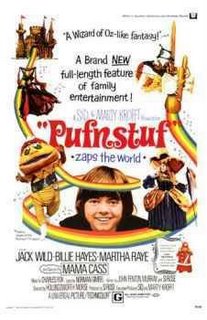
News update: PUFNSTUF - THE MOVIE (1970) now available on DVD and CD

Last November, while I was lamenting that this movie wasn't on DVD, I mentioned that the soundtrack was only available as the old vinyl release.

See my review of the movie here...PUFNSTUF - THE MOVIE (1970)
But now there's been a new CD release containing all the tracks from the old album. It's composed by Charles (BARBARELLA) Fox and includes songs sung by Mama Cass Elliot ('Different') and Jack Wild, of OLIVER fame.


On a sadder note, in the same week that I finally got the CD soundtrack, I learn that the child star of Pufnstuf, Jack Wild, has passed away, aged only 53. I miss you already, Jack, but I'll never forget you.